Showing posts with label health - the body. Show all posts

Monday, September 14, 2015

Apple #718: Why Am I Hungry if I'm Fat?

Dear Apple Lady,

My body has rather obvious stores of fat available to it. How come when I'm hungry, it doesn't just burn that extra fat?  How come my body wants me to eat more food, when it's already got a lot of food stored up in the fat?

Asking for a friend,
A.L.

Well, A.L., I had to read up on this one because I've had that very same question for a long time (imagine that).  Based on what I've read, the answer is: fat don't work like that.


Fat cells very nearly have a mind of their own. They don't work the way other cells do and they don't take direction from many other parts of the body. They will keep getting bigger in spite of other processes going around them which should otherwise direct them not to.
(Diagram from QMP's Plastic Surgery Pulse News)


  • Fat cells in your body are like rich people.  You know how when people start to amass wealth, you would think they'd have that much more they'd be willing to share? (This was the theory behind Reagan's idea of trickle-down economics.) But in fact what happens is people raise their bar for what they consider to be the minimum amount of money they need to live on.  The more they have, the more they feel they need to protect.
  • Fat is like that.  The more fat you have, the more your body is going to give you the prompt to eat more. As one recent New York Times article put it, "We get hungrier because we're getting fatter."
  • For quite a while now, the prevailing wisdom about obesity has been that if you're overweight, you've simply eaten too much.  Too many calories in, not enough burned. That simple.  So all you have to do is un-do that equation.  Eat less and exercise more.
  • Problem is, this is a big fat lie.


This, on the other hand, is not just a joke, it's the truth.
(someecard sourced from All-species fitness)

    • Suppose you've been invited to a really phenomenal dinner. Your friends are going to prepare the best foods you've ever tasted in your life. It is going to be one great big spread of super-deliciousness. They tell you to "Come hungry." What do you do?
    • My answer was that I wouldn't eat much during the day prior to the dinner. Someone in the audience said, "Exercise." You know, "work up an appetite." 
    • Right, Gary said. To make sure you're good and hungry and ready to eat a lot, you eat less and exercise more.
    • So why are we telling obese people that the way to lose weight is to do the very thing we know will trigger us to eat a lot?
  • He does a lot more debunking of the conventional obesity theories and advice. So let me pause a moment here and say, it's time we quit blaming people for being overweight and obese, and started figuring out what we don't understand about how our bodies use food and get to fixing it.
  • Taubes debunks our current thinking about obesity in order to figure out the real answer behind how obesity works. If we know what's causing it, then we can know how to treat it or stop it.
  • The deal is that fat doesn't work the way we think it does.  We've been told that our body stores extra food as fat and then when it doesn't have enough food available, it will burn off the fat.  But it's more complicated than that.
  • Fat cells want to keep their fat.  Fat cells have a membrane that lets stuff in and keeps things from going out.  What is allowed in are fatty acids.  Some fatty acids that you may have heard of are
    • Omega-3
    • Omega-6
    • Prostaglandins
    • Palmitic acid
    • Stearic acid
  • There are all kinds of them.  These are what you get when you eat foods that contain fats. Meat or fish or nuts, for example.
  • The membrane around the fat cell lets the fatty acids in. Then the fat cell combines these with a type of sugar called glycerol to make triglycerides. This is the form in which fats and sugars are stored in your body. More triglycerides in the fat cell, the fat cell gets bigger, and you get fatter.
  • Once the fats & sugars are stored in the form of triglycerides, your fat cell does not want to let that triglyceride out. The holes in the membrane are too small for the triglycerides to pass through, for one thing, so the triglycerides can't get out on their own.


A representation of a triglyceride. Three fatty acids plus glycerol. This makes for a big, complex molecule -- too big to get back out through the fat cell membrane.
(Image from Antranik.org)


Another depiction of a triglyceride being made from 3 fatty acids and glycerol, and then being stored in the fat cell of a prairie dog, I think that is.
(Diagram from The KetoDynamic Antidote)

  • In order for the fat and sugar locked in your fat cells to get out, the triglycerides have to be broken down again into their fatty acid and sugar components, and then those can pass back out through the membrane.  
  • But your fat cells do not want the triglycerides to be broken up.  Your fat cells are like, "I worked hard to get these triglycerides. You are not getting these out of me just because you skipped lunch today. Uh-uh. No, sir."
  • When you get hungry, your body doesn't really see the fat stored in your body as available food. Because the stuff it needs is all locked up in those triglycerides. Think of it this way: When you get really hungry, are you going to take the time to dress and roast and baste a turkey? Or are you going to reach into the cupboard and grab the already-made container of pudding and scarf that down in 30 seconds? You are going for the 30-second pudding.

Literally everything in you says EatthepuddingEatthepuddingEatthepudding.
(Photo and recipe from Fine Cooking)

  • Your body is the same way.
  • Your body is like, I'm not going through all the hassle of breaking down those triglycerides. I'm not opening up the fat cell cupboard and mixing up spices and butter and roasting and basting and who knows what else for who knows how long. I need something in my blood, and it's got to be easy for me to get energy out of it because I'm hungry right now!
  • What's the easiest and fastest thing for your body to break down? Sugars. Highly processed carbohydrates. The ready-made pudding.
  • As long as your body can get its bloody little fingers on some simple sugars, it is not even touching what's in those fat cells.
  • So that is why you still get hungry when you're fat.
  • In fact, it's even likely that when you have a lot fat stored up, your body will tell you to eat more often because of it. Because your body has gotten very good at storing sugar, there's even less of it in your bloodstream, so you'll get the hunger prompt more often.
  • How are you supposed to get out of this vicious cycle?  How are you supposed to burn fat when all fat wants to do is store up more of itself?  
  • It seems like the answer ought to be involved in breaking up those triglycerides, which will make the fatty acids and the sugars available again and deplete those fat stores. But how do you break up those big triglycerides?
  • The answer is in a hormone.
  • Various hormones regulate the calorie-burning, food-intaking, fat-storing process. Think about how a child eats a lot and grows bigger. Or how when you hit puberty, if you were a girl, your body started storing fat in places it hadn't before -- breasts and hips -- and that was a good thing. Or if you were a boy, you ate a lot and got taller and also developed muscles. So something is telling your calorie/fat/food-using processes to use food in a certain way when your body was growing versus how it handles food and fat once your body has reached adulthood.
  • The main thing directing the food/fat traffic is hormones. Different hormones turn on certain processes and turn off others. We typically think of hormones as estrogen and testosterone, and it's true, those are two pretty important ones. But another hormone that is very important in the food/fat process is insulin.  
  • Insulin is not the only hormone working inside the fat cells, but it is the big policeman on the block, so to speak.
  • Insulin is the traffic cop directing fatty acids and sugars out of the blood into the fat cell. Insulin is the policeman who is locking the fatty acids to the glycerol and putting them in the triglyceride jail. And when the triglycerides want to bust out of jail, insulin is the guard who tries to keep them from busting out.


This is a very complex diagram that includes things not discussed in this entry, but the main point is to notice all the green boxes which contain the word Insulin and the one red box containing the word Insulin. This shows in how many fat-storing processes insulin is involved.
(Diagram by Keith Frayn, sourced from The Eating Academy)


Insulin. The police officer that does not let the triglycerides out of fat jail.

  • If you can control the insulin, you can control the fat.  More insulin equals more fats and sugars in the triglyceride jail. Less insulin means the triglycerides can bust out and be free.
  • But you do still need insulin, right? Don't people with diabetes have to inject insulin to regulate their blood sugar?
  • Yes. People with Type 1 diabetes don't have insulin being made in their bodies so they have to supply it. People with Type 2 diabetes have had so much insulin pulsing through their blood, their cells are desensitized to it and don't know it's there and so can't control the sugar in the blood. 
  • So, yes, we do need insulin, but as with most things, we don't want too much of it or too little of it.  What's the thing that results in too much insulin? Sugars. Carbohydrates.
  • Here's the process broken down:
    • You get hungry
    • You eat & start digesting food
    • Sugar shows up in the blood
    • Pancreas makes insulin to deal with the sugar
    • Some sugar gets burned as energy right away
    • Insulin ferries leftover sugar & fat to the fat cells
    • Insulin makes sure the sugar & fat (now triglycerides) are not getting out
    • Sugar levels in blood drop
    • You get hungry
    • It all starts over again
  • Of course it's more complex than that, but that's what we need to know for our purposes at the moment.
  • If we could have less insulin locking up the sugar & fat, it would stay in our blood longer and we'd have it available to burn. We don't want that stuff lingering in our blood too long because that's how you get heart attacks and nasty things like that.
  • So maybe we do something else to change the mechanism at the beginning of the process. Maybe we make the body work a little harder to get the nutrients it needs. Instead of letting it scarf down the container of ready-made pudding, maybe we make it reach for a turkey sandwich.


Now this is the kind of turkey sandwich I can get into. Not the slimy, weensy, sliced turkey from a plastic package, but hunks that have been cut off the roasted bird, with a healthy amount of mayonnaise and butter and some cheese too, on whole-grain bread. This one is made with roasted red peppers and pesto and fontina cheese.
(Photo and recipe from inspired2cook)

  • I'm being too metaphorical here. Let me get to the point. The best way to disable this fat-accumulating process is to eat fewer sugars and simple carbohydrates. 
  • When you put more easy-access sugar into your blood, you speed up the whole insulin-making, fat-jailing process. Once the fat is in the jail, your body has practically forgotten it's there, so it asks for more food. If you give it a lot of sugar -- way more than it can burn right away, which is true of those all those sugary processed things like candy bars and soda pop and doughnuts and pudding and children's cereal and most of the things in the mid-section of the grocery store -- if you give it more free sugar than your body can use, it's only going to lock more of it up in the fat jail. It's not going to bust out that stored-up fat, and it is certainly not going to do that if you keep giving it more free sugar.
  • The only way to break the fat-storing cycle is to quit giving your body more free sugar. You have to make it work for its food. Only then will the insulin police let the triglycerides break up and get out of jail. Only then will you start burning the stored-up fat.  Only then will you start losing weight.
  • So the short answer is: want to lose weight? Eat less sugar.


A good way to help yourself eat less sugar is to follow this map of a grocery store layout. Stick to the outer regions. Avoid the pre-made stuff in boxes in the center aisles. Except for the nuts. I'll go into the center aisles for the nuts.
(Diagram from Medicine in Plain Words)


P.S. When I couldn't eat sugar for a while -- and I mean I had no sugar at all. Not just the typical things you'd think of like ice cream or cookies, but also no bread. No ketchup. No tomatoes. It was intense. I ate almost exclusively protein and vegetables. -- I held to the restriction for about 3 months. And I lost 28 pounds. I wasn't even that much overweight to begin with.

When the problem that precipitated this drastic diet went away, I started eating some sugar again. I gained back the weight I'd lost and then some. :(  But I am proof that if you want to lose weight, don't eat the sugar.

P.P.S. I also learned, though another source, that if you're trying to change your behavior, it's much harder to achieve a Don't than it is to achieve a Do. So I'll say that while you're not eating sugar, Do eat proteins. Do eat vegetables. Do eat crunchy, complex things. Do add spice.
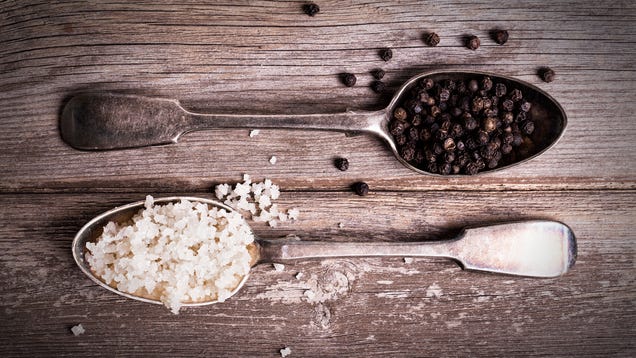


Salt & pepper. Two of the best anti-sugar aids ever.
(Photo from Gizmodo)


Sources
David S. Ludwig and Mark L. Friedman, Always Hungry? Here's Why, The New York Times, May 16, 2014
Berit Brogard, Does the Body Burn Fat When You Are Hungry?  Jillian Michaels
Encyclopedia Britannica, Fatty Acid 
American Diabetes Association, Insulin Basics
My Wellness Center, The Importance of Insulin

Monday, November 17, 2014

Apple #689: How the Body Adjusts to Cold Weather

The temperatures are starting to drop, some parts of the country have already gotten snow.  But it struck me last week, when temperatures fell from a surprising 70 degrees down to 45, how different 45 degrees feels at the end of fall versus what it feels like at the beginning of spring.

This time of year, when it hits 45, everybody starts pulling out their heavy coats and winter sweaters, putting on gloves and hats, blowing on their hands to keep them warm.  In the spring, that same 45 degrees feels luscious.  Everything's melting, the sun is out, the air feels balmy, everyone's unzipping their coats, going bare-headed and without gloves.  So what's the deal?


Like it or not, cold weather is coming.  Are you ready?
(Photo from Ask Bob Carr)


I've always thought the fact that we react to the same temperature so differently depending on the time of year was all a matter of perspective.  Context.  It's been warm, now it feels colder, and ooh boy, we don't like it.  Or, it's been cold, now it's warming up, and ooh boy, that's nice.

I looked this up (as your fearless Apple Lady is wont to do) and it turns out, it is not just in our heads.  It is in our bodies, too.

  • Scientists estimate that it takes our bodies somewhere between one and two weeks to adjust to a major change in temperature.  This could be cold weather becoming warm, or warm weather becoming cold.
  • But we are better at adjusting warming temperatures rather than warm temperatures becoming cold.  As one anthropologist says, our bodies are better adapted to warm weather and "Our bodies are just not as good at dealing with cold."
  • But our bodies do make some adjustments.
  • First, you get goose bumps.  This doesn't actually do all that much for us anymore now that we humans aren't covered with a coat of fur.  But if we were still furry like our animal relatives are, the constriction of the hair follicles would lift the individual hairs slightly above the skin, trapping warm air beneath the fur and giving us an extra layer of insulation.  As I said, we don't have fur anymore, so even though we still get goosebumps, they don't do us that much good.


See how the goose bumps make the hair stand up?  Now, if this were long and densely packed animal fur instead of sparse and thin body hair, you can imagine the warm air that would be kept all nice and cozy under there.
(Photo from Beliefnet)


    • By the way, the big scientific word for goosebumps is "horripilation." This is because animals' fur stands up not just when they're cold but also when they are threatened and want to scare the heck out of any would-be attackers, a.k.a. they want to make themselves look horrifying. 
 
  • The next cold weather response is that our muscles shiver.  This is a fast way of producing a lot of heat -- 5x the amount of body heat prior to shivering.  When we shiver, our muscles contract rapidly over and over.  But since shivering expends a lot of energy and it doesn't do much else for us, shivering is typically a short-term solution, one that our bodies abandon if the cold persists for too long.


Yes, this is bad clip art, but it gets the idea of shivering across.  Also, see how he's got his arms crossed in front of his chest?  This is another unconscious response to the cold that we often have.  We are trying to warm up and protect the most important part of our body: the core.  So this guy may look cold, but his body is trying its best to keep him warm in spite of the cold.
(Image from Clipart Panda)

  • The next thing, and the longer-term solution, is our blood vessels constrict.  Your body is trying to manage blood flow, and since blood carries heat with it, it's trying to be judicious about how much heat it's sending where.  It doesn't want to send too much blood/heat to the extremities like fingertips, toes, end of the nose because those parts of the body are not as essential as things like the internal organs and the brain.  
 
    • I don't know about you, but I have noticed when I'm out walking in the winter for any length of time that I might feel chilly in my hands and face, but I'm snug as a bug in my torso.  This is the blood vessel constriction plan working very well.


Cross-section diagrams of blood vessels. At the left is what the blood vessels normally look like, in the middle is what blood vessel constriction looks like, and finally at the right, what blood vessel dilation looks like.  It's not that the blood vessels themselves get bigger or smaller, but rather that the muscle cells in the blood vessels expand or constrict, allowing more or less space in the vessel for blood to pass through.
(Diagram from Wikipedia)

  • But your body is not so draconian that it believes it can entirely abandon your fingertips, toes, and end of your nose.  Those things are pretty helpful.  So it will periodically stop doing the constriction thing and switch to dilation -- expanding the blood vessels to allow blood flow back to the extremities to keep them nourished and from getting so cold they get frostbite.  
 
    • When your cheeks turn red from cold and your nose turns pink, that's blood vessel dilation happening.  The pink in your cheeks is the extra blood flow going to your face.
 

These people's faces have turned pink because their bodies are trying to keep their faces warm, even as it's cold outside.  Blood vessel dilation in the face at work.  (These people are in Iceland, by the way.)
(Photo from TripAdvisor)

  • If you stay out in the cold and your body has to continue to deal with it, your body will switch  again from dilation back to constriction.  Because really, those internal organs are pretty important.  After enough time in the cold, your body will make that brutal decision to sacrifice your fingertips, your toes, or the end of your nose if it has to.  This isn't some namby-pamby parlor game, after all.  This is the preservation of your life we're talking about here.
  • Something else that happens along with blood vessel constriction is an increase in blood pressure.  Less room for the blood to move around in, the higher the pressure on the blood vessels.  This is why, for example, people are more prone to getting heart attacks while shoveling snow.  
  • But what's more likely to happen before you have a heart attack from elevated blood pressure is that your body will try to reduce the pressure by reducing the amount of fluid in your system.  Which means your body will decide it's got to get rid of that excess urine, and you'll have to go to the bathroom.  
 
    • That's right, when you've gotten your kid all bundled up like Ralphie's little brother and you've sent him outside, don't be surprised if he runs back in half an hour later, saying he's got to go to the bathroom.  His not trying to be annoying, it's just his body helping him to survive the cold.


Yes, right about now is when he'll have to go to the bathroom.  Thank the cold air for that.
(Screen shot sourced from SpartanTailgate)

  • Sidenote: You might be wondering, how does the nose running fit into all this?  Is that another blood vessel construction/fluid expelling thing at work?  Well, no.  That is just your nose doing its own thing.
  • Your nose's job is to warm, moisten, and filter the air your breathe in so it doesn't hit your lungs all dirty and cold and dry.  Hack, hack, just the idea of that makes me want to cough.  That's what your nose does all the time, courtesy of the nose hairs and mucus in there.  
  • But when it's really cold out, that cold air is also especially dry.  So your nose has to work extra hard to add more moisture to that air to keep everything nicely humidified for you.  Then, when you exhale through your nose, that extra moisture is going to get pushed back out toward the end of your nose, which because of the cold outside is getting a little chilly.  The cooler temperature at the end of your nose will make the moisture condense there, and so you get a runny nose. 

[I don't think you really want to see a picture of a runny nose, so we'll pass on this image opportunity.]

  • OK, so we've got blood vessel constriction and blood vessel dilation going on, with maybe a need to urinate more frequently and perhaps a runny nose thrown in for good measure.  Now, if I go inside, all those anti-cold-weather reactions will settle down and relax in the warmer inside air.  But the key is, over the course of a couple of weeks' worth of going outside to the cold and coming back in, your body gets better and better at managing that trade-off between constriction and dilation.  So when you go outside, your body is already kind of prepared to go into cold-weather-response mode.  You don't feel the cold as much on Week 2 as your did on Week 1.
 
  • "Physically, you never get used to the cold. It's cold! If it's cold, it's cold! And you go out there and your body feels it, but I think mentally, living in it, it's not such a shock to you. I took the dog out last night, it was 20-something degrees and I'm like, 'Yeah, I'm in my shorts, but I did this the day before, and the day before …'"


Clay Matthews takes his dog out in 20-degree weather while wearing his shorts.  I think that means his body has gotten used to cold weather.
(AP Photo from the Courier-Journal)

  • After a very long time of being exposed to very cold temperatures, you body will also change its rate of metabolism--that is, the process by which your body converts food into energy.  This is something that happens to deep-sea pearl divers, or to researchers who stay in the Arctic for a year or more.  But after that amount of time having been exposed to such cold temperatures, their bodies will speed up metabolism in order to generate more heat.  So after several months of this hardy-cold living, they will be able to tolerate diving in 50 degree water without a wet suit, or walking around the Arctic camp in T-shirts.
  • For the rest of us who merely have to adjust to the change in seasons in more moderate climates, there are some things we can do to help our bodies make the transition:
 
    • Layer your clothes -- For example, wear a warm sweater over a short-sleeve shirt over a long-sleeve shirt.  The extra layers will help your body when it first encounters the cold -- and believe me, it will know it's cold out from the cold air that hits your face.  Once your body's made its adjustments and is warming up, you can open your coat or take off a layer.
    • Stay hydrated -- even though your body will try to respond to the higher pressure by getting rid of excess fluid, everything will work better with moisture.  Especially if you are exercising (e.g. running) in the cold, you'll want to keep hydrated so your nose can continue its essential humidifying activities and so you can keep your muscles from cramping.
    • Take off your cold clothes when you get inside -- cold air will be trapped in your clothes, though you may not have noticed that while your extremities weren't getting much blood flow.  But once you get back inside where it's warmer, your body will try to warm up those fingertips and ankles and feet again, and it will also realize, hey, I've got to try to fight against the cold air stuck in the pants cuffs and sock wrinkles and whatnot.  Do your body a favor and shuck off all those cold clothes when you get inside and change into snuggly warm things.
    • If you want to try to speed up your body's acclimation to winter weather, you could try taking cool showers or cool baths.  Many people say this does help speed up your body's response mechanisms to cold weather, so you become better-acclimated sooner.  Do not immediately plunge your body into a bathtub full of ice and sit there for 15 minutes.  Also do not try this if you have an existing hearth condition.  Be judicious about this.  Take a cool shower for 5 minutes, get out, towel off thoroughly, and warm up.  Remember, your goal is to speed up the process, emphasis on that word process.  Your body is not a light switch that turns off and on suddenly, but rather a serious of interconnected mechanisms that work best when they work together.  You want to help your body, not punish it.

Once you've done all that, then have a cup of hot chocolate. Specially recommended by your Apple Lady!


Sources
Emily Sohn, Cold Weather's Coming: Is Your Body Ready? Discovery News, September 19, 2013
Cool Antarctica, How humans deal with and survive extreme cold
Laura McMullen, 6 rules for working out in cold weather, NY Daily News, December 5, 2013
Mich Smith and Lolly Bowean, As winter wears on, bodies adjust to the chill, scientists say, Chicago Tribune, February 8, 2014
Medicine.Net, Goose Bumps
NPR, Why Does Cold Weather Cause Runny Noses? January 24, 2009
Cold Showers, Ice Bath Benefits and Considerations

Saturday, January 5, 2013

Apple #617: Showering with a Cast


As you may already know, I broke a bone in my hand last week.  I've had a cast on my hand & forearm since New Year's Day.


My hand, casted.
(Photo by the Apple Lady)


At first, I was daunted by all the things that would be a lot more difficult thanks to not being able to use my right hand.  But I've discovered that I can pretty much do everything that comes up; it just takes longer. The results might be a little messier, but the job gets done.

So I thought I'd share a few tips, for anybody else who might find themselves having to rely almost entirely on their non-dominant hand.


First, Why Keep the Cast Dry
If I didn't have to worry about getting the thing wet, I might use my clunky club stump to support things or brace them while I use my left hand for the detail work.  So why can't you get a cast wet, anyway?
  •  In short, because water softens plaster.
  • The nurse in the ER (his name was Brian) told me that casts are made with the same kind of plaster used to build houses.
  • Specifically, it's plaster of Paris.  It's cheap, it sets quickly, and it's easy to use.
  • Actually, first, Brian wrapped my arm with a cotton bandage.  It's really soft and comfortable.  Imagine taking a bunch of cotton balls and making a piece of cloth out of it.  That's what's against my skin.
  • Next, he applied the plaster.  But it wasn't like he painted it on.  He unrolled a whole bunch of plaster-impregnated gauze in hot water, which made the plaster gooey and sticky.


Bandage coated with plaster, ready to be moistened and used to make casts.
(Photo from Supplies Central)

  • He pressed the layers of wet plaster bandage into shape around my hand and arm, smoothed it, and tamped it down, all while avoiding the sore place on my hand.
  • Finally, he wrapped the whole thing in another bandage that has a long strip of Velcro at the end.
  • So the outer cloth provides some protection, but if the plaster got wet again, it would soften up and fail to fulfill its purpose in keeping my hand immobile while the bone heals.
  • One kind of interesting thing: as it hardened it got warm, almost hot.  Brian told me that would happen.
Now that we know why I can't get the cast wet, here's how I've been avoiding that.

Washing Dishes


(Photo from Life less hurried)

I don't have a dishwasher, so washing dishes by hand becomes more of a problem.

  • First, I've been using the lazy-person's dishwashing method, which goes like this:
  1. Rinse dishes
  2. Fill sink with very hot water and dish soap
  3. Add dirty dishes
  4. Let soak a good long time, at least until the water's cold
  5. With hot water, rinse the dishes again and wipe off anything that might be lingering
  6. Let air dry
  • The slight difference here is that I'm doing all of this with one hand.  That's not much of an issue except for during step 5.  I put the bowl or glass or plate in the empty side of the sink and kind of work a dish cloth around the dish until I'm satisfied.
  • The silverware and pot lids don't look as shiny as usual, but hey, they're clean and my cast did not get wet.
  • Then of course there's the strategy of not getting dishes dirty in the first place.  I've been using paper plates and the occasional plastic fork (This isn't exactly earth-friendly, but it sure does help.)

Making Food


Pre-sliced cheese: the hand-in-a-cast's best friend.
(Photo from Sargento)

  • Since wielding a knife doesn't really work, or would be dangerous, I've gotten pre-cut things from the grocery store: sliced cheese, diced onions, salad-in-a-bag, etc. 
  • I have scoffed at this prepared stuff, but that was when I had both hands available.  Now I'm very grateful that somebody else cut up the watermelon for me.
  • I've also chosen things that I could heat up with a minimum of manual input.  Pre-shaped hamburger patties, sausages, cheese.
  • The naturally hand-held food items are also much-appreciated.  I'm thinking mainly of apples.  But peaches, apricots, cherries--all sorts of fruit fall in this category.  Then there are the hand-held snack foods like hot dogs, roasted & shelled peanuts, potato chips, etc.
  • I'm very proud to say that I cracked 5 eggs with my left hand.  Then I made scrambled eggs. Go, Lefty!
  • Finally, there's always the option of microwavable meals (I can only take so many of those, though, before I start to feel as alert as cardboard), or delivery: pizza, Chinese, sub sandwich, etc.

Showering

This was the activity I was looking forward to the least.  The doctor and a couple nurses in the ER gave me different tips for how to avoid getting the cast wet.  The doctor told me to put my arm in a garbage bag and tape it shut.  But the idea of pulling tape from a roll, putting it down to cut it with the scissors, and then wrap it around my arm, all without getting it stuck to itself or the wrong things just seemed like a recipe for major frustration.

So I came up with a different plan.

  • Wrap one sheet of Saran Wrap around the arm part of the cast.  Make sure the plastic covers everything from about the thumb down to the end of the cast, with a little extra extending beyond the end
  • Pull & press the plastic wrap snugly to minimize gaps.


Plastic wrap draped around the cast, before getting wrapped snugly.
(Photo by the Apple Lady)

  • In case the press n seal nature of plastic wrap doesn't stay stuck, add rubber bands.  The kind they put around broccoli at the grocery store work especially well.
  • Tuck the end of the plastic wrap into the end of the "sleeve" of the cast.  Again, make sure there aren't any gaps.


The first of several rubber bands securing the plastic wrap.
(Photo by the Apple Lady)

  • Next, drape another sheet of plastic wrap over the hand & fingers.  Use a generous amount to leave room for your thumb, which will want to move around a lot.


You can see the rubber bands I've added, and now I'm draping the 2nd piece of plastic over the fingers.
(Photo by the Apple Lady)

  • Finally, make sure the plastic over the fingers covers any last gaps.
  • Secure with another rubber band or two.

Here's the finished result.  Note the extra wiggle room for the thumb.
(Photo by the Apple Lady)


Totally worked!  When I get out of the shower, I tamp dry the plastic just to make sure that doesn't get anything wet.  When I take off the plastic, everything under it is dry, not even damp.


I'm still encountering things where I have to figure out how to do them with just one hand & a thumb (like tying shoelaces), but as I also continue to discover, it's all doable. I just have to get a little more creative and a little more patient.


Sources
my own trial & error
Elsa Chung, Nursing Management of Patient with Casting, July 5, 2009
Supplies Central, Plaster Bandages
Voluntary Simplicity, Washing Dishes Made Easy

Tuesday, January 1, 2013

Apple #616: Uh-oh, It's Broken

For about the past week and a half, I've been away in the Land of No Internet, so I could not post anything to the Daily Apple.  In the meantime, I've been collecting ideas and suggestions for new entries, so I have a few in the hopper.

(Also in the meantime, a Korean site that I think is something like Reddit picked up my entry about the power symbol, so there was a flurry of visitors here for a day or two.)

When I got back to the World of the Wired, I was going to get cracking on those ideas in the hopper, but first a little accident happened.  I was watching the recent Packers-Vikings game with a friend.  I'll call him Minnesota Mad Man to protect his, uh, innocence.  I'm a Packers fan and Minnesota etc. is obviously a Vikings fan.

M^3 was doing some trash talking while the Vikings were rather easily beating the Packers.  After a few quarters of this, I made to tackle him -- as one does during football games -- and he put up his hand to block me, the two hands collided, and smack.  My finger got jammed into his arm and I was curling up and saying ow ow ow ow.

I once upon a time broke my toe, and that was so painful, I could hardly see straight.  This hurt, but only about as much as it does if you jam a knuckle.  After some careful poking around, I discovered that the heart of the pain was in the body of my hand, below my ring finger.  I thought of those two tendons, one from your ring finger, the other from the pinky, that come together there.  I couldn't move my finger at all at first, but in time I was able to bend it slightly.  All of these things led me to conclude that I hadn't broken anything but maybe strained that tendon and that, with a little ice and ibuprofen and time, it would be fine.

I also didn't want anything to be broken.  This was my right hand.  My number one tool.  Crucial to me in so many ways, for so many reasons.

Two days later, after icing and avoiding using it and bonking it by accident which led me to yelp in pain, my hand is slightly swollen, and the knuckle looks like it's sunken down.  I Googled "broken hand" and lo and behold, there was an array of pictures of hands in situations that looked a lot like mine; which is to say, they don't look that obviously messed up, just a little bit swollen.  Sites like the Mayo Clinic and WebMD said that any injury to the hand should be examined immediately.  Whoops.


The swelling in this guy's broken hand is a little more obvious than mine, but this is pretty close to what my hand looks like.
(Photo from Club Pebble Beach)


So I'm off to the emergency room.  On New Year's Day.  So this should be a whole lot of fun.  I'm bringing my copy of The Brothers Karamazov with me.  Maybe I'll finish it by the time they get to me.

By the way, my hand is a bit achy after typing this with my left hand and three fingers of my right.  So probably I'm a numskull.

Anyway, pictures and more stuff to come when I can.

----- 3 hours later -----

Back from the ER. Typing almost entirely with my left hand because I now have this:


They took 3 X-rays.  "You broke it," the doctor said when they were ready.  He showed them to me on a computer screen.

On the metacarpal of the ring finger of my right hand there were marks like a fine, maybe two-inch greater-than symbol on its side.


This isn't my hand, and the fracture is worse than mine, but the location is similar.
(Photo from Wikipedia)


He told me it's not a bad break, and it's in the middle of the bone which means it will heal relatively easily.

They put the cast on, which will stay on for about a week, or until I can see the hand orthopedic doctor.  They'll take the cast off, look things over, decide what to do next.  The ER doctor told me that because the fracture is relatively mild, "they probably won't need to put a pin in it."  !

He said he can't promise what they'll do, so they might want to put in a pin, but most likely another cast for 6 weeks.  !

They included my just-fine middle finger in the cast because they like to give stability to the broken finger on both sides.  So, thanks to the cast, there's not much I can do with my right hand.

Ach.  I'm beginning to feel frustrated.  It took me almost an hour to do just this much.  I'm ready to take off the cast or at least free my 3rd finger so I can do something with my right hand.  But, nope.  It will have to stay on for 6 weeks.  I'll have to order out for food -- for 6 weeks.  No washing dishes -- for 6 weeks.  I'll have to wrap my hand in plastic and tape it closed -- for 6 weeks.  No writing by hand, which I dearly love to do, only typing with my errant and slow left hand -- for 6 weeks.

I have already had trouble putting on my coat.  The sleeve almost didn't fit over the cast.  I've had trouble eating, using a fork with my left hand.  I had trouble putting my car into Drive, had to use my left hand.  This isn't some funsie little game I can stop playing now.  I'm going to have to struggle with such basic activities for 6 weeks.

I'm wishing I hadn't gone to the doctor and gotten the cast after all.  I mean, here's how my hand looked before the cast:


You can hardly tell that anything is wrong, can you?  If you didn't know to look for the slight swelling on my right hand, would you ever have guessed that it's broken?
(Photo by the Apple Lady)


When I said something about it being a pretty minor break, the ER nurse said, "But it's your hand.  It's a delicate and important tool."  So she's right, I don't want it to heal wrong or be messed up in some more permanent way.  But this sure is annoying and frustrating, and I've only been wearing the damn thing for less than 2 hours now.

She also told me I should stop hitting my friends.  I wanted to retort, But you don't understand!  He was being so smug!  I had to stand up for the Packers!  Now I wish I had at least knocked him over.  I mean, all this and I didn't even really tackle him.  Sigh.

The Packers play the Vikings again next week.  At home, in Lambeau Field.  The Packers had better win, that's all I have to say.  For my honor as well as theirs.

[Note: I am pleased to report that the Packers won their next game with the Vikings, 24-10. M^3 is rather grumpy about it, too.  Vindication!]

Thursday, June 28, 2012

Apple #592: A Whole Lotta Blues

I thought I'd finish up my series of blue entries with a whole bunch of blue things, with a few facts about each. Sort of like the finale at a fireworks show.

Blue Suede Shoes


(Photo from some site on Etsy that isn't loading)

  • We all know Elvis Presley performed the song, but Carl Perkins is the guy who wrote it. He got the idea from Johnny Cash.
  • Cash told Perkins about an Air Force sergeant he used to know was rather particular about his appearance. He used to say, jokingly, "Just don't step on my blue suede shoes!" The reason this was a joke was because he'd be wearing his Air Force uniform at the time, with his regulation-issued shoes.
  • Cash thought this was a good line for a song, but Perkins didn't have any idea what to do with it. Not long afterward, he was performing at a dance when he heard a boy tell the girl he was dancing with, "Uh-uh! Don't step on my blue suedes!" He thought it was pretty incredible that the boy would care more about his shoes than the girl, and that's what made the song start to click in his head.

Baby Blues

 "I was shakin' in my shoes whenever she flashed those baby blues"


Blue eyes of a newborn
(Photo from info.com

  • The phrase comes from the fact that a lot of Caucasian babies are born with blue eyes. It's supposed to suggest wide-eyed innocence, as innocent as a newborn babe.
  • When people say that all babies are born with blue eyes, they are exaggerating. Some percentage of Caucasian babies are, but not every baby is born with blue eyes.
  • Some babies' blue eyes will change to a different color as the babies get a little older. This is because the melanin doesn't kick in until it's exposed to ultraviolet light.
  • Usually, after about 6 to 9 months, you'll notice a baby's eye color will have started to change.
  • Some babies' eyes will continue to change for as long as three years.  In about 10% of babies born with blue eyes, it may take even as long as adulthood until their eyes have settled on their final color.

Bluegrass


Kentucky bluegrass, a.k.a. Poa pratensis. Its tendency toward lushness is what makes this a favorite "barefoot grass."
(Photo from Power Seeds Inc.)

  • Bluegrass the music,is named for bluegrass the plant, which has a blue-ish tinge and grows in Kentucky.
  • Naturally, you'd think that Kentucky Bluegrass the plant would be native to Kentucky. Actually, it's originally from all over the place: almost all of Europe, northern Asia, and the mountains of Algeria and Morocco.
  • If you're just starting a lawn of bluegrass, don't mow it until it gets higher than 2 inches. And going forward, it's best not to mow it any shorter that 2 inches.

Blue Humor


The Aristocrats may be the quintessential bluest joke. Here's Gilbert Gottfried, after telling it at a friar's roast not  long after 9/11.
(Photo from Youdopia NSFW)

  • Jokes that involve bad language or sexual or vulgar or crude situations are typically referred to as "blue humor."
  • A lot of people say that this phrase comes from another phrase, "blue laws," which were laws going as far back as the 17th century that punished bad language, lying, swearing, public drunkenness, etc. In other words, laws that governed moral behavior. That much of the origin of "blue humor" seems to be true.
  • However, people go on to say that the phrase "blue laws" comes from the fact that the laws were printed on blue paper.  This part is not true.
  • The experts can't say for 100% certain, but they're reasonably sure that "blue laws" is related to the word "bluenose."
  • A bluenose is a very rigidly moral person, presumably one who would write laws about what you can and cannot say in public.

Blueprints


Blueprints are architectural or other detailed drawings that have a blue background and the text and lines are in white.
(Photo from Twins Daily)

  • Blueprints, as you'd expect, are so named because they are blue.  
  • The paper doesn't start out to be blue, but it turns out that way as a result of the process by which the designs are printed on the paper.
  • Technically, a blueprint is called a cyanotype. Making a cyanotype is a lot like developing a photograph. The process uses iron compounds, which start out to be green, but once they're exposed to UV light, they turn blue.
  • (Sort of the opposite of baby's eye color thing then.)
  • If you want to know more about how to make a cyanotype, a site called Alternative Photography has the instructions.

Blue Whales


The blue whale. Everything about it is superlative.
(Photo from Wonderful Whales)

  • Blue whales are the largest mammals on Earth.
  • They can get to be 100 feet long and weigh some 200 tons.
  • Here's a weird tidbit: their tongues, alone, can weigh as much as an elephant. (I don't know who's going around weighing blue whale tongues, but I believe this assertion)
  • They eat anywhere from 4 to 8 tons -- tons -- of krill per day.
  • Baleen, the stuff over their mouths that they use to filter in food, is made of stuff very like our fingernails.
  • They're also among the loudest animals on the planet. Their sounds are at very low frequencies, but they're so loud, other blue whales can hear them up to 1,000 miles away.
So many things to know about blue whales, I may just have to do a separate entry about them.

And now, with this last hurrah, I must tell you that I'm going on vacation.  Please of course browse around in the meantime.  With 591 other entries to choose from, I'm sure you'll find something to interest you.  See you in a couple of weeks!


Want more blue things? How about bluebirds , blueberries, Steely Dan's "Deacon Blues," plus of course the entries from this series: blue-footed booby, blue jeans, bleu cheese, and the ever-popular blue-plate special

Sources
Squidoo, Elvis Songs: Blue Suede Shoes
Songfacts, Blue Suede Shoes by Carl Perkins
Rockabilly Hall of Fame, Blue Suede Shoes: Chronology of a Hit
Anne Marie Helmenstine PhD, About.com, Why Are Babies Born with Blue Eyes?
What to Expect, Baby's Eye Color
Texas A&M System, Aggie Horticulture, Kentucky Bluegrass
Snopes.com, Blue Laws
Patrick Bromley, About.com, Blue Humor
Dictionary.com, blueprint
Alternative Photography, Cyanotype - the classic process
National Geographic.com, Blue Whale
Enchanted Learning, Blue Whale, the Loudest Animal on Earth 

Sunday, April 1, 2012

Apple #577: Left-Handedness

I've had a request! Regular Daily Apple Reader Roxanne wants to know:

I've heard that left-sloping handwriting means you can't trust someone, but that might just be an extension of the notion that left-handed people are evil or that left-handedness is a product of the devil--my mother-in-law tells tales of nuns slapping her hand with a ruler when she tried to write with her left hand. Has there been a Daily Apple about this? I'd read the shit out of that!!

Actually, Roxanne's enthusiastic request covers two topics: the notion that left-handed people are evil, and whether left-sloping handwriting means its owner is untrustworthy. And really, the second part of that question may relate to issues of graphology in general, which is a rather large topic and one best tackled on its own.

So I'm going to take up the topics separately, and left-handedness first.


The way Rick is holding the pen is one of the many inventive ways left-handed people use to write so that they don't smear the ink just after they've put it on paper.
(Photo from The Nibster, a really interesting site that makes and sells specialty pens and nibs)


Some Facts to Start With

The funny thing about left-handedness is that it doesn't take very long for the conversation to veer off from known facts into superstitions, claims about people's character, and their tendency to be bad people. It seems like, even with all our fancy science, we still hold a lot of superstitions about left-handed people.

I'll start with the most basic facts I found, and then you'll see how quickly the topic turns toward speculation and finger-pointing.

  • Roughly 10% of the population is left-handed.
  • That rate seems to hold true throughout the world, and since there have been people. Cave paintings depict some of the people holding spears in their left hand.
  • The fact that it's persisted in generation after generation suggests that there is some biological reason why we need some people to be left-handed.
  • Some researchers think that lefties have the benefit of surprise, that they come from a direction others don't expect, or they're on the lookout for predators coming from the side where the righties aren't looking.
  • Handedness--a preference for one side or the other--exists in all sorts of species, not just humans, and not just animals. The same 10% rate seems to exist in chimps, toads, and even schools of fish. (In general, the rate of left vs. right varies a lot from one species to another.)


One study found that female dogs prefer their left paw and male dogs prefer their right. Until they are spayed or neutered, after which they don't seem to care either way. Aw.
(Photo from the Daily Mail)


  • Even though we think of people as being either left- or right-handed, it's probably best considered on a spectrum, that some people are very strongly left- or right-handed, some who prefer to use one hand over the other but do have a choice, as well as varying levels of competency with the non-dominant hand.
  • Case in point: 4 of our last 7 Presidents have been left-handed: Gerald R. Ford, George H. W. Bush, William J. Clinton, and Barack H. Obama.
  • However, Ford said if he was standing up, he wrote with his right hand. Some people say that though Reagan wrote with his right hand, he may have actually been left-handed or was at least ambidextrous.


What do these men have in common? They're all lefties! Yes, possibly even Ronald Reagan!
(Photo from Rants 'n Reviews)

  • Left-handedness does run in families, which suggests a genetic link. But researchers hesitate to say for sure that there is one gene for left-handedness. They say it is much more complex than that, since it is often connected with language preferences and capabilities, and since there is a "nurture" element to the equation as well.
  • Recent research suggests that the more stress a mother is under during pregnancy, the greater the likelihood that her child will be born left-handed. Also, if the mother is over 40, or if the child has a low birth weight, the child will be more likely to be left-handed.
  • One review of research in the field found that genetics is considered to be responsible for left-handedness only about 25% of the time.
  • One reason it gets difficult to sort all this out is because the brains of left-handed people may be arranged differently. In right-handed people's brains, the parts that deal with language are on the left. You might expect, then, that for left-handed people, their language parts would be on the right. Not so simple.
  • About 70% of left-handed people's language centers are also on the left. But 30% of left-handed people either have their language pieces on the right, or else their language parts are evenly distributed across both sides of the brain.
  • Researchers also currently suspect that symmetry--when both sides of the brain try to manage the same task--is actually harder for the brain, and it's been linked to disorders such as schizophrenia, dyslexia, and ADHD.
  • So, being left-handed may mean that you're more likely to have those sorts of brain disorders.

Superstitions and Pseudoscience

  • All this current research linking left-handedness to scary disorders uncomfortably reminds me of the way people used to regard left-handed people: in a word, as scary.
  • For centuries, left-handed people were regarded with fear and skepticism.
  • In many cultures, the left side of the body was/is considered the "taboo" side.
  • The devil was thought to come from the left (see Latin sinister) so anyone who was left-handed surely already had the devil on his side.
  • Paintings of Satan often put him on the left side of the picture because there are some passages in the Bible that say Lucifer was on God's left.


Here, Satan is in the middle, but Eve is taking his apple with her left hand. She's also standing to Adam's left, and he's pushing her away with his left hand. This is a good example of another equation that also gets made, which is that men = right and thus strong or good, and women = left and thus weak or bad.
(Image from Bartered Breath)


  • The Devil was said to baptize with the left hand. (Even today, we in the US would never swear an oath with the left hand raised. Right hand only!)
  • Left-handed women were often suspected of being witches, or vice versa (see Joan of Arc).
  • At one point, the Catholic Church, ever the paragon of tolerance, at one point declared that left-handed people were the servants of the devil.
  • Consequently lots of people were burned or otherwise executed primarily because they were left-handed.
  • Children who exhibited signs of being left-handed got whacked with a ruler to have that tendency beaten out of them, or they had their left hand tied behind their back so they would have to use their right hand instead.
  • It's not just a Western superstition, however. Lots of African and pre-Christian peoples have superstitions about left-handed people.


The ancient Egyptian god Set is the god of chaos and storms and destruction and sometimes he is also evil. He is known as "the Left Eye of the Sun." He is associated with animals like crocodiles and hippos, which are considered unclean. He is usually depicted holding his staff in his left hand.
(Photo from Ancient Treasures)


  • In Buddhism, there are two paths. People should avoid the path to the left but choose instead the path on the right, which leads to the eight-fold path of enlightenment.
  • Until relatively recently, in Japan, if a woman was left-handed, that was sufficient grounds for divorce.
  • Eskimos believe you have to keep an eye on left-handed people because they may become sorcerers.
  • In 1903, physician Cesare Lombroso published a study in which he said you could identify a criminal by all sorts of physical features, such as an excess of moles, a "primitive" distribution of pubic hair, and left-handedness. He thought criminals (and prostitutes and "lunatics") were more primitive types of people, and he said their their uncivilized or savage behavior was linked to their proclivity to the weaker, more primitive side of the body, the left.
  • He summed up with this proclamation: "left-handedness, united to many other traits, may contribute to form one of the worst characters among the human species."


Cesare Lombroso, the man who brought all sorts of superstitions and prejudices about left-handed people into the realm of 20th century science.
(Photo from goodquotes.com)

  • Ah, here we go, someone agrees with me. Harold Kushner, writing in The Lancet, says that Lombroso's ideas were eventually dismissed as "pseudoscience" and are now the subject of much ridicule. But, he cautions, a lot of studies being bandied about now are making claims that we may also soon see as rather silly. He cautions that even though we have all sorts of tools like genetic analysis and brain imaging technology and high-powered biostatistical methods, we are not immune from reaching biased and even somewhat laughable conclusions.

Language
  • What people think of the left side shows up in the language. Here are various languages, their words for "left" and what those words also mean.
  • Latin : sinister. Our word "sinister" comes directly from there, meaning that we think someone who is evil and suspicious must be left-handed.
  • Greek : skaios, which may mean either left-handed or ill-omened or awkward.
  • German : links, means both left-handed and weak.
  • French : gauche, which means awkward or clumsy and also very outre -- in general, something no French person with an ounce of self-respect would ever want to be.

Good Stuff about Being Left-Handed
  • On the other hand (har har) left-handed people are thought to be better at what's called "divergent thinking," which means they come up with new ways of doing things, or innovative solutions to problems.
  • There's been lots of debate about whether left-handed people are smarter, but one researcher's study found that more people with IQs over 140 were left-handed. Lots of really famous smart people were left-handed: Albert Einstein, Isaac Newton, Benjamin Franklin, to name a few.
  • Left-handed people may have an advantage on the big screen. Lefties tend to gesture with their left hands. When viewed on screen, that looks to us as if they're using their right hand. So they seem to us righties as if they are the dominant person on screen. This may be why lefties seem to do better in politics in this current, highly televised world.


Barack Obama, waving with his left -- and to us viewers, his preferred -- hand.
(Photo from Hand Facts)


  • Or, maybe left-handed people are just like you and me. Ever thought of that?

Famous Lefties

To counter what seems to be a stubborn prejudice, I'll list just a few of the famous people throughout history who were or are left-handed.

Scientists


Einstein says: Ha ha, I'm left-handed and you're not.
(Photo from Jokes with Einstein)

Isaac Newton
Albert Einstein
Buzz Aldrin
Dr. Albert Schweitzer


Inventors
Benjamin Franklin
Henry Ford
Bill Gates


Military Leaders
"All the decisive blows are struck left-handed" --Walter Benjamin


Napoleon said, "I want all of that over there," and he took it with his left hand.
(Image from Knarf's class at U Penn on Napoleon)


Julius Caesar
Alexander the Great
Charlemagne
Napoleon
(also his wife Josephine)
Fidel Castro
General Colin Powell
Joan of Arc (or she may have only been depicted as such to make her seem like a witch who therefore must be burned)


Presidents


Gerald R. Ford ended our "long national nightmare" by signing Nixon's pardon -- with his left hand.
(Photo from Fitsnews.com)


James A. Garfield
Herbert Hoover
Harry S Truman
Gerald R. Ford
Ronald Reagan (and his son Ron)
George H. W. Bush
William J. Clinton
Barack H. Obama


Kings, Queens, and Other Leaders


Queen Victoria was left-handed. How unconventional, how un-Victorian of her! Here she is pictured with her beloved Collie, Sharp, at her left side.
(Photo from The Border Collie Museum)


Ramses II
Queen Victoria
Prince Charles
Prince William
Benjamin Netanyahu


Criminals
Billy the Kid
Jack the Ripper
John Dillinger
Boston Strangler


Supreme Court Justices and other Lawyers


One of the tests for left-handedness is to fold your hands and see which hand is on top. In Ruth's case, it's her left.
(Photo from Felber Frolics)


Ruth Bader Ginsberg
Anthony Kennedy
Clarence Darrow
F. Lee Bailey


Artists


Escher's Drawing Hands -- possibly a reflection on what it feels like to be left-handed?
(Image from io9)


Michelangelo (ambidextrous; also his Adam on the Sistine Chapel)
Leonardo da Vinci
R. Crumb
M.C. Escher
Matt Groening (also Bart Simpson)
Albrecht Dürer
Pablo Picasso
Paul Klee
Edvard Munch
Raphael
Rembrandt


Entertainers


Would that we all could be as dashing as Cary Grant. Who happens to be left-handed.
(Photo from the Museum of Modern Art, sourced from the Encyclopedia Britannica blog)


Jerry Seinfeld
Oprah Winfrey
David Letterman
Jay Leno
Lenny Bruce
Robert Redford
Robert DeNiro
Whoopie Goldberg
Marilyn Monroe
Greta Garbo
Judy Garland
Charlie Chaplin
Harpo Marx
Cary Grant
Betty Grable
Dan Aykroyd
Diane Keaton
Richard Pryor
Julia Roberts
Sylvester Stallone
Bruce Willis


Authors


James Baldwin. Left-handed. Simple as that.
(Photo from Joe Vogel)


Mark Twain
Marshall McLuhan
Eudora Welty
Lewis Carroll
James Baldwin
H. G. Wells
Jessamyn West


Athletes


Right-handed batters supposedly have a harder time hitting against left-handed pitchers. Especially when they're Cliff Lee.
(Photo from Observing Baseball)


Jimmy Connors
John McEnroe
Martina Navratilova
Babe Ruth
Barry Bonds
Wade Boggs
Ty Cobb
Ken Griffey, Jr.
Rickey Henderson
Sandy Koufax
Cliff Lee
Stan Musial
Ted Williams
Mark Spitz
Pelé
Bruce Jenner
Dorothy Hamill
Gayle Sayers
Steve Young
Boomer Esaison
Deion Sanders
Larry Bird
Bill Russell
Bill Walton


Musicians


Jimi Hendrix. Possibly one of the most creative musicians of modern times. Also left-handed.
(Photo from Jimi Hendrix.net)

Ludwig van Beethoven
Sergei Rachmaninoff
Cole Porter
Jimi Hendrix
Paul McCartney
Ringo Starr
Robert Plant
Paul Simon
David Byrne
John Lydon a.k.a. Johnny Rotten
Kurt Cobain
Billy Corgan
Glen Campbell


Good People
my dad
probably lots of people you know too


Sources
Perri Klass, M.D., On the Left Hand, There Are No Easy Answers,
The New York Times, March 6, 2011
The Left-Handed Advantage, ABC News, February 17, 2005
The Health Risks of Being Left-Handed,
The Wall Street Journal, December 6, 2011
David E. Rosenbaum, On Left-Handedness, Its Causes and Costs, The New York Times on the Web, May 16, 2000
Howard Kushner, Cesare Lombroso and the pathology of left-handedness, The Lancet, January 8, 2011
Quora, Handedness: Why was there prejudice against left-handed people?
Uncle Taz, Left-handedness
5 surprising facts about left-handed people, The Week, May 2, 2011
AccessScience, Does "handedness" exist among other animals?
Anything Left Handed, Left-handed animals?, A Left-Handed History of the World
About.com, Left-Handed Artists
M.K. Holder's list of Famous Left-Handers