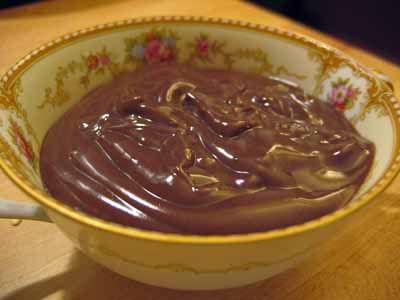
Friday, October 13, 2006

Apple #200: Top 5 of the First 200 Apples

I have tallied the results of the voting for the Five Favorites, and I will present the list of winners shortly.

But first, thank you to the many devoted readers who scanned through many pages of this blog to decide which five entries you liked the best. I very much appreciate the time it took to do this, which is probably more time than you my faithful readers would prefer to put forth toward the construction of someone else's blog. So you have my sincerest gratitude, and I am also forwarding the happy gratitude of fellow readers who will enjoy finding out what is the overall consensus.

What I learned from the voting is that lots of people liked lots of different things. Very few people voted for the same entries. I actually think this is a good sign. We all need a little variety, and I think that the voting tells me I'm doing a fairly good job of providing that variety.

Forty Apple entries were selected as people's favorites. Seven got more than one vote. That's not much of a consensus, but as I said, variety is good, and it's what we have to work with.

Before I get to the top five, I'm going to give a little wave to the entries on the 1904 Olympic Marathon and Emma Goldman. Rather like the gymnast who performs the triple Tsukahara with a twist but doesn't take the gold, these entries got high praise but not quite enough votes.


Going from the lowest number of votes to the highest, here are the winners:

5. Pastrami, Apple #78
What sets Pastrami above the other entries that received two official votes is that I happen to know that one rogue reader, who did not have the chance to enter, wanted it in her five favorites. In addition, Pastrami was also #10 in the previous poll. People like to say the word "pastrami." They like the link to the gallery of reubens. I had a reuben sandwich for dinner last night.


4. Boston Molasses Flood, Apple #118
I came very close to voting for this one, even had it in my original list. It's just such a fantastic story. A vat of molasses exploded all over Boston -- it's like some children's story -- except the resulting destruction was pretty serious. Horses and people got trapped in the goo. Molasses oozed out of the sidewalk for years afterwards. And the photo of said destruction is very memorable. Not the sort of story they teach you in high school history class, but they if they included things like this, I think more people would like history.


3. Llamas, Apples #92 and #94
Llamas got two official votes plus a vote from that rogue reader. I voted specifically for one of the two llama entries, but the other voter for llamas did not specify which entry, so we're going with the both of them. I made the same decision in the previous poll, where the llamas also rang in at #3. Llamas hum. Their fur is soft. They travel in people's minivans and look out the back window.


2. Dewey Decimal System, Apple #198
With three official votes outright, the entry on Dewey and his system of organization weighs in at number two. It's a very recent entry, suggested by a relatively new reader, but it was appreciated by library-lovers across the country -- and I mean literally from the East Coast to the West Coast. My favorite part of this entry is the realization that this simple system has been used for 150 years to organize all human knowledge across all time.


1. Inventor of the Urinal Cake, Apple #177
With a commanding four-vote victory, the urinal cake entry wins the big prize. This topic was suggested by a loyal reader, a3dmofo (who also voted for this entry). This is why I ask people for suggestions, to get the big winners. The fact that this topic was your favorite proves to me that, yes, you agree, there are interesting facts to know about any object around you, however trivial or ridiculous it may seem.


Thank you all, again, for your votes. They are much appreciated.


(Photo from Raynox)

Thursday, October 5, 2006

Deadline October 12

All right, readers. I've taken my time putting up new posts, to give you all time to decide on your five favorites. I know for a fact that some of you already know what your five are, you just haven't put 'em up yet.

As of today, you've got one week. Tick tock.

Apple #199: Was there Once a Tolkien Craze?

I am a fan of the Harry Potter books. I have all the existing books on tape, and I listen to them at night before I go to sleep. I have listened to them enough times, I can hear places where the tapes are wearing thin.

So, like countless others, I await the final book in the series with an impatience that doesn't entirely want to be satisfied. Because once that book is published, it will be over. To tide me over, I check JK Rowling's website every now and again to see if there's anything new. If you haven't played around on the website, it's kind of fun to try to find the various objects hidden throughout the site. And if you get too frustrated, lots of people have posted helps elsewhere.

Most times when I check on the latest Harry Potter news, it occurs to me to wonder whether the Hobbit books by J.R.R. Tolkein drummed up such anticipation in their day. Those books actually established the genre; without them there would be no Harry Potter (Rowling has claimed Tolkien as one of her influences). The Lord of the Rings books also appeared over time, and they have a huge fan base now, especially after Peter Jackson's super-produced (and woefully acted) movie versions.

But I wonder, back in the day when the novels first appeared and there wasn't as big an advertising machine, did people get worked up waiting for the next installment of The Lord of the Rings? Did people line up at the bookstore to get the newest copy?

  • The Hobbit was published in 1937. Tolkien began it after writing haphazardly on a blank page at the end of a student's exam booklet, "In a hole in the ground there lived a hobbit."
  • He decided to investigate what a hobbit was, and then he decided to keep writing. What he produced grew out of his love of the study of languages (philology) and his knowledge of epics such as Beowulf and Sir Gawain and the Green Knight.
  • By the way, Tolkien says he never intended The Hobbit to be written for children. If you think it's mawkish or sentimental or overly instructional, he says that was by mistake. He tried harder with his next book to avoid doing anything like that.

Tolkien. Nice guy in favor of goodness.
(Photo from Tolkienet)


  • Fourteen years later, he completed The Lord of the Rings. He typed the 1,200 plus pages with two fingers. It is commonly referred to as a trilogy, but it was actually intended as a single book, and most serious Tolkien folks refer to it as such.
  • Even so, the publishers decided to break it into three parts, which we now know as The Fellowship of the Ring, The Two Towers, The Return of the King. They were published from 1954 to late 1955.
  • Sales of the so-called trilogy exceeded publishers' expectations and they had to issue reprints. The book(s) didn't sell insanely well, though, because in 1961, one critic without his crystal ball proclaimed that it looked like the Tolkien enthusiasm had died out.
  • But in 1965, an unauthorized paperback version of the book was published, and sales exploded.

Covers of the rogue paperbacks, published by Ace books. All three of these together are currently worth anywhere from $60 to $260.
(Photo from Absolute Elsewhere)


  • On college campuses, where LOTR seemed to find its most enthusiastic followers, the New York Times reported that "hobbits have quite replaced Salinger and Golding as 'in' reading."
  • Several fan groups sprang up, including the Tolkien Society of America, which was founded in 1965, and two years later, boasted 1,000 members.
  • In 1967, sales of the book worldwide had topped three million copies, with the United States ringing in with the greatest number of fans by far.
  • By 1968, the book was adopted as the seminal text for thousands of "Alternative" readers, and the "cult" of Tolkien was underway.
  • From 1965 to 2001, Ballantine (only one of many publishers who've had rights to the book) sold 32 million copies of The Lord of the Rings. After the first film was released, they sold 14 million in two years.
  • So let's stack up the data on LOTR and compare with Harry Potter

On the first day you could order advance copies of the last book in the Harry Potter series, orders were more than five times higher than the number of first-day pre-orders for the sixth book. So it looks like total pre-orders for this book will smash the number of total pre-orders for the sixth book, which amounted to 1.5 million copies.

  • So the answer is, no, the excitement over the Lord of the Rings books was not as pronounced as what we know today.
  • Make no mistake, however, there were some pretty devoted fans of LOTR in 1965. It has been noted in several places that, at the time, you couldn't go far on most college campuses in the country without seeing a bumper sticker reading "Frodo lives," or hearing people greet each other with, "May the hair on your toes never grow less."

Bilbo Baggins, as seen in the animated movie of The Hobbit

Sources
David Doughan, Who Was Tolkien? available at The Tolkien Society's web page
Philip Norman, "The Prevalence of Hobbits,"
The New York Times, January 15, 1967
Phyllis Meras, "Go, Go, Gandalf,"
The New York Times, January 15, 1967
Pat Reynolds, "The Lord of the Rings: The Tale of a Text," Tolkien Society page
Andy Seller, "'Rings' comes full circle,"
USA Today, December 16, 2003
Julian Dibbell, "Lord of the Geeks," Village Voice, June 6-12, 2001
Roberto Rivera, "The Lord of the Rings: a fan of the book reviews the film," Boundless webzine, date not provided
Shmuel Ross, Harry Potter Timeline, Infoplease
"Potter pre-orders exceed previous book," Bloomberg News, February 2, 2007

Thursday, September 28, 2006

Apple #198: Dewey Decimal System

Yes, Dan, there really still is a Dewey Decimal System. And thanks for asking!

For those of you who may not know, the Dewey Decimal Classification system is a method of organizing materials, usually in a library, according to their subject. Think about it this way: you're standing in a library, book in hand. Where do you put the book? Say it's a book about robins, written by one of your favorite authors who also writes a lot of fiction, say Alexander Dumas. Do you put the book with other non-fiction books about robins, or do you put it next to books written by Alexander Dumas? This system helps you make that decision.

Next, you use the system to assign a code to the book. That code gets entered in a list of all the books in the library, and you can use the list to help you find that book again later, as well as any other book in the list. The list is called a catalog and the code given to each book is called the catalog number. The number gets printed on the spine of the book, and then you shelve the book about robins sequentially next to books with a similar number.

There are actually two major classification systems like this used in libraries in the United States and in libraries internationally. The other system, besides Dewey, is referred to as the Library of Congress Subject Headings (for those who know it on an informal basis, LC).

LC is much more comprehensive and detailed than Dewey and is most often used in larger libraries at universities, or at libraries with very specialized collections. The Dewey Decimial Classifaction system (DDC) is used most often in small to medium-sized libraries. Your local public library probably uses Dewey.

In fact, the Dewey Decimal system is the one most widely used in the world. It was originally developed by a guy named Melvil Dewey in 1876.


Melvil Dewey, looking kind of young
(Photo from the Harris County Public Library)


The Dewey Decimal System is now owned -- yes, it is intellectual property that has been bought and paid for -- by a company called OCLC, the Online Computer Library Center. OCLC is actually a consortium, but a very powerful one in the library world. Essentially, they provide the software that the vast majority of libraries use to catalog their collections. You can use software that will catalog according to Dewey or LC, as you choose for your library.


One of OCLC's buildings at headquarters in Dublin, Ohio
(Photo from OCLC)


  • If your library uses Dewey, the code on the spines of the books will start with numbers. If your library uses LC, the codes will begin with letters, followed by numbers.
  • Melvil Dewey devised his classification system in 1876, when he was 45 years old. He also helped found the American Library Association in the same year, he edited one of the oldest magazines about books and libraries, the Library Journal, and he is generally recognized as the founder of library science in the United States.
  • Mr. Dewey also promoted the metric system. Makes sense, since his Decimal System works pretty much in base ten, as does the metric system.
  • The Dewey Decimal System divides all fields of knowledge into ten major subject classes, indicated with the numbers 000 through 999. Each 100 mark denotes a new subject.
    • 000 Generalities
    • 100 Philosophy & Psychology
    • 200 Religion
    • 300 Social Sciences
    • 400 Language
    • 500 Natural Sciences & Math
    • 600 Technology & Applied Sciences
    • 700 Art, Sports, & Recreation
    • 800 Literature & Rhetoric
    • 900 Geography, History, Biography
  • Categorizations within a given subject are indicated by changing the numbers within that 100-level. Here's how we would make some cataloging decisions for our book about robins:
    • At the 100-level, we'd use the 500s, for Natural Sciences
    • At the 10-level, we'd use 590s, which is for books about Animals
    • At the 1-level, we'd use 598, which is for books about Birds
    • Next comes the decimal, and we'd proceed from there, with greater specificity at each step until we have a code that describes this and only this book.
  • One of the biggest problems with the Dewey system today is that there really isn't room within it to handle books about computers, hardware, software, video games, and that sort of thing. None of that technology was even imagined in the 1870s, and there just isn't a whole lot of room in the 620s (Engineering) for all the information about computer technologies.
  • If you go to your library's section on computers and look at the catalog numbers on the spines of the books in that section, you'll see that the numbers are probably really really long. That's because the only way the cataloger could get specific enough about the book was to add more sub-categories within the 620s.
  • For similar reasons, the Dewey System can sometimes result in awkward cataloging of non-book media, like music recordings or movies -- how do you indicate that something's on VHS as opposed to a DVD? Most libraries just put VHS before the catalog number or the like, but that means essentially that the Dewey System has to be modified to accommodate these other formats. And what do you do for software that's written for a PC as opposed to software written for a Mac?

Clearly, librarians are not the only people who have trouble figuring out what to do with piles of floppy disks
(Photo from ACT/Apricot)

  • Questions arise not just because of modern formats or technology. Just this year, the Lords of Cataloging at OCLC couldn't figure out how to categorize a book written by Jim Belushi called Real Men Don't Apologize.

    • "With all due respect to the author," said Leslie Buncombe, chair of OCLC's Editorial Policy Committee, "we remain unsure how to categorize this particular work. What is it? Autobiography? Self-Help? We can't even tell if it's fiction or non-fiction. Maybe it's Fantasy Biography?"
    • I have encountered many books that walk that weird line of "I'm a celebrity and I'm going to tell you about my life and maybe give you some tips but also just talk about how great I am." It is hard to know what to do with those things sometimes.
    • Buncombe isn't even sure this particular item is "an actual book."
  • I should note that catalogers have to make decisions like this all the time, regardless of what cataloging system they're using. In other words, just deciding to use LC instead of Dewey doesn't mean you won't encounter similar types of questions.
  • Any system of classification will have its shortcomings because really nothing can encompass the scope of all human endeavors across all times. After all, that's what these classification systems are trying to do. When you think of it that way, it's really remarkable that they hold up as well as they do.

Only one entry left to tell me your top five favorite Apples! Some of you, I know, already have your five favorites in mind. Now's the time to post 'em, please.


Sources
Rutgers Moving Image Collection, Glossary of Cataloging & General Terms
OCLC, Dewey Decimal Classification System
Middle Tennessee State University, Let's Do Dewey
Duke Libraries, How the Dewey Decimal System Works and Outline of the Dewey Decimal System
"Dewey Decimal System Helpless to Categorize New Jim Belushi Book," The Onion, August 14, 2006

Thursday, September 21, 2006

Apple #197: Potted Mums

In the fall, my mom always bought flowering mums and put them on the front porch, along with pumpkins or other various fall-ish decorations. Twice now, I've tried to do the mum thing myself and both times, my mum plants died within a week. I water them, and the water all runs out the bottom of the pot. So I figure, maybe they don't need that much water. Two days later, they're dried up and dead. What's the deal?


You can buy mums like these from Gro-Moore Farms in Henrietta, NY.

  • Chysanthemums, or mums for short, bloom naturally in the fall. They can be forced to bloom in greenhouses any time of year, but fall is their true time.
  • The Chinese are the first known people to grow Chrysanthemums (what didn't they do first?), as far back as 15 centuries B.C. They believed that mums contained the power of life. So what does this mean for me, who can't keep a mum alive as long as a week?
  • According to the garden experts, the most important thing is to give potted mums lots of water.
  • They like to be watered best from the bottom, so put a pan of water under the pot and let it soak for about 20 minutes. Make sure you don't forget to take the pot out of the water because if you let it sit for too long, the roots will rot.
  • Even though potted mums need more water than most plants in the ground, you want to make sure they need the water before you give them more. This means the soil needs time to dry out before you water. A good way to tell if the soil is dry is to pick up the plant in its pot and see if it feels light.
  • If the leaves have gone limp and turned yellowish green, and the blooms are relatively small, you've probably let it go too long without watering.
  • Potted mums also need lots of sun. They like it best in full sun. Even a half-shady place will keep them from blooming their best.
  • My mom also told me that she plants hers once she gets them home. I don't think this is exactly accurate because I distinctly remember potted mums on the porch, but she says that's what she does with them and that's how she gets them to stay alive longer.
  • There are lots of tips on many websites about what to do when your mum has stopped blooming and you want to plant it so it will stay alive and bloom again the next year. My mom says that when she tries this, it usually doesn't work; the plant doesn't survive the winter. Since she's a far, far better gardener than I am, I'm going to go by her word and just try to get my stinking potted mums to live long enough in the fall so I can enjoy their blossoms.

(Photo from Better Homes & Gardens)


P.S. Don't forget to tell me your top five favorite Apples!


Sources
P. Allen Smith, Magnificent Mums
Groth's Gardens, Mum Guide
University of Missouri Extension, Care of Flowering Potted Plants

Monday, September 18, 2006

Apple #196: Baby Carrots

I eat baby carrots just about every day for lunch. I have meant, many times, and now I've finally remembered, to find out if baby carrots are harvested when they're small. Or are they larger carrots that are honed down to size, maybe by a carrot lathe or something.

  • As in many things, the truth about baby carrots depends. It depends on the variety of carrot you have purchased.
  • Some varieties, the Nantes variety for example, are bred to grow small and ripen quickly so that they can be harvested when they are small.

Nantes carrots, bred to grow small
(seeds are available from Renee's Garden)


Another version of baby carrots, grown in France. Notice how they're a little bit stubbier, and they taper naturally at the ends.
(These are available for ordering from Coosemans Denver)

  • Other varieties are bred to ripen quickly, but they grow long and slender. These are harvested early, but they are then peeled and cut into sections.
    • Carrots are washed
    • A cutter removes the green tops
    • An inspector weeds out the misshapen or "problem" carrots
    • Automated cutters cut the carrots into two-inch pieces
    • A third cutter trims the pieces and does some pre-peeling work
    • An automated, light-based sorter picks out any carrots that have green in them
    • Two-inch pieces are sent down pipes to the peelers
    • Peelers rotate, scrape, and peel the two-inch pieces
    • Baby carrots are weighed and packaged, then stored in refrigerated units

What most baby carrots look like in the grocery store
(Photo from Harvest Cycle)

  • Baby carrots got their start in frozen foods. Food processers were already paring down the larger sized carrots to be included in frozen mixed-vegetable bags.
  • Then a California farmer, the guy who sold Bunny-Luv carrots, was tired of dumping his misshapen, consumer-unfriendly-looking carrots. He said he used to feed his extra carrots to his pigs, but pigs can only eat so many carrots before their fat turns orange.
  • He saw the frozen baby carrots and thought, why couldn't he do that and package them to be sold fresh? So he tried it, and it was enormously successful from the start.

Your friends, the baby carrots, cooked and buttered, on the plate, ready for you to eat them
(Photo from Busy Cooks)

  • One source I read said that baby carrots have less of the good stuff like Vitamin A and beta carotene than larger carrots. This is because when carrots are allowed to ripen over a longer period of time, they store up more nutrients. However, the source said that it isn't too big an issue because regular carrots have been bred and hybridized to increase their nutritional value.
  • I wanted to know the particulars about this, so I looked up the nutritional data for baby carrots vs regular-sized carrots. I should caution that the data wasn't available in comparable units, so I did some multiplication to get comparable numbers. I don't know if that's how it really works, but at least you'll get an idea of the state of things in carrotland.
    • Baby Carrots, 50 grams (nutritional values derived by multiplying nutrition for 10g of baby carrots times 5)
      • Vitamin A 140%
      • Vitamin C 5%
      • Calcium 0.1%
      • Iron 0.1%
      • Sugars 2.5g
      • Fiber 1g
    • Big Carrots, 50 grams (about 1 small-sized regular carrot)
      • Vitamin A 120%
      • Vitamin C 5%
      • Calcium 2%
      • Iron 1%
      • Sugars 2.3g
      • Fiber 1.5g
  • What it comes down to is that carrots are good for you, whether you eat them large or small. Crunch 'em right up.
P.S. Don't forget to tell me your top five favorite Apples, please.


Sources
Ask Yahoo, "Are baby carrots really baby carrots or just carrots cut for babies?" August 4, 2004
Mary Spoon, "Are baby carrots as nutritious as large ones?" Reno Gazette-Journal, June 24, 2002
Elizabeth Wiese, "Digging the baby carrot," USA Today, August 11, 2004
Calorie Count, baby carrots and regular carrots
To read more about how Grimmway Farms grows and processes their baby carrots, go to their Consumers page, then choose Baby Carrots

Friday, September 15, 2006

Apple #195: Your Top FIVE, Please

Yes, it's that time again. The Daily Apple is approaching another centenary mark. That is, we're closing in on Apple #200. When we approached Apple #100 over a year ago, I asked you all, Daily Apple readers faithful and fickle alike, to tell me which ten of the existing Apples were your favorites. I pooled the data and came up with an overall Top Ten Favorites. This time, I'm asking for essentially the same thing.

Except this time, I'm making it harder. You have to choose only five.


They can be any five from the entire history of the Daily Apple. That is, you need not limit your choices to Apples 101 through 200. Please select from all the available Apples.

If you want to refresh your memory a bit, scan the Subject Index, a link to which is also always available in the right-hand frame. Peruse away.

Once you've made your selections, click on the Comments link at the bottom of this entry and list your favorites. If you want to share the reasons behind your choices, please do.

Many thanks, readers!

Monday, September 11, 2006

Apple #194: Formula One Nail-Biter

So, remember how, a few months back, I posted an entry about this season's Formula One line-up of drivers? If you don't, here are the crib notes:

  • My favorite driver is Fernando Alonso. He's from Spain, he drives Renault cars, he wears blue, he won the championship last year. He was the youngest to win ever, and people say he's one of the most skilled drivers they've ever seen at his age. In interviews, he always gives credit to his pit crew and to the quality of the car, but he's not so humble that he can't describe how his driving helped win the race. Have I said that I like him?
  • The guy running in second is Michael Schumacher. He's from Germany, he wears red and drives Ferrari cars which up until this season have had a less than exciting record in Formula One. He's won the championship a record seven times. This is insane. I have also learned that his methods to win are, shall we say, suspect. He's edged and even bumped other drivers off the track, and in a car going 240 miles per hour, that is extraordinarily dangerous, potentially murderous. But he's the biggest champion to hit the sport, ever. So that makes it right, doesn't it?
  • My second-favorite guy is a Finnish driver named Kimi Raikkonen. Last year, he posed a pretty serious threat to Fernando Alonso. He's younger than Alonso, and people were saying he's a superb driver as well, and the only thing holding him back was the fact that his cars kept crapping out on him. They figured him to be a real challenger for the championship this year.
The driver championship is determined by the number of points each driver has earns in each race, and the person with the most points wins. They've driven in fifteen races so far this season. In a nutshell, here's what's happened:

  • Fernando Alonso started the season strong. At one point, Alonso was ahead by something like 30 points, and people were kind of yawning, as if the whole thing were all but over.
  • Raikkonen, my second-favorite, has again faced issues with his car and has not won a race this year.
  • But then Schumacher won three races in a row. He'd won two others earlier, and the addition of these three in a row put him in the hunt as a possible upset to Alonso.
  • In qualifying a race prior to this Sunday's race, Alonso was penalized for blocking another driver, a guy named Felipe Massa. Massa is Schumacher's teammate, but that's not really significant. What is significant is that the rules require that only intentional blocking should draw a penalty. Many observers and drivers, including Alonso, say that not only was any blocking clearly unintentional, they're not even sure how the judges could call blocking of any kind. Regardless, Alonso had to take the penalty, and this meant he had to start at a much worse position at the start of the race that counted on Sunday.
  • During Sunday's race, Alonso was pushing his car to make up the lost position, and his engine literally exploded. He did not finish the race.

(Photo of Fernando Alonso from La Voz de Asturias)
  • Schumacher, on the other hand, had a far better position to start with. He wound up winning the race, which gave him crazy points. Alonso, of course, earned none. This put Schumacher within two points of the lead.
  • This is not the first time the folks in charge of Formula One racing have made decisions that penalize others and that also wind up benefiting Schumacher. Many people are crying foul, but it's kind of after the fact as far as this past race is concerned.
  • Schumacher also announced he will retire at the end of this year. He's already insanely motivated to win, and now this decision to retire, I think, will push that motivation up another notch.

Schumacher, broken up about his plans to retire
(Photo from SI.com)


There are only three races left. What I have to say about all this is, "Go, Fernando!"

Sources
Formula One 2006 Season Review and 2006 Drivers Championship standings
Formula One articles including
Michael Schumacher - the end of an era
Schumacher wins as Alonso suffers DNF
Italian Grand Prix - selected driver quotes

Saturday, September 9, 2006

Apple #193: Puddings, Various

Lately, I've been seeing a lot of pudding on TV. Chefs on the Food Network making pudding, commercials for pudding, people going into raptures at the sight of pudding, Bill Cosby. So this has reminded me of a Daily Apple topic I have meant to investigate for some time now, and that is, what's the difference between American and British pudding. I've gathered that British pudding is different because in British novels people are often eating pudding with a fork, which absolutely would not work with most puddings I have encountered, or the pudding is nicely molded and jiggling on the table, or sometimes it may even have things like kidneys or livers in it.

So what the heck is British pudding anyway? What about rice pudding, isn't that really rice in lots of sticky goo? And what about bread pudding? Isn't that secretly bread with something like syrup or honey all over it? And the final question: what is tapioca?

  • First, let's start with American sweet pudding, the kind you know and love from the Jell-O pudding packets. If you make pudding from those packets, you mix the dried contents of the packet with milk. But what's really in those packets? What if you made pudding from scratch?
    • Let's say you're going to make chocolate pudding (which is the very best kind). You might find lots of recipes, but basically they would all combine milk, eggs, chocolate, and sugar. First you'd warm the milk and then add the other stuff and beat it all together and cool. There's your pudding.
    • Technically, the definition of pudding in American terms is "a sweet cooked dessert with a smooth creamy texture, typically consisting of flour, milk, eggs, and flavoring."

The master of puddings.
(Photo from some guy's confusing My Space page)


  • When the British use the word "pudding" they can be using it to describe lots of things. Which explains why I was confused. Sometimes they use "pudding" to mean any kind of dessert, or the dessert course in a multiple course meal.
  • Or, sometimes the British use "pudding" to refer to what is now classified as a meat pudding. Meat puddings are actually the earliest known forms of pudding. The sweet puddings didn't come into being until the 17th century.
    • Meat puddings, or most old-school British puddings, are either a mixture of flour and suet, which is the hard fat found around the kidneys and loins of cows or sheep, which is then steamed. Meat puddings can also be the intestines of a sheep or a pig stuffed with meat, oatmeal, and spices, and then boiled.
    • While you're all shouting "Ew!" here's another tidbit for you. The word pudding comes from the Latin word botellus, which means "sausage or small intestine."

This is a steak and kidney pudding. You cook this in a little basin and when it's done, you upend the basin, giving the pudding its molded shape.
(Photo and recipe from Cookstr)


  • Rice pudding is one of the sweet puddings, and it's not the smooth and creamy mixture we generally think of when we talk about pudding. Still, for many people, it's one of those comfort foods because it's gooey and warm and simple.
    • Rice pudding is generally made with rice, milk, and sugar, and then you can add flavorings like lemon or nutmeg, and depending on how thick you want it to be, you could add butter or shortening or some other form of fat. Lots of people also add raisins.

Here's a peaches and cinnamon rice pudding, enjoying the view out the window
(Photo from favorite brand name recipes)

  • Bread pudding is one of those inventions designed to get the most use out of a staple item. In this case, you soften and sweeten up stale bread.
    • In this variant, you start with bread cut into cubes, then add your good friends sugar, eggs, milk, and butter. From there, you can add whatever flavors you like, such as lemon or nutmeg or cinnamon, and dried fruits, or more exotic things like pineapple or applesauce. Then sometimes people top it with whipped cream or syrup.

A pan of Mom's Bread Pudding
(Photo from RonzCooking)

  • Like rice pudding, tapioca pudding uses a starchy grainy thing, in this case tapioca, and adds the milk and sugar and eggs to it. But what are those little translucent knobby things we call tapioca?
    • Tapioca is the hard white grain taken from the root of the cassava plant.
    • Cassava plants are woody shrubs that grow in tropical places like Africa and Brazil and Indonesia. They are harvested for the starch in the roots, and that starch is then processed. Sometimes the starch gets milled to make flour, and sometimes it is combined with water in order to extract tapioca pearls.

These are cassava roots harvested in Guyana
(Photo from the Eden Project)


A fancy tapioca pudding, with the tapioca pearls plainly visible


  • Finally, those other gooey things like custards and creme brulee can also be classified as types of pudding.

Sources
Love to Know Recipes, Pudding Recipes, Rice Pudding Recipes, Bread Pudding Recipes
OneLook, pudding, suet, tapioca, cassava
Encarta, Dictionary, pudding
Compact Oxford English Dictionary, pudding
Purdue University Center for New Crops & Plant Products, Cassava

Saturday, September 2, 2006

Apple #192: From the Soaps to Hollywood

So a friend and I were watching that show, Inside the Actors' Studio. In case you've never seen it, this guy named James Lipton who's got a jawline beard and glasses and speaks like a very high-toned academic interviews famous actors about how they got their start, specifics of their films, and then he asks them to answer a little survey with revealing questions such as "What sound do you love?" and "What sound do you hate?" and "What occupation would you choose if you could not be an actor?" It's sort of a high-brow version of E! or one of those tabloid shows, except without all the glitz and paparazzi shots, just two people sitting on stage in front of an audience.


Then my friend told me that James Lipton's big acting break was in a soap opera. Which, if you've ever seen this show and you've heard him talk like he's Mr. Smarty Uppercrust, you would find surprising and then kind of funny.

Of course I had to look this up to verify it, and it's true. James Lipton's biggest role was playing Dr. Dick Grant on Guiding Light for ten years, from 1952 to 1962.

Then my friend and I started talking about all the famous Hollywood actors who got their start on soap operas. Lots of soap opera stars hope they can break out of it, but most of them don't. So it's surprising that how many people we now know and love as Hollywood stars cut their teeth on daytime soaps.

The list below is probably not complete, but it's probably pretty close. Maybe you'll be able to tell which actors I know and used to watch on the soaps Back In The Day.

  • James Earl Jones - in 1966 played Dr. Jerry Turner on As the World Turns, and then later that same year, played Dr. Jim Frazier on Guiding Light
  • Martin Sheen - now known best for his role as President Bartlet on The West Wing, but way back before all the movies and all the fame, he was Jack Davis on As the World Turns, from 1965 to 1970.
  • Julianne Moore - first appeared as Carmen Engler on the now-defunct Edge of Night. The next year, she played both of the half-sisters Frannie Hughes Crawford and Sabrina Hughes Fullerton Crawley on As the World Turns.
  • Lauryn Hill - in 1991, played Kira Johnson, who falsely accused the dashing Duncan McKechnie of sexual advances, on As the World Turns.
  • Meg Ryan - played love-triangle-tortured Betsy Stewart Montgomery Andropoulos on As the World Turns from 1982 to 1984.

Meg Ryan, on the cover of Soap Opera Digest, in September 1983. Hey! Her lips used to look normal!

  • Demi Moore - played rough-voiced, intrepid reporter Jackie Templeton on General Hospital. When she wasn't looking worried, she was flipping her hair around a lot.
  • Rick Springfield - played Dr. Noah Drake, who was utterly unmemorable except for the fact that he was a rising rock star who played at a hospital benefit concert on General Hospital. He also appeared on the Six Million Dollar Man, The Rockford Files, the original Battlestar Galactica, Wonder Woman, and the Incredible Hulk. Oh, and this year, he went back to General Hospital.
  • Jack Wagner - was bad-boy-turned-investigator Frisco Jones on General Hospital, then he appeared on Santa Barbara briefly, then he got a decent part as untrustworthy Dr. Peter Burns on Melrose Place, a couple disappointing movies, and now he is Domenick "Nick" Payne Marone on The Bold and the Beautiful. Back in the 80's, when General Hospital was trying to get more stars launched into rock & roll fame, he released an LP with the hit single, "All I Need."
  • Kelly Ripa - played recovering alcoholic Hayley Vaughan Santos, who was married to her real-life fellow-actor husband, on All My Children, before moving to Regis' show and Hope & Faith at the same time.

Kelly Ripa as Hayley Santos, about fifteen years ago maybe?

  • Marisa Tomei - her first role was Marcy Thompson Cushing on As the World Turns, from 1983 to 1985. She and Meg Ryan actually shared a dressing room for a while.
  • Salma Hayek - in 1989, played the lead role in the Mexican soap opera Teresa, in 1989.
  • Eva Longoria - now known as the sexpot Gabrielle Solis on Desperate Housewives, got her start as a flight attendant on Beverly Hills, 90210. She was in one episode of General Hospital as a Brenda Barrett lookalike, and then spent two years on The Young and the Restless as Isabella Braña Williams, from 2001 to 2003.
  • David Hasselhoff - before Baywatch, before Knight Rider, he was Dr. William "Snapper" Foster, Jr. on The Young and the Restless, from 1975 to 1982.

Hasselhoff, working it on The Young and the Restless, as Snapper Foster

  • Lisa Rinna - was Billie Holliday Reed on Days of Our Lives, from 1992 to 1995. She moved on to Melrose Place, opposite Dr. Peter Burns, from 1996 to 1998, but then went back to Days from 2002 to 2003. Now she's the host of Soap Talk. She was also on one of those Dancing with the Stars-type shows one season.
  • Brandon Routh - the disappointing most-recent Superman appeared as Seth Anderson on One Life to Live from 2001 to 2002. I used to watch that show back then, and I barely remember him. Not exactly an electric person on-screen.
  • Lester James Brandt - once upon a time, he played Rafael "Rafe" Santiero on Another World, from 1995 to 1996. He got some bit parts on such stellar TV shows as Silk Stalkings and Walker, Texas Ranger, and then, instead of going on to Hollywood, he decided to work for Heidi Fleiss, in her all-male bordello in the desert north of Las Vegas. I guess the fate of a soap opera star can go in either direction.

Sources
IMDB, multiple biographies on individual actors
IMDB Movie/TV News for January 5, 2001
Soap Central, As the World Turns, Who's Who in Oakdale
Tiscali Film & TV, Marisa Tomei Biography
Superior Pics, Selma Hayek biography
Globalist, Bollywood Beatbox for August 23, 2003
"Rick Springfield Rejoins 'General Hospital,'" NPR, March 2, 2006
Betting on the Studs, Newsweek, December 12, 2005
Hair Boutique, Lisa Rinna Short Sassy Signature Hairstyle
This Summer's Screen Sizzlers, Gwinnett Daily Post, May 5, 2006
Eva Longoria Sheds her 'Desperate Image,'" Media Blvd, April 20, 2006

Wednesday, August 30, 2006

Apple #191: A Bumper of Bumpers

I've been reading a hefty amount of Victorian era novels lately: A Tale of Two Cities -- which is unbelievably violent, and I say unbelievably because I don't remember such bloody horrors from when I read it in high school -- Vanity Fair, and a somewhat obscure novel by Anthony Trollope.

In reading these novels, I encountered people drinking bumpers of punch, or pouring out another bumper of some kind of alcoholic drink. This was made to sound like a lot of hooch, and that word "bumper" made me think of the felt-covered bumpers that are on billiard tables. I wondered, are people drinking that much liquor, and out of things that look like pool table bumpers?

  • The word "bumper" is meant to indicate a hefty measure, but not in the container I was imagining.
  • Most of us know the word "bumper" in its first meaning, which is some kind of device that protects an object against shock or damage from oncoming things. But there are two other definitions.
  • The first alternate definition for "bumper" is a glass filled to the brim. This is the one we're after.
  • This definition may come from the observation that when one fills a glass with wine, or nearly any liquid, the liquid tends to cling lower to the sides of the glass than in the middle (a phenomenon called surface tension). This means that the liquid in the middle of the glass rises up, or "bumps" up.

Surface tension makes the water bulge above the rim of the glass, and is also strong enough to support this paper clip without making the water spill over
(Photo from the DHD Multimedia Gallery)

  • There is yet a third definition for bumper, and maybe this is also related to the wine-drinking definition. "Bumper" can also be an adjective meaning extraordinarily abundant, as in the phrase "bumper crop."
  • Finally, there is a much more recent slang meaning for bumper: crack cocaine.
    • I'm not sure where this meaning comes from exactly, but when I was looking for more information about this, I saw that in lots of drug busts, the cops found cocaine hidden in the bumpers of cars.
    • I also saw that the word "bumper" is can describe a container used to dispense small amounts of crack.
  • Lots of other things have been referred to as bumpers. Most of these things are either protecting one thing against damage from another or are somehow especially abundant. Here are some additional types of bumpers:
    • Side wall of a pool or billiard table
    • Piece of music or other interlude used to separate the content of one radio or television program from another segment, or from a commercial
    • Pad designed to fit around the inside of a baby bed to keep the baby from hitting itself against the bars, or from falling out
    • Bouncer, or door-man
    • Person who molds bricks by hand, or a machine that rams sand into a mold
    • Covered house at a theater (this is old slang)
    • A woman's well-endowed bottom (current, total slang)

A NOTE TO REGULAR READERS

Apple #200 is approaching...
Do you know what your favorites are?
More coming soon.


Sources
OneLook, bumper
Brewer's Dictionary of Phrase and Fable, accessed through Bartleby.com, Bumper
Illinois Institute of Technology, Smile Program, Surface Tension of Water
Office of National Drug Control Policy, Street Terms: Drugs and the Drug Trade
Urban Dictionary, bumper

Thursday, August 24, 2006

Apple #190: Duty-Free Shopping

A friend of mine recently went to Canada and during this trip, he bought some whiskey in a duty-free store. It was very cheap, compared to what it usually costs. In discussing this little venture, my friend and I realized we didn't really understand how duty-free stores work.

We knew it had something to do with not having to pay taxes on the goods in the store, but beyond that, we had many questions. For example, could you go to your nearest local international airport, find the duty-free store, buy a bunch of stuff, and go back home?

Clearly, this was a question for the Apple Lady.

  • Normally, if you buy a product from another country, you pay an extra fee for it. You pay this fee partly because you don't live in that country and pay its taxes and do all the things its citizens do to support its economy. You may also be buying the product from that foreign country because the product is cheaper or somehow better than what you can get in your own country. Your own country doesn't want all its citizens to buy everything from another country and thus send all that money elsewhere, so your own country also wants you to have to pay extra to get that exotic item. The upshot is, you have to pay extra for the privilege of buying an imported item. That extra amount is known as the "duty" or the "tariff."
  • "Duty-free" is supposed to refer to goods that do not have that extra amount tacked on to them. So people assume that "duty-free" stuff is cheaper.

(Photo from Sterling Ticket)

  • But of course there's a little more involved than that.
  • The only people who are really eligible to buy goods without paying that tariff are the stores located in airports or boat ports or railway stations, places that are at the entry and exit points at international borders. These stores are given special exemptions from having to pay the duty on those international goods.
  • The idea is that these stores will then pass along those savings to me and you. Or at least they'll give us a portion of those savings. But there's nothing that requires the stores to pass along any particular percentage, or even to give any discount at all. So technically, a store that calls itself "duty-free" may not be offering its goods for much less than another type of store.
  • Most of the time, you can get some good bargains in duty-free stores. The best savings are in high-luxury, or high-danger items that typically have lots of taxes associated with them: things like jewelry and perfume, or cigarettes and alcohol.

The jewelry counter at Niagara Falls' duty-free store

  • Items that are probably not going to be less expensive are hand-made, crafted items made by the local folks. Say you're traveling in Namibia and you're about to go home and you stop in the Namibian duty-free shop. That wood-carved elephant might look like a nice last-minute souvenir to purchase, but you probably would have gotten it a whole lot cheaper in the Namibian market where you were shopping the day before.
  • Mid-range stuff that can sometimes be pretty pricey in general is a toss-up area. Crystal, china, watches, electronics, and cameras may look like they're cheap in a duty-free shop, but you might actually be able to purchase them at a lower price in a discount store back home. Not necessarily, but that is sometimes the case. So you might want to do some homework on those items before you go traveling.
Now that you're a savvy duty-free shopper, you should also know that it matters in which country's duty-free store you're going to exercise your savvy purchasing power.


Duty-Free store on the Blue Water Bridge between Michigan and Canada

  • If you are coming home from traveling and you stop at the duty-free store in your own country, you can buy whatever you want and not have to pay the duty on it. The duty applies only to the importer, and since the store already took care of the duty for you, you pay nothing.
    • However, it's not so easy to pop into your local airport's duty-free store, do some shopping, and zip back home. In airports, duty-free stores are located beyond the gates where you have to show your boarding pass to enter the area. (The stores pay a huge rent to be located in those choice shopping areas, so you better believe you're going to be paying some of their rent.)
    • Also, once inside the duty-free store, the clerks are supposed to ask you to show your overseas ticket. Whether they actually do or not, I don't know, since I haven't been in a duty-free airport store. But I gather that this is the custom.
    • Stores on the border at highways are set up so there's only one means of entry and one means of exit, on the other side of the border. So you can't run in from the United States and run back out into the United States.


Duty-Free in Strasbourg

  • If you stop at the duty-free store in the country you're visiting and you buy stuff there, once you bring that stuff into your home country, you become the importer, and now you have to pay the duty. Sometimes.
  • Here are the rules governing what you're allowed to bring back to the United States from elsewhere without paying the duty:
    • You have to have been out of the country for longer than 48 hours.
    • You must be able to carry the items with you. If you're going to ship them home, you're going to have to pay to import them.
    • Items have to be for your personal or in-home use.
    • The total value of your purchases has to be less than $400. If you buy goods with a total value over $400, then you have to pay.
    • You can't have used any part of your $400 allowance in the past 30 days.
    • Within your $400 allowance, there are some other exceptions:
      • If you're buying tobacco, you can buy up to 200 cigarettes and up to 100 cigars. Over that amount, and you have to pay.
      • You can bring up to one liter of alcohol into the country, and only if you are 21 or older.
      • None of that alcohol can be absinthe. Importing absinthe into the US is prohibited.
  • Have you got all that?
  • It's important to note that these particular rules about amounts and so on will be different in other home countries.


Australia's rules about how much they can bring home are a little different.
(from the Melbourne Airport)


  • The upshot is, they've made the rules so that duty-free shops might give you a bargain, but only if you're really and truly traveling internationally, and only if you're buying a small amount of stuff.
  • Oh, and there's no such thing as duty-free shopping anywhere in the European Union anymore. So don't expect to go gadding about from Spain to France to Portugal, scooping up bargains as you go.
Sources
Howstuffworks.com, "How Customs Works," and "How the U.S. Customs Service Works"
For more specifics on personal exemptions and restricted items, see Howstuffworks, "What Does Duty-Free Mean?"
Jack Adler, "Duty Free Shopping," TravelASSIST Magazine
Betsy Wade, "What's So Free About Duty-Free?"
The New York Times, August 16, 1998
Ask Yahoo, "What's the deal with duty-free shopping?"

Sunday, August 13, 2006

Apple #189: Salamanders

When I was in Florida, my friends and I found ourselves discussing a burning question: can salamanders really survive amid fire? We had heard people describe salamanders as walking around in fire. I once upon a time got hooked on a computer game called Dungeon Keeper, and some of the creatures in it included salamanders, and they were the only creatures who could walk through fiery lava. So do actual salamanders live on the sides of volcanoes or something? Where does this salamanders-enjoy-fire idea come from, and is it accurate?

  • In real life, salamanders like to live in watery or moist environments.

This is a Tiger Salamander from Illinois
(Photo from MichaelCravens.com)


  • Salamanders are also known as newts.
  • They don't have scales or hair or feathers, just a smooth skin that is often moist or even slimy to the touch, like frogs.
  • They are very closely related to frogs, in fact (they are also related to the Mexican axolotl).
  • Salamanders begin life in the water, much like frog tadpoles. Once they transform from larvae into their adult bodies, most will leave the water and live on the land.
  • Wherever they live, all salamanders need to be near water or somehow be able to keep their skin moist. If their skin dries out, they will dehydrate and die.
  • Another caution: it's really not good for salamanders if you touch them. They have their whole super-slick skin thing working for them, and the oils and dirt and stuff on your skin will mess that up. So don't pick them up or touch them.
  • Salamanders are nocturnal. They hunt for their food at night, eating insects, earthworms, millipedes, aphids, and moths.
  • Most salamanders live in the Northern Hemisphere, and primarily in North America. Some live in Central or South America. They're also spread across Europe (they seem to be really popular in the Netherlands), all the way across the expanse of Russia over to Japan.
They don't live in especially hot climates. They need to stay moist and be near water to survive. So where does this salamanders-live-in-fire business come from?


This picture of a salamander in fire was drawn in 1617.
(Image from Strange Science)


  • The word "salamander" comes from a Greek word that means "fire-lizard."
  • According to Greek mythology, salamanders were believed to be able to quench fire. Such notables as Aristotle and Pliny said they had observed this very characteristic.
  • Here are some possible explanations for why Aristotle and others through the centuries believed this about salamanders:
    • The necessary moistness of the salamander's skin may make the animal more resistant to fire to begin with. They also secrete an extra, milky slime when they encounter fire, so this does give them a bit more imperviousness.
    • Some species of salamanders like to live in rotting logs. When people picked up the rotting logs and threw them on the fire, the salamanders scurried out to safety. Thus people thought the salamander could survive being thrown into a fire.
    • Another thought is that since most salamanders like to live in the water, they are more likely to survive a wildfire than other types of animals. Here comes a fire, jump in the water, wait for the fire to go out, come back out of the water, and lo, it looks like the salamander lived through a fire.
    • In fact, many salamanders thrive in post-wildfire environments, where loose debris that is also moistened by a hard rain covers the forest floor, and insects get to stirring over the remnants.
  • Of course the myth-makers weren't content to let the salamander stop at being able to combat fire. Over time, the salamander became larger, and it lived in fires, and it liked fires so much that it became an animalistic symbol of fire. Salamanders became something like dragons, except without the malevolence.

This salamander from a game of the same name looks more like a snake or a dragon, but it's a salamander and apparently there was lots of fire involved.
(Image from Insomnia)


Other notable appearances of salamanders:
  • In Marco Polo's records of his visit to China, he reported that his Chinese hosts gave him something called salamander cloth. It could not be burnt even if it was thrown into a fire. He was told it was made from the hair of salamanders, but in truth, it was asbestos.
  • In Ray Bradbury's Fahrenheit 451, the firemen's truck is called the salamander.

Guy Montag at work on the salamander, in the movie version of Fahrenheit 451.
(Photo from Squidoo)

    Sources
    James L. Byford, "Salamanders Handbook," School of Agriculture and Home Economics, University of Tennessee
    Melissa Kaplan's Herp Care Collection, Salamanders and Newts, August 17, 2002
    Living World.org, Amphibia: Caudata
    Environmental Literacy Council, Salamanders
    Global Oneness Commitment, Salamander - Mythology
    Answers.com, Amphibians and humans
    Sylvia Volk's Asia Page, University of Calgary, Ancient Uses of Asbestos
    Bookwolf, Fahrenheit 451, Questions for study with answers

    Wednesday, August 9, 2006

    Apple #188: Kayaks

    Another thing I did on my vacation (I know, it's been a while, but things have been crazy around here) was tool around in a kayak. It wasn't one of those white-water things, just some placid paddling action. I had been in a kayak once before, also on vacation, when I went to Vieques once. That was a great experience -- both the trip to Vieques as a whole, and also the part where I was in a kayak. So I was looking forward to the chance to get in a kayak again, and I was not disappointed. Even though it started raining halfway out. Even though my watch fell in the drink. I saw lots of shore birds, may or may not have seen an alligator, and just generally enjoyed zipping around in the kayak.

    • The kayak is an Inuit (Eskimo) version of the canoe. Canoes were first made some 8,000 years ago by digging out the innards of a tree and then covering the hull with some protective layer of animal skins, bark, or fabric.
    • Canoes are made depending on how and where they're going to be used. Deep-hulled, enormous dug-outs that seat 8 to 10 people were used on the Pacific Coast for navigating the ocean. Smaller canoes lined with bark were used on inland lakes and rivers. And the kayak, which typically has a deck that closes around a single person, was designed for zipping through the cold, icy waters, and giving extra protection to its paddler.

    This photo of an Inuit kayaker with his harpoon was taken around 1913 or 1914.
    (Photo by Robert Flaherty, from the Royal Museum of Ontario)

    • I found the kayak to be much more manageable and responsive than a canoe, and that's probably because kayaks were originally made for hunting, when swiftness is key. The word kayak actually means "hunter's boat."
    • They were also made to make the transition from water to land and back again more easily. Kayakers might hunt for seals, narwhales, or fish, as well as birds, caribou, or other land-dwellers.
    • Back in the day, kayaks were made from wood frames with either sealskin or caribou hide stretched over the frame. Materials used today include wood and fiberglass for the frames with kevlar coatings. But the shape and structure are still much the same as they were before the Europeans got to the Americas.

    This current Alaskan kayak doesn't look all that much different from the 1913 model.
    (Photo from Homer Ocean Charters)


    • Kayaks are also different from canoes in the way they're paddled. Typically a canoer gets a single oar with one paddle at the end of the oar. And usually, but not always, a canoe holds two or more people, each with his or her own paddle. A kayak's oar has paddles at both ends. This makes it easier for one person to navigate the craft.
    • Here are some tips for more efficient and easier paddling:
      • Sit up straight and don't allow your shoulders to slump
      • Bend your elbow as little as possible all the way through each stroke

    Note the position of his arms relative to his face and the side of the boat
    (Photo from Kayak Lake Mead)


      • Think of a stroke as spearing a fish. Start with your paddling arm in front of your face, then plunge the paddle nose-first into the water. Get the whole paddle blade in the water, and make sure it enters the water close to the side of the boat.
      • Then pull the paddle back at an angle of 45 degrees to the boat so that your supporting arm moves in front of your face. Lift the paddle out of the water when it's near your hips.
      • The stroke will feel short at first, but this keeps you from bending your arms and from putting extra strain on your shoulders. Instead, your lateral and back muscles will do more of the work, as they should, since they're bigger muscles anyway.
      • For pictures of what the stroke should look like, see these paddling tips.
    • That's just the forward stroke. There are many others, for steering or slowing the boat as needed. When you're really advanced, you can try the "Eskimo roll."

    (From the Four Elements of the Eskimo Roll)

    • If you want to buy a kayak, depending on the type you choose, it can cost you anywhere from $250 for a beginner's single-seater to $4,500 for a top-notch double-seater foldable kayak. For some tips on how to choose a kayak, see Kayak Online.
    Sources
    Virtual Museum of Canada, Living Traditions, The Canoe & Kayak
    Chicago Kayak, A little sea kayaking history
    Hickock Sports, History of Canoeing & Kayaking
    Deep Cove Kayak, Paddling Tips
    GORP, Essential Paddle Strokes for Kayaking

    Tuesday, August 1, 2006

    Apple #187: Rockford Files and David Chase

    Here's something else I saw while I was in Florida. I was by myself in the house for a while, lunchtime I think it was, and I was flipping through the channels on TV and I came across an old Rockford Files episode. I hadn't seen one of those in a while, so I thought I'd watch that.


    From the intro sequence
    (Photo from SuperSonic Soul)


    It was still very early in the episode, and they were showing the credits. I saw "Written by David Chase." I thought, could that be the same David Chase who is the head writer and brains behind The Sopranos?


    Tony, telling them how it is
    (Photo from Australia's The Age)


    Before I answer, a little background.

    In case you're not familiar, The Rockford Files was a detective show that first aired in 1974, starring Jim Garner as Jim Rockford, a no-fuss private detective who wasn't afraid to pretend he was somebody smarmy to get an address, and who would do his best in a fistfight if he couldn't avoid one. He lived in a trailer next to the ocean and drove a gold-toned Firebird. I used to watch this show a lot with my dad.

    The Sopranos, on the other hand, is a super-intense mafia drama on HBO. The lead character is Tony Soprano, de facto head of a New Jersey mob family. You see Tony exacting his mafia brand of violence on all sorts of people, and members of his mob family doing the same. The impetus for the show is that Tony is having panic attacks and goes to see a therapist. So you also see him in therapy sessions, trying to figure out his life. In addition, you also see a group of federal agents working to collect enough information to arrest Tony.

    Now, here's what happened in The Rockford Files episode I saw:

    • Jim and his troublemaker friend Angel Martin are in court for some detectiving misdeeds and the judge sentences them to group therapy.
    • During one group therapy session, a fellow member reveals some troubling information about people breaking into her apartment. Jim talks to the woman some more, and he learns that she was in a mental hospital for a while. There, she met someone who said he was a federal agent of an organization that might as well have been the CIA.
    • Jim tries to find out more about this supposed CIA guy. In doing so, he unwittingly alerts actual federal agents about his investigation and they start to follow Jim.
    • Jim talks to the CIA guy in the mental hospital and then talks to his friend Angel Martin, who tells Jim that the supposed CIA guy is actually an ex-mafia dude who ratted out his family. They can't kill him because of some family connections, so they've had him put in the mental hospital to punish him.
    • In the climactic scene, Jim is talking to the son of the mob family (the father is unavailable) and his flunkies, and then the federal agents bust in and it turns into a big 1970's chase scene.
    Do you see the connections? Therapy sessions, federal agents trailing people, the mob.

    So it should come as no surprise that, yes, David Chase of the now-Sopranos fame did write that episode. It's called "The Dog and Pony Show," in case you're interested.

    And in fact, David Chase wrote several episodes of The Rockford Files. He even won an Edgar Allen Poe award for one of them, called "The Oracle Wore a Cashmere Suit." That one doesn't have a whole lot to do with mobsters, but another episode of Chase's does -- "Just a Coupla Guys" is about New Jersey mobsters -- as does "Punishment and Crime," which includes Russian mobsters and a torture scene.

    Oh, yeah, and David Chase was also one of the producers of The Rockford Files, from 1976 to 1980.

    The point of all this is that maybe one of the reasons that The Sopranos is so good is that Chase had the chance to work on his plot a few times before he turned it into a full-blown, multi-season TV show.


    Sources
    Internet Movie Database, The Rockford Files and Dog and Pony Show
    The Museum of Broadcast Communications, Rockford Files
    Wikipedia, The Rockford Files
    C Mulroony's blog about shows directed by Reza Badiyi
    Internet Movie Database, The Sopranos
    The Sopranos.com, David Chase