Showing posts with label health - illnesses. Show all posts

Monday, July 11, 2016

Apple #733: Zika Bites

There's been so much going on in the news lately -- a lot of it distressing.  I've been trying to come up with a way to respond to that in the context of the Daily Apple, and I have obviously failed.  I'm not sure how I can give some sort of positive message in response to all these people being shot for various reasons, without sounding all Polyanna-ish, and without saying something you haven't already seen 9,000 times elsewhere.  Just know that your Apple Lady is cogitating on all these events and looking for some way to be helpful.

In the meantime, I know one thing I can do that is useful, and that is to find out about Zika mosquito bites.  (I am cringing even as I type this, knowing that people are dying from horrific gunshot wounds and here I am talking about mosquito bites.  But it's all I've got at the moment, and I have to remind myself that it is more important to contribute something than to do nothing.)

So, my question is, when you've been bitten by a mosquito, can you tell if you've gotten a Zika bite?


The Aedes aegypti is the primary vector -- thing that transmits -- the Zika virus.  Only the females sting, so it seems that we're safe from over half the total population of mosquitoes. The trouble is, the Aedes aegypti are extremely common in all sorts of places around the world.
(Photo from Wikimedia Commons via The Verge)

  • No.  Bites from a mosquito infected with the Zika virus look and act the same as bites from any other mosquito.
  • You might suspect you've got the Zika if you've got a mosquito bite and you also have
    • a low fever, less than 102 degrees
    • itchy pink rash
    • bloodshot eyes resembling pink eye
    • sensitivity to light
    • headaches
    • joint pains 


This is what the rash from Zika looks like.
(Photo from Wikipedia)

  • But those symptoms can seem like something else, or there may be only a few present, or you may have been bitten by a Zika mosquito and you could have no symptoms of the virus at all.  In fact, 4 of 5 people who've been bitten by a Zika mosquito do not show any symptoms.
  • The only way to know for sure if you've gotten a Zika bite is to have a blood or urine sample tested within two weeks.  But if you have no symptoms, you have no reason to think you'd need a test done, so you may never know if you've gotten a Zika bite.

WHY SHOULD I CARE?

  • You may be thinking, if all the thing does to me is make me feel like I have the flu for a week or so, or maybe I feel nothing at all, then what's the big deal?  Who cares whether I get the Zika or not?
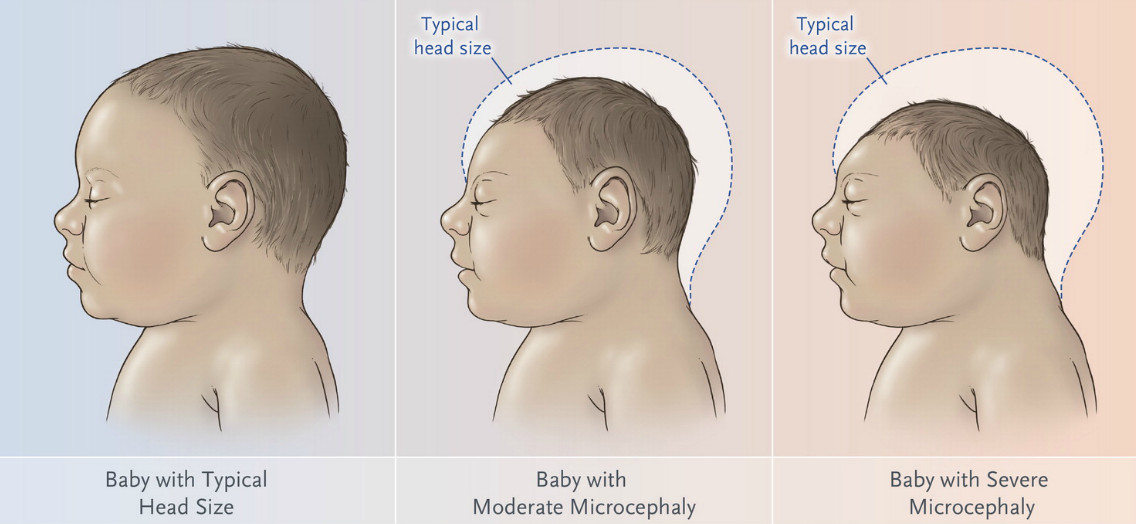
  • Because fetuses as young as 19 weeks old whose mothers become infected with the Zika can suffer a very rare type of brain damage that is so severe, their brains stop growing and so do their skulls.  Not only are they born with very small heads, but often the nerves that connect with the eyes and ears do not work properly, they may experience frequent or constant seizures, and they may be unable to move their arms and legs properly.
  • This condition is called microcephaly (very small head). There is no cure. 
  • If a pregnant woman gets the Zika, how likely is it that her unborn child will get the microcephaly?  Experts aren't sure.  Right now, their guesses are anywhere from 1 to 5 percent of pregnancies with Zika resulting in microcephaly. 


This is Sophia. She is 2 weeks old and she has microcephaly. She's having a nap before her physical therapy session at a hospital in Brazil.
(Photo by Felipe Dana from the AP, sourced from Stat)

  • Sometimes the babies of Zika-infected mothers are born with other types of brain defects including Guillain-Barre syndrome. In this lovely scenario, a baby's immune system will attack its nerves that control muscle movement, pain, temperature, and touch. Results can range from persistent tingling to loss of movement to paralysis and difficulty breathing.  It is possible to recover from this syndrome, but it is not fun and for babies it can be very dangerous.
  • If you're a man, you should care because it's possible you could transmit the virus sexually.  More often, the virus is transmitted by mosquito bites, but somewhere around 10% of cases have been transmitted through sexual contact.  Vaginal and anal sex are more likely sources of transmission than oral, but transmission by oral sex is still possible.
  • There is no vaccine for the virus, no way to stop its activity once its infected someone.  If you've got the Zika, the only thing to do is let it run its course.
  • The good news is that if a woman has had the Zika and recovered, and the virus has left her bloodstream, and then she gets pregnant, the baby will not be affected.  She will have developed an immunity to the virus.

PREVENTION IS KEY 

  • Even though it is beneficial to be immune to the Zika virus, researchers and medical professionals certainly do not want people going around trying to infect themselves so they become immune.  There have been too few cases for researchers to be certain you might not be exposing yourself to some as-yet-unknown risk. Making yourself sick on purpose is just asking for trouble.
  • The best way to protect yourself against the Zika is to
    • try to avoid getting it in the first place
    • try to avoid passing it on if you've got it
  • Avoiding getting the Zika means
    • Controlling mosquito populations outside your house.
    • Don't give them a place to breed. Since mosquitoes lay eggs in or near shallow water, make sure you don't have places where standing water can develop and be accessible to mosquitoes.  This means
      • Get rid of or cover things like birdbaths, flowerpots, old buckets or trash cans, etc.
      • Tightly cover water barrels
      • If a container cannot have a lid, cover it with wire mesh with holes smaller than a mosquito. 

This is just the sort of environment mosquitoes love. Standing water, a perfect place to lay their eggs.
(Photo by Sam Hames on Flickr)

    • They also tend to hang out in dark, humid places. Spray outdoor insect spray in likely areas, such as under patio furniture, under a deck, behind the garage, etc. 
    • Controlling mosquito activity inside your home
    • Install or repair screens on windows
    • Use air conditioning if possible
    • Drape a mosquito net over your bed 
    • Protecting your person from mosquito bites
    • Wear long-sleeved shirts and long pants
    • The above ingredients are listed in order of effectiveness (DEET is the most effective).   
    • * = don't use on children younger than 3 years old
    • Don't use insect repellent at all on babies younger than 2 months old. For them, make sure their clothing covers all exposed skin and keep their cribs and strollers covered with mosquito netting.
  • Avoiding transmitting the Zika means
    • For 3 weeks after having been in an area where the Zika virus has been identified,
    • Practicing safe sex by using condoms.
    • Or don't have sex at all. 
    • Following the steps listed above to control mosquitoes and to try to keep from being bitten and thus infecting a mosquito who could pass the virus on to someone else.
  • Where have Zika cases been identified?
    • This information changes frequently.  As of this writing, areas range from Mexico and Central and South America, to Egypt and several countries in Africa, India, Pakistan, and Indonesia, and several countries in Southeast Asia.
    • It has recently also been identified in most states in the US.  Utah is the first state to have seen a fatality from Zika.


WHAT IS ZIKA ANYWAY?

  • The Zika virus has been known to exist since the 1940s when it was first isolated from a rhesus monkey in the Zika Forest in Uganda -- hence the name. 
    • (Originally it was spelled Ziika. The word means "overgrown.")
  • The virus was first identified in a human in the 1950s.
  • It is in the same family of viruses as dengue fever and West Nile and some 60 or so other viruses.
  • Incidence was restricted mainly to Africa and tropical parts of Asia.  But in recent years, the virus has spread rapidly.
  • Reasons for the virus's rapid transmission may include
    • increased global travel
    • urbanization (more people moving into mosquito-rich areas)
    • climate change (more areas becoming warmer and friendlier to mosquitoes)
  • It seems that the number of microcephaly cases have risen because the number of Zika cases have risen to a correspondingly increased extent. 

(Image from the New England Journal of Medicine, sourced from Vox)


As the Wesley twins said, much to their own surprise, "Safety first."

Or as one infectious disease specialist who's been studying the virus said, "It's not a verbal exercise. It's people's lives. Babies' lives and welfare are at stake."


Sources
Centers for Disease Control and Prevention (CDC), Zika Virus -- a multitude of resources here
The New York Times, Short Answers to Hard Questions About Zika Virus, June 24, 2016
Alana Romain, Romper, Does a Zika Mosquito Bite Look Different than Normal Mosquito Bites? [No] March 16, 2016
PBS Newshour, How many Zika-infected infants will develop microcephaly and other FAQs, May 20, 2016
World Health Organization (WHO), The history of Zika virus
The Verge, Climate change and urbanization are spurring outbreaks of mosquito-borne diseases like Zika, February 10, 2016

Sunday, January 3, 2016

Apple #723: Dementia

I've been looking up all kinds of thing about dementia and Alzheimer's Disease because it seems more and more apparent that my family is looking down the long barrel of what is most likely Alzheimer's where my mom is concerned.  She hasn't been officially diagnosed as having that (it's unfortunately common for a doctor not to tell a patient when he or she may have Alzheimer's because it's an upsetting diagnosis), so I could be wrong (but I don't think I am), or maybe I'm speaking too soon.  But I don't think it's ever too soon to get information.

And I figured, as long as I'm looking up all this stuff, why not share some of what I'm learning with you.  Since we're all living longer, chances are better than good that most of our parents will experience some form of dementia at some point.  So while I'm one of the first among my friends to be facing this in my parents, I'm sure that many of my friends will soon be entering this territory too.

It's not really a fun place to be.

But information helps, as much as anything can.  It helps to understand what's going on and why, helps to know that the changes that are happening are not the result of some conscious decision but are rather the result of some uncontrollable change in brain biology.  So that's why I keep looking up stuff, and that's why I think it might be helpful for someone else to read what I'm learning.

One of my big questions is, what is dementia, exactly?  People keep throwing this word around and I'm having a hard time getting a fix on what the word actually means.  I get especially confused by how people use the word in relationship with Alzheimer's.


A good visual representation of dementia
(Image from the Royal College of Speech & Language Therapists, London)


Definition of Dementia

  • A lot of sources will say that the difference between dementia and Alzheimer's is that dementia is a generic term that refers to a set of symptoms, and Alzheimer's is a specific disease.  But then when they further describe dementia, they describe it as being characterized by symptoms, so I get confused.  
  • One site calls dementia a syndrome, and based on what I've read elsewhere, I think that's probably the best way to think of it.  So let's go with that, and I'll break it down further from there.
  • Dementia is
    • A generic term that may apply in several circumstances
    • A syndrome, or a combination of symptoms that together indicate dementia
    • A term used to describe a significant loss of cognitive function 
  • In order for the symptoms to add up to dementia, at least two of the following have to be present:
    • Memory loss
    • Difficulty finding the right words
    • Inability to focus or pay attention
    • Problems in logical reasoning
    • Problems with problem-solving, such as planning or organizing or carrying out complex tasks
    • Difficulty with physical coordination and motor functions
    • Disorientation issues, such as getting lost
    • Problems with visual perception
  • The symptoms need to be significant and lasting, as opposed to occasional or passing or temporary.
  • The symptoms do not resolve with changes in medication, or the cessation of an illness or an infection.


Another problem with trying to understand dementia is that everybody's list of symptoms is slightly different.  But the major elements are often the same, and they all indicate significant, noticeable cognitive impairment.
(Image from LifeStyle Options, Inc.)

  • Additional symptoms may include psychological changes, such as
    • Inappropriate behavior
    • Agitation
    • Paranoia
    • Hallucinations 
  • A lot of people equate dementia with aging, or they think it's just a normal part of aging.  This is partly because it has become so common.  About 1% of people aged 65 have some form of dementia.  In people age 80, it's around 11%.
  • That may not sound like much, but in 2012, about 41 million people in the US were 65 or older.  Applying those percentages of frequency of dementia within certain age groups, somewhere between 410,000 and 4 million people had dementia in 2012.


Somewhere between 1% and 10% of people over 65 have dementia.  Looks like there are about 30 people in this photo.  Taking this as a representative sample of the general population, 1 to 3 of the people in this photo would have dementia.
(Photo from the Town of Queensbury)

  • So, dementia is common, but that doesn't mean it's normal.  In fact, dementia is a sign that something is wrong. Pain is something else that's common, but just because lots of people have pain for any number of reasons, that doesn't mean nothing's wrong.  In fact, pain is the alarm bell that something is wrong.  Same is true of dementia.

Causes of Dementia

  • A lot of different types of illnesses or conditions can cause dementia.  These illnesses or conditions each have their own suite of cognitive symptoms.  There is a lot of overlap in the symptoms of each of the causes, but the causes are often distinguished from each other in terms of which symptom appears first, or which of the symptoms is most prevalent.
  • Things that can cause dementia:
    • Alzheimer's Disease -- the most common cause of dementia
    • Lewy Body Dementia  -- similar to Alz in terms of the protein bodies in the brain, but with this, short-term memory is OK, but you get hallucinations.
    • Parkinson's Disease --  primarily characterized by muscle rigidity and tremors, plus the dementia
    • Vascular Dementia -- in most cases, this means caused by a stroke.  This kind of dementia looks very similar to Alzheimer's, and some people may have both. Some symptoms that may be different than Alz include laughing or crying inappropriately, loss of bladder or bowel control, or hallucinations. Second-most common cause of dementia.
    • Other medical conditions such as alcoholism, thyroid disease, thiamine deficiency, electrolyte imbalance, or HIV infections
    • Drug interactions or toxicity
    • Brain injuries or illnesses other than stroke, including infections like meningitis or syphilis or fluid build-up in the brain, or brain tumors, or Pick's disease which is due to atrophy of the brain.
Of the possible causes of dementia, Alzheimer's is the most common
(Pie chart from Cargo Collective)

  • Isn't this fun? All the things that can go wrong with your brain?  Egad. 
  • The point is, if you think you are experiencing dementia, or if you think someone you know has dementia, it's important to get thee to the physic to get it diagnosed.  Dementia means there's a problem in the works someplace, and it's important to identify the cause of the problem.
  • In some cases, the cause of the problem is really depressing and not very treatable.  But in other cases, it is treatable and it's important to act sooner rather than later.  And for those conditions which aren't treatable, it's helpful to start making plans sooner rather than later, so nobody's scrambling later on.
  • Also, if you need to start looking for resources to help you help someone who has dementia, the Area Agencies on Aging is a good place to start.  This agency has offices located throughout the country, in accordance with a 1973 federal law that says we have to do more for our aging family members.  They are there to help people of all income levels find resources and support for the challenges we all face as we age.  They have to be there, and they have to help, so take them up on it.

Sources
WebMD, Dementia and lots of other related pages
Mayo Clinic, Dementia
Alzheimer's.org, What Is Dementia? and lots of other related pages
Prevention Magazine, 55% of Doctors Keep a Patient's Alzheimer's Diagnosis Secret, April 1, 2015
Alzheimer's Disease International, The Prevalence of dementia worldwide
Ortman, Velkoff, and Hogan, US Census Bureau, An Aging Nation: The Older Population in the United States

Tuesday, May 26, 2015

Apple #712: Brain Fog after Exercise

Earlier today, I played tennis.  Not a real game, just hitting the ball around with a friend for about an hour and a half.  This is the second time I've played tennis in I'm not sure how long.  Twenty years?  I'm embarrassed that such a number like that exists in my life.  Anyway, it's been a very long time, and I am woefully out of practice.

Also, as my body is reminding me, it is not used to being so active & athletic.  Most of the time, my exercise consists of hour-plus-long walks in the woods or equally lengthy bike rides.  Neither of those things is as challenging as running down a little bouncy yellow ball and trying to hit it back over the net with speed and accuracy.  Or so my aching thighs and biceps are telling me.


Heather Watson, at Wimbledon 2014. I would like you to notice how muscular her arms and legs are. This is how fit you have to be to play tennis well. This is not me.
(Photo from Celeb Mafia)


The last time my friend & I played, it was a pretty hot day.  When I got home, I took a shower and passed out for about three hours.  Wiped. Out.  Today, it wasn't that hot, so I thought I wouldn't find myself so completely out of commission afterward.  And that was true; it wasn't as bad.  No total blank-out sleep, but I did take a couple of naps.  What's relevant to this here Daily Apple is that I have felt fogged in the head most of the day.


One of many depictions of brain fog. This one, made with Microsoft Paint, seems especially apt.
(Image by Lydia King)


I've been trying to settle on a Daily Apple topic for, what, three hours now.  I've read news articles, found a couple of things that seemed like good candidates, read a page or two about the topic, but just could not see how I could contribute anything further to the information available.  I chalk this up to the brain fog: it's not that I doubt my abilities, I'm just having trouble visualizing what I could do.


This one might be my favorite.
(Image from Tara Skye Golden)


I looked up brain fog and exercise, and I got a lot of flotsam & jetsam.  It takes some thinking at a higher level than my brain wants to do right now to sort out what's relevant and useful from what's not.  But I'll give it a bit of a go.  We'll see what comes out.

  • Brain fog is not any kind of official medical term.  But it's something most of us have experienced at some time or other.  It can be characterized by
    • inability to focus or concentrate
    • poor memory retention or recollection
    • difficulty learning new information
    • you tend to view a task as more difficult than you otherwise would
    • difficulty expressing thoughts articulately
    • disorientation
    • lack of mental clarity
  • In other words, your brain just won't work as well as it normally does.


(Image from Chronic Curve)

  • All kinds of things can contribute to brain fog.  Here are some of those things.  I will alphabetize them, because I'm not a medical-enough person to tell you which causes are more or less common, and the alphabetizing will be a good exercise for my cloudy cortex.
    • ADHD
    • Anxiety
    • Brain injuries or brain tumors
    • Chemotherapy
    • Chronic fatigue syndrome
    • Dehydration
    • Depression
    • Diabetes
    • Electrolyte imbalance following exercise
    • Fibromyalgia
    • Food allergies, especially gluten
    • Hormonal imbalance
    • Low blood sugar
    • Lack of sleep (guilty)
    • Lyme's disease
    • Lupus
    • Menopause 
    • Multiple sclerosis
    • PTSD
    • Schizophrenia
    • Stress
    • Substance abuse or withdrawal from substance abuse
    • Thyroid disorders
  • I like the alphabetical list because it puts big scary things next to fairly common things -- schizophrenia next to stress, for example.  I find it interesting that common things like dehydration or low blood sugar can have an effect that is similar to one of the effects of a big scary thing like schizophrenia or a brain tumor.
  • That said, I'm sure the level or duration of brain fog probably does differ, depending on which of these causes is involved.
  • I suspect I'm not saying this right.  Hopefully you will know what I mean.


(Image from As My Body Attacks Itself)


  • One of the main points here is that a lot of us experience brain fog, for any one of a multitude of possible reasons.  
  • In my case, I've got the fog probably because of a suite of three or four causes: after-effects of exercise, dehydration, and lack of sleep.  I would kind of like to go to bed right now and sleep for a day or two.
  • Here's one interesting thing I read about dehydration: some researchers studied what would happen to women who exercised and got dehydrated versus women who exercised and did not get dehydrated.  The researchers tested the women's mental abilities before and after exercising to determine how their brain function was affected. 
  • The women who were dehydrated reported
    • less vigor
    • more fatigue
    • increased perception of task difficulty
    • headaches that were more severe than those not dehydrated
  • The other interesting tidbit is that the women who were dehydrated didn't know that they were.  This doesn't surprise me because I remember reading elsewhere that it doesn't take much for your body to be effectively dehydrated.  The symptoms of dehydration can be very severe -- think of the bearded thirsty guy crawling through the desert -- but you can be a very long way from that point and still be dehydrated.


Thirsty? If so, take a tip from this cat and have a drink of water.
(Photo from VetriScience Laboratories)

  • Signs of mild dehydration are:
    • Thirst
    • Dry, sticky mouth
    • Sleepiness
  • (That last one is especially interesting in this context, isn't it?)
  • I remember reading some doctor saying somewhere, "If you're thirsty, you're dehydrated."  Surprising, but true.
  • But I want to know more about how or why exercise reduces your mental capacity.  
  • A lot of guys who lift talk about "CNS fatigue" or having trouble paying attention the day after a heavy lifting session.  
  • Some say they try to avoid it by taking naps before and after a lifting session, or they eat more (there's a debate as to whether proteins or carbs will be more helpful in this situation).  
  • So it's very much a real thing. But why does it happen?

 
(Image from Alaska Health Improvement Center) 

  • [looks up more stuff]
  • Well, I can find all sorts of things that say exercise is good for the brain.  Stimulates blood flow, which means more oxygen gets carried to the brain, which encourages mental function and also possibly the generation of new brain tissue.  Stimulates endorphins, which reduce levels of depression, and can give you a "runner's high" feeling afterward.  Improves cardiovascular function, helps control blood sugar levels, as well as of course helping to burn fat and reduce weight.
  • I can also find things that say that too much exercise, as in people who train intensely for really long periods of time -- people training for the Iron Man, for example -- can be bad for you.  Your body can't cope with the amount of stress all that exercise is putting on it, so the immune system gets overtaxed.  Regular high-intensity exercisers may find that they're getting colds and flu a lot, or they're developing problems with their heart rate, or they may even suffer a stroke.
  • I am nowhere near having that kind of exercise problem. 


Exercising so hard this happens can actually be bad for you.  It can make your body vulnerable to illnesses and injuries.
(Photo originally from Lava Magazine, sourced from Iron Man Finish Line Collapse)

  • Ah, here's one article.  "Researchers suggested that too much exercise may cause the brain to “max out” in the production of BDNF [brain-derived neurotrophic factor] and neurons, and this may prevent learning."
    • (BDNF, by the way, is a protein that supports the health of synapses in the brain and also protects and helps grow new neurons.)
  • In other words, the more physically fit mice had reduced mental capacity compared to the less active mice.
  • This runs counter to expectations because most of the time, exercise increases your mental acuity.  But that's in the short-term.  This study was looking at bred-into-them traits over the long term. 
  • So this study doesn't really answer my question. But maybe the business of there being an overload of BDNF may apply in the immediate short-term, too.


Brain fog, someecards style
(Image posted somewhere on this Beat Brain Fog Pinterest page)

  • [looks up more stuff.]
  • OK, I can't find anything that tells me what I want to know.  Even so, I think I've read enough to formulate a theory of my own.  Here goes.
  • A moderate level of exercise is good.  Gets all the juices flowing, improves your mood, sharpens mental abilities -- in general does all sorts of wonderful things for your mind and body.
  • But when you do too much exercise, then you can run into problems.  This can mean too much exercise over the long term, or too much exercise in a single session.
    • Lots of those body builders report that if they have a really intense session one day, whether or not they get the brain fog the next day depends on how in shape they are already.  If they've kind of fallen out of shape for a while and then go back to it hard, they get the brain fog.  Or if they're at a good, consistent level of lifting but they don't give their body sufficient recovery time in between sessions, then they'll get the brain fog the next day. 
  • And here's my theory about why this happens.  This is completely and totally my theory -- not even that, it's actually only a hypothesis. And not a scientific one, at that.  
  • I'm thinking that exercise that reaches a level of intensity that your body is not prepared for because of factors such as
    • not enough sleep
    • not enough carbs to fuel the body & the brain
    • your body just isn't used to that much exercise
  • then your body doesn't have enough juice to power both the body and the brain.  So your body makes some tough decisions about where to divert the resources it does have.  And since it's always going to choose that which is absolutely necessary for survival first, it's going to feed the most basic functions first and let the nice-to-have stuff slide for a bit.  Higher brain function probably falls into the nice-to-have category as opposed to, oh, keeping your blood flowing and your heart beating, regulating your body temperature, sending food to your cells, and so on. 
  • So while your muscles are twitching and your heart rate is returning to normal and your muscles are trying to rebuild, your brain is temporarily left in the zombie zone.
  • So, what to do if you find yourself in the post-exercise brain fog?  Here are my suggestions:
    • drink water
    • sleep
    • eat
    • drink water
    • sleep
    • eat
    • rest
  • That's all I've got.  Thank you and good night.


This is more like me. Not enough sleep.  Cause I got stuff to do. 
(Photo from Inquisitr)

Monday, September 17, 2012

Apple #603: Concussions

A couple weeks ago, I fell off my bike.  I was standing up & pedaling hard to get up some speed, changing gears, a wall was approaching faster than I realized, I tried to swerve, and I lost my balance and bang, over I went.  The fall itself seemed to happen in slow motion, and I could see that I was going to hit my chin on the pavement.  I tried to keep that from happening by bracing myself with my hands (which had already slammed hard onto the pavement), but the force of my fall was greater than my strength and my chin smacked with a bang on the cement.

I was afraid my teeth were going to get broken, but fortunately that did not happen.  The impact jarred my jaw pretty hard so that it hurt to work my jaw for some time afterward.  My chin started swelling up and later developed quite a dark bruise.


Chin bruise, courtesy of a fall off my bike. It got darker over the next day or two.  What's up with that weird downturn on one side of my mouth? I look like I've had a stroke or something. Fortunately, that is not the case.
(Photo by the Apple Lady)


Throughout the course of that day, I developed a headache that got stronger and stronger.  I kept taking ibuprofen, but it didn't seem to make a dent in the pain.  Usually one pill does the job, but I took four over the course of a few hours and I didn't notice any difference.  That's when I started to wonder if I'd gotten a concussion.

Naturally, as the Apple Lady, I had to find out about concussions.

  • A concussion can happen after getting hit hard in the head. But a strong blow to the body can result in a concussion, too.
  • Your brain is like Jell-O. It's soft, a little jiggly, and it doesn't stand up very well to direct, physical pressure.
  
Jell-O. Your brain is about this defenseless inside the skull.
(Photo from Allee Willis)

  • The brain is protected from the outer world by the skull, but it needs still more protection than that. Within the skull, the brain is cushioned by the fluid that surrounds it, which keeps the brain from banging against the hard bone that is your skull.  
  • If you get hit hard in the head, though, the blow can cause the brain to hit bone, and the Jell-O brain can be affected as a result.  That's a concussion.
  • You don't have to be hit in the head to get a concussion.  If you get hit in the body hard enough that your head whips forward hard and suddenly, your brain can be flung against the inside of your skull and get injured that way.  It's the same kind of injury as occurs in shaken baby syndrome, though usually less severe.  In fact, the word concussion comes from the Latin concutere, which means "to shake violently."

What Happens When a Concussion Occurs
  • As a result of the impact, your brain is shoved against the inside of the skull (this is called the coup). Then when your head snaps back, the brain hits the opposite side of the skull (contrecoup). 


The coup -- first impact of the brain against the skull -- and contrecoup -- the second impact against the skull on the opposite side of the brain.
(Image from KIN450 Neurophysiology)

  • So you get two bruises on opposite sides of your brain.  The size and severity of the bruises depend on the force of the impact.
  • If the impact is a complex one with lots of jostling and motion in many directions, like, say, while getting tackled by lots of people during a football game, the impact of the brain against the skull may also be more complicated, with rotational movements and shearing forces. It's usually in the more complex type of impacts that loss of consciousness occurs, but a single, direct impact can cause loss of consciousness too.
  • You might think bruises don't seem too bad, but your brain reacts to bruising with reversible but immediate temporary paralysis of the nervous system.  Everything shuts off for a second. This is a protective mode, but for that brief shut-off time, there is no one manning your ship.  The brain controls your breathing, your heart rate, all kinds of stuff you need to survive.  For those few milliseconds or moments, all that is shut off.  You do not want this to happen for very long, or very often.
  • Along with the bruises comes swelling, which first of all means pain, but it also means restricted blood flow, which means a reduction in oxygen, which means a reduction in brain function.
  • You can also get torn axons, which are nerve fibers that carry messages in the brain. If those are torn, the messages won't get through. Unlike lots of other types of tissue in the body, axons do not heal themselves back together. Once they're torn, that's how they'll stay.
  • If this isn't enough to convince you that concussions are serious, here's more.  As we learned in a previous entry, bruises are bleeding that's contained under the skin. If the impact on the brain is severe enough, those bruises can rupture and then you've got bleeding on the brain. You really do not want this because a) the blood carries oxygen which the brain desperately needs to do its thing and if the blood is leaking out, it's not getting that oxygen and b) bleeding can put pressure on the brain within the skull and with enough pressure, the whole thing will stop working and you can die.
  • Now that I've scared the pants off you, I will say that bleeding in the brain is not at all common with a concussion.  Most of the time you get the two bruises.  But those bruises mean the brain has been injured, and that's not something to take lightly. Capice?

How Do You Know if You've Had a Concussion
  • It's not always obvious if a concussion has occurred. A concussion might cause you to pass out or blank out, or it might not.  Symptoms can be mild or severe. They can last for hours, or days, or weeks, or months, depending on the severity of the injury, or how many concussions you've already suffered.  
  • It's also possible that symptoms won't appear right away but develop after some time has passed.
  • There are four types of symptoms of a concussion.  Chances are, if you have a concussion, you won't experience all of these symptoms, or maybe even half of them.  But if more start popping up, or if any of them get worse over time, then absolutely go see a doctor. 

  
A headache was the only symptom I had.  I put a bag of frozen peas on my head for a while, and that helped.
(Photo from LAdodgertalk)

  • 1. Physical
    • Headache
    • Fuzzy or blurred vision
    • Nausea or vomiting
    • Dizziness
    • Sensitivity to noise or light
    • Ringing in the ears
    • Balance problems
    • Feeling tired, having no energy
  • 2. Thinking or Remembering
    • Difficulty thinking clearly
    • Feeling slowed down
    • Difficulty concentrating
    • Difficulty retaining new information
  • 3. Emotional / Mood
    • Irritability
    • More emotional
    • Unexplained sadness
    • Nervousness or anxiety
  • 4. Sleep
    • Sleeping more than usual (unintentionally so)
    • Sleeping less than usual (unintentionally so)
    • Difficulty falling asleep
  • If you think you've had a concussion, the primary and most important thing to do is go see a doctor.  The doctor will conduct a lot of simple tests to determine whether you've had one, and then will determine what kind of rest or therapy you need.
  • The second most important thing is don't immediately go play a demanding, contact sport where you could get injured further.  Your brain is a delicate instrument that you need to survive. You've already subjected it to some damage. Give it some time to recover before you go slamming it around again.
 
  
In football, most concussions occur due to impacts from the side and to the lower part of the face, such as in this hit between two high school players in Pennsylvania.
(Photo by Christine Baker, The Patriot-News)

  • If you do go back to playing your sport before your concussion has healed and you re-injure your brain, you'll have what's called Second-Impact Syndrome. Basically it means all the symptoms of a concussion can be worse, but you're also more likely to suffer a permanent disability, and even death.
  • When you go see the doctor (you see how I'm assuming that this is a given?), the doctor will tell you how long you have to wait before you can play your sport again.
  • The doctor will also tell you if you need to stay in the hospital for observation, or if you need to have someone monitor your sleeping and wake you up if you've been asleep for too long and also help watch for any changes in your behavior or mood, or if monitoring your own symptoms is sufficient.

  
Some of the tests a doctor will conduct will test your reaction time, such as this simple test designed by a teen-age named Ian Richardson.
(Photo from the University of Michigan, sourced from NPR)


How to Treat a Concussion
  • You can't exactly put a Band-Aid on your brain, so the best ways to help your brain heal all require patience.
  • The best thing to do is to rest.  This might mean not playing the sport in which you were injured. It might mean giving yourself a break from doing really demanding mental tasks. It might mean getting more sleep than usual.  It might mean giving yourself a break from using the computer (!) or playing video games.
  • You can take Tylenol to help with the headaches. Aspirin and ibuprofen aren't recommended because if your brain is on the cusp of bleeding, either of those could push it over the edge.
  • Don't take any other pills unless the doctor prescribes them. Again, your brain is a sensitive creature.  Pumping it full of stuff when it's injured is not doing it any favors.
  • The same goes for alcohol or illegal drugs.  Don't go pouring those things onto the problem.  You'll only make it worse.

All right, now that I've read and learned all this, do I think I sustained a concussion?  At first, when I saw all the symptoms, I didn't think so.  The only symptom I experienced was that headache.  I didn't have any of those other things.  But then I remembered what that headache felt like.  It felt different than a usual tension-type headache.  It felt -- this is going to sound strange -- hot, like an electric throbbing, as well as painful.  Even more tellingly, it started at the top of my head and radiated down.  That spot where it started was almost exactly opposite of where I hit my chin on the cement.

So I think I did have a concussion.  The headache was gone the next day, thankfully, and I haven't had any other symptoms since then.  If the headache had persisted another day, I would have gone to the doctor.  I maybe should have even gone the day I fell, but it didn't even occur to me that I might have had a concussion until several hours into the day.

Although a helmet would have been completely useless in this situation, I am now wearing my helmet when I ride my bike.  (Stupid and dorky-looking though that thing is.)  I like my axons intact.


This is how happy your brain will be if you wear your helmet.
(Photo from Kids Bike Helmets)


Related entries: Bruises; Aspirin

A note to my readers: While I dearly cherish any comments posted to my blog, if you ask me whether you've suffered a concussion, I cannot help you. I'm not a doctor and I can't diagnose these things.  I can only provide you some information to start with.  If you think you may have suffered a concussion, go see the person who is best equipped to help you: a doctor.


Sources
CDC, Tramatic Brain Injury, What are the Signs and Symptoms of Concussion?
WebMD, Traumatic Brain Injury, Concussion - Overview
Mayo Clinic, Concussion
brainline.org, What Happens When a Brain Bleeds? and Facts About Concussion and Brain Injury
Patrick J. Fernicola, M.D., Concussion: When the skull just isn't protection enough
Richard Smayda, D.O., "What happens to the brain during a concussion?" Scientific American, February 3, 2012
Nerve Regeneration, BI 108, Brown University

Sunday, November 20, 2011

Apple #559: Getting the Wind Knocked Out of You

A week or so ago, a bunch of friends and I were watching a football game. After one play, one of the players was lying on the field not moving for a few moments. It turned out not to be serious, and we speculated that maybe he'd just had the wind knocked out of him. Then we realized we weren't sure what causes that.

What exactly happens when you get the wind knocked out of you?

  • Basically, your diaphragm stops working correctly.
  • Normally, your diaphragm, which is the muscle beneath your lungs, contacts to pull air into your lungs and relaxes to push air out.
 
Diagram of the diaphragm. This seems the opposite of what you'd expect, but when the diaphragm contracts, the area in your chest enlarges and allows air to rush in. In other words, you inhale. When the diaphragm relaxes, the chest cavity gets smaller, air rushes out, and you exhale.
(Photo from Merck Manuals)


Here's the motion of the diaphragm in a video:


  • The diaphragm is controlled by a bunch of nerve cells called the solar plexus. Medical professionals call this bunch of nerves the celiac plexus.
  • The solar / celiac plexus lives pretty much in the central-most part of you. It's below the xiphoid process, behind the stomach, but in front of the aorta (major artery from the heart). In other words, it's tucked away in that soft spot beneath where your ribs open out.
  • A sudden, strong blow to your solar / celiac plexus shuts off those nerve cells which in turn stuns the diaphragm muscle, and it spasms.
  • I always thought "spasm" meant that a muscle flutters or twitches. Nope. "Spasm" means that a muscle suddenly and involuntarily contracts and stays that way for some time.
  • So, when your diaphragm spasms, that means it zaps into contracted mode and it stays that way. It's stuck in the position that pulls air into your lungs.
  • That's another weird thing about all this because when you get the wind knocked out of you, it feels like you can't get any breath into your lungs, can't inhale. But your diaphragm is stuck in the inhale position.
  • But since it's stuck there, it can't contract any farther to bring in more air, nor can it relax to push air out, allowing you to inhale new air. So it feels like you've got no air in there.
  • The only thing to do when you're in this situation is wait for your diaphragm to relax out of its spasm -- which it will do shortly, though when you feel like you can't breathe, "shortly" will seem like a long time.
  • You can help your diaphragm relax by lying on your back, bending your knees and pulling your legs up to your chest.
  • Then take long, slow, calming breaths. As your breathe, concentrate on making the breathing happen. This will help get your diaphragm working again as well as helping you to calm down, and it will also get more oxygen circulating so your whole system will start to feel better.


It happens to animals, too. Here, one cat knocks the wind out of the other.


Sources
Nemours, KidsHealth, Getting the Wind Knocked Out of You 
Straight Dope, What happens when the wind gets knocked out of you? and message board on the subject 
Motorcross Action Magazine, Just Breathe: Getting the Wind Knocked Out of You 
SportMedBC, Getting the Wind Knocked Out of You 
Merriam Webster, solar plexus and celiac plexus

Sunday, September 25, 2011

Apple #549: Losing Your Voice

So I went to a really great concert this week. Whoo, that was good. I sang along with just about every song, and since so many people were there and the whole thing was generally loud and huge and a whole lot of fun, I was singing more loudly than I realized. When the concert was over, the lights came up and everyone was leaving and talking at more normal volume levels, and that's when I discovered that my voice was hoarse and cracking. The next morning when I woke up, I tried to speak but no sound came out except a whisper.

That lasted only a couple of hours. But I'm a bit proud of this, I have to say. That's the first time I ever lost my voice because I was so into a concert, I was singing and yelling and whooping like mad.

Dave swears a lot in this. That's the way he is.


But of course I had to know more about losing your voice.
  • The medical term for losing your voice is laryngitis.
  • I had always thought of laryngitis as something official and medically serious that happened in connection with some sort of illness. Duh me. It's far more general than that. Any time you lose your voice, regardless of the reason, it's laryngitis.
  • You lose your voice because the vocal cords in your voice box, or larynx, become inflamed. The word "laryngitis" literally means "larynx, swollen."

As this diagram shows, your larynx is at the top of your trachea, or wind pipe. It's not connected up with your esophagus but sits next to it.
(Image from HowsHealth)


From the top down, the larynx looks rather like a vagina. So you may be rather startled by these images, but relax. It's just the larynx.


This is the best image I found of what laryngitis looks like compared to vocal cords that are healthy. The vocal cords turn red and swell up.
(Diagram from emedicinehealth)


Here's a video that shows how the larynx and vocal cords works, and what happens to them when you get laryngitis. (I'd embed it here but that's not allowed.)


Of course after I looked at pictures of laryngitis and watched that video, I wanted to know more about how the larynx / vocal cords work in general. So I've got a couple visuals for you as part of that detour.


This seems counter-intuitive to me, but when the vocal cords are open, that means you're breathing and not making any sound through your trachea. When they're closed, that means you're talking or singing.
(Diagram from vocal clinic)


Finally, because I'm fascinated by the whole vocal cord (or vocal fold) thing in general, here's a video of a woman's larynx in action as she breathes and then sings. There's a spot in the middle where all the action stops, but after that, you can see what her vocal folds like like as she sings the National Anthem. It's pretty amazing that such sound comes out from such a little thing.


  • Okay. Now back to the more specific topic of laryngitis.
  • By the way, you don't have to lose your voice entirely to have laryngitis. Hoarseness alone can be an indicator of laryngitis.
  • All kinds of things can cause you to lose your voice:
  1. Overusing your voice, like I did
  2. Cold or flu (this is the most common cause)
  3. Acid reflux
  4. Irritation from smoke or other harsh fumes, or due to allergies
  • By the way, I think someone ought to study Dave Grohl's larynx. He screams like a madman for hours, night after night, and he seems to be completely unaffected.
  • For most people in most situations, the swelling in the larynx subsides after a few days.
  • If the laryngitis lasts longer than two weeks, then it's time to go see the doctor. You may have a viral or a bacterial infection, or some other situation going on that requires further treatment.
  • But if you've lost your voice for relatively minor reasons and you're about as irritated by it as the vocal cords are themselves, here are some tips.

What Not to Do

  • Losing your voice is common enough that a there a lot of suggestions out there for home remedies. Many of them don't do anything or they may even make the situation worse.
  • Lemon -- People often recommend drinking hot tea with lemon, or warm water with lemon, or sucking on lemon lozenges. Lemon is an acid. Acids irritate things, including vocal cords. Acids also contribute to acid reflux, which is the most common cause of chronic laryngitis. If you've lost your voice, avoid lemons and lemon juice.
  • Hot tea -- This is another acid. Even the much-lauded green tea. Not a good idea for an inflamed larynx.
  • Acids in general -- Lots of foods out there are acidic, and it's a good idea to avoid these if you've lost your voice. Some other acids to avoid are any citrus fruits, tomatoes, and -- sob -- chocolate.
  • Hot toddies -- for those of you younger than 109, a toddy is a warm alcoholic beverage. Some people recommend warm whiskey with lemon (as to the lemon, see above), or warm brandy or rum for laryngitis. Alcohol is a desiccant. That means it will dehydrate you. Anything inflamed will get worse if you take the moisture away. So alcohol is the opposite of what your inflamed larynx wants.
  • Whispering -- Since you can't speak in your normal way, you may be tempted to whisper. But whispering actually puts extra stress on the vocal cords. You're effectively constricting the vocal folds, holding them back out of the way while allowing sound to pass through them. This keeps them from rubbing together, and it dries them out. As we know, dry vocal folds are unhappy vocal folds. So whispering may actually make your vocal cords take longer to heal.
  • Clearing your throat -- Like whispering, clearing your throat puts added stress and vibration on your already inflamed, sore vocal cords. You may be tempted to do it as a way to make the hoarseness go away. But it will only hurt, not help.

What Makes No Difference
  • Slippery elm -- this is one of those botanicals that people have recommended for years to treat sore throats or laryngitis. It's essentially gooey, and people think the gooiness helps coat and soothe the throat. But there is so far no scientific evidence that shows this helps at all. There's no evidence that shows it hurts, either. So it's a placebo.

What Does Help
  • Drink lots of water -- yes, I know, you hear this so often it's boring. But it's true. Good old water is plain good for you. Inflammation is often caused by or characterized by not enough moisture. So an inflamed larynx will be helped and soothed the most by giving it all the nice, soothing, life-giving moisture you can: water. As an added bonus, if there's anything floating around in there like smoke or bacteria or some other irritant, the water will help flush that out.
  • Use a humidifier -- a humidifier or a vaporizer are other good ways of getting more of that soothing, life-restoring moisture to the larynx. If your laryngitis is due to a cold, the extra humidity will help break up the stuffiness in your sinuses.
  • Don't speak -- your vocal cords are tired. They've been overstrained, or overloaded by some external badness like a cold or an allergen or smoke. They need to rest. Don't speak. Let them sleep.

Take Helen's advice.


Sources
WebMD, Laryngitis
Mayo Clinic, Laryngitis
ABC News Cold and Flu Coverage, Losing Your Voice: 5 Myths for Remedies
Vox Daily, Vox Health: The Dangers of Whispering for Your Voice
Anahad O'Connor, The Claim: Whispering Can Be Hazardous to Your Voice, The New York Times, February 7, 2011

Tuesday, July 19, 2011

Apple #537: Heat Exhaustion vs. Heat Stroke

I have a weather band radio in my car, and because of the high temperatures the past few days, it's been warning me about heat exhaustion and heat stroke. The way the automated voice says it, it's more like "heet stROKe and heet egsAUSStion."


Temperature and humidity can work together to make conditions more likely for heat-related illnesses. This chart shows the likelihood of developing heat exhaustion, heat cramps, and heat stroke (a.k.a. sun stroke) as the temperature and humidity levels rise.
(Chart from NOAA's National Weather Service)


The weather warnings have been telling me I should know the warning signs of heat exhaustion and heat stroke, but they don't say what those warning signs are. So I thought I'd find out. And what's the difference between the two, anyway?

  • Heat stroke is much more severe than heat exhaustion.
  • On the less severe end of the spectrum, judging by the description of heat exhaustion, it's pretty easy to get yourself there.
  • I'm pretty sure I've had heat exhaustion several times. Though it's happened to me quite a few times, I remember each one of those episodes. They weren't exactly big fun.
  • I'll start with the least severe of the heat illnesses and work my way up to most severe.

This is a very basic diagram of how sweating works. Your body heats up, either through exercise or through ambient temperature, your hypothalamus tells the sweat glands to start making sweat, and the evaporation of the sweat cools the body. Heat exhaustion and all the heat-related illnesses that follow it are what happens when this process doesn't work right.
(Diagram from by Ka Botzis at picture book)


HEAT EXHAUSTION
  • Heat exhaustion -- or any heat-related illness -- happens when your body heats up faster than sweating can cool it down.
  • If you're exercising or working in the hot sun, or even if you're in a very hot environment like a hot car or a stuffy, closed-in apartment, your body temperature might rise faster than it can cool itself off.
  • Your body also attempts to cool itself by sending more blood toward the skin, where it's more likely to lose heat. This means less blood is going to your muscles and to your brain, which is why you'll feel weak and dizzy or disoriented if you get too hot.
  • The whole thing gets worse if you don't drink enough water. Your body loses a lot of moisture through sweating, and if you don't have enough water coming in to replace that lost water, you'll get dehydrated. Once dehydrated, your body has less fluid available to produce more sweat, your body will get hotter still, and the whole thing escalates.

These guys are a little bit of a special case, but they're still good examples of heat exhaustion. They're all wet because they're cosmonauts whose spacecraft landed in the Black Sea, where they bobbed around for a couple of hours before getting picked up. They've now got heat exhaustion, as evidenced by their red faces, their inability to hold up their heads, their tendency to keep their eyes closed.
(Photo from First African in Space)


  • The CDC says that heat exhaustion can develop over several days, but other sites suggest that the time-period in which you can get heat exhaustion may be much shorter.
  • Heat exhaustion is the first heat-related illness that you'll encounter.
  • You might experience:
      • dizziness or lightheadedness
      • weakness
      • headache
      • nausea
  • Your skin may feel cool and moist to the touch, but your pulse will be fast and shallow, and your breathing will be shallow too.
    • If this is happening, the best thing to do is
        • Get out of the hot sun
        • Get into a shady or better yet, cool environment
        • Drink cool water or a sports drink like Gatorade
        • Do NOT drink alcohol or caffeine
        • Rest

    On hot, humid days like the ones we've been having lately, a glass of cool water may be your best friend.
    (Photo from Teplok)


    • If you don't take a break when you hit heat exhaustion, your body will continue to heat up and dehydrate, and it will progress to the next stage of heat-related illnesses.

    HEAT CRAMPS
    • Some people classify heat cramps as a symptom of heat exhaustion. Some people say it's its own category.
    • Heat cramps are pretty intense or painful muscle spasms.
    • They happen when muscles are overexerted and depleted of water and essential nutrients.
    • They can occur anywhere on the body, but most commonly they happen in the abdomen, legs, or arms.

    Athletes are susceptible to heat cramps. Andre Agassi, in his autobiography Open, said he'd rather deal with his spondylolisthesis, a degenerative disc disorder in his back which caused shooting pains up and down his spine, than get heat cramps.
    (Photo from National First Aid Training Institute)


    • If you start cramping, stop what you're doing and rest.
    • Drink a cool beverage that has more nutrients than plain water. Light fruit juices or sports drinks are best.
    • Gently stretch or massage the cramping areas, but do so slowly and carefully.

    Shade and rest are your friends, too, when you've got heat exhaustion and heat cramps.
    (Photo from Fooyoh)

    • If the cramps don't subside after an hour, go to the doctor.
    • Even after the cramps have subsided, don't do anything strenuous for the next several hours. Your muscles will need time to rejuvenate, and if you pressure them too soon, they'll go back to cramping again, or you could progress to the next level of heat illness.

    HEAT STROKE

    • This one is bad news, sister. You do not want heat stroke.

    Quick & dirty pictogram of heat stroke. The super-red danger-red may be the best indicator of what heat stroke is.
    (Image from wellness of health)

    • At this point, your body is completely unable to regulate its own temperature. All the body's cooling mechanisms have failed, and the heat simply takes over.
    • Once this happens, your body temperature can rise to danger level extremely fast, within about 10 or 15 minutes.
    • Danger level -- and the main sign of heat stroke -- is a body temperature above 103°F.
    • Some sites say that the danger line is a core/rectal temperature of 105°F. But if I'm feeling this lousy, no way am I putting a thermometer in my rectum to find out just how bad it is.
    • Here's what else may be happening, in addition to the high temperature:
        • Throbbing headache
        • Skin is hot and dry, no perspiration
        • Skin rash (possibly)
        • Rapid, strong pulse
    • From here, if the heat stroke continues, your body may progress along the badness that is heat stroke through the following:
        • Dizziness
        • Nausea
        • Difficulty breathing
        • Confusion or disorientation
        • Hallucinations
        • Seizure
        • Fainting / Unconsciousness
        • Coma
    • If heat stroke isn't treated immediately and as an emergency, it is often fatal.
    • If someone is experiencing heat stroke, call 911.
    • Until the ambulance gets there, do the following:
        • Move the person to a cool, shady area
        • Put them in front of a fan or fan them yourself
        • Loosen or remove clothing
        • Apply cool water to the skin, either with damp sheets or a wet sponge or a spray
        • If they're conscious and can drink liquids, give them cool water
        • Place ice packs under the armpits or at the groin

    This looks like a silly cartoon at first, but it's really the best depiction of how to treat a heat stroke victim. She's put him in the shade, taken off his shirt, she's dousing him with water, and she's fanning him with a little hand-held fan. The only thing that's missing is giving him water to drink. Presumably, she's already called 911.
    (Drawing by Kathryn Born, from the American Academy of Family Physicians)


    • Even when heat stroke is treated successfully, people can still suffer damaging effects from it for several months afterward.
    • Most people who have had heat stroke later experience some form of neurological or mental impairment. Some people experience problems with their kidneys or blood clots. Some experience lung malfunctioning.
    • About 25% of the people who survived heat stroke died within the year.
    • Again, you do not want to get heat stroke.
    • Those who are most at risk for heat stroke are
        • infants
        • elderly
        • obese
        • alcoholics
        • people who abuse prescription drugs
        • people with cardiovascular disease
        • people who have difficulty sweating under normal conditions
    • But anyone can get heat stroke if they don't take care of themselves when the first warning signs of heat illness appear.
    • So the moral is, when it's hot, drink lots of water, don't push yourself too hard, give your body chances to rest and cool off.
    • If you feel that tight hot throbbing in your face, stop what you're doing and help your body cool off.
    • You're not a wimp for resting. You're taking care of your body so it can continue to function at its best.

    See? This is a tough guy. But he's taking a break to stay hydrated. He's also wearing a loose-fitting white cotton shirt, a hat, and sunglasses, all of which will help him stay cool and protected from the heat. Tough guys take care of themselves!
    (Photo from Safety Rocks)


    Related entry: It's the Humidity

    Sources
    CDC, Frequently Asked Questions About Extreme Heat
    MedicineNet.com, Heat Exhaustion, Heat Stroke Treatment
    WebMD, Understanding Heat-Related Illnesses -- the Basics, Heat Exhaustion and Heat Stroke Treatment
    Mayo Clinic, Heat Cramps: First Aid, Heatstroke: First Aid
    infohealthz.org, Heat Stroke Long Term Effects, July 7, 2011

    Monday, July 12, 2010

    Apple #470: Broken Eardrum

    As you faithful Daily Apple readers know, I had my first scuba diving lesson last week.  Unfortunately, my ears have been all weird since then.  I had trouble equalizing the air pressure in my ears during the diving, and since then, they have not stopped clicking and clunking and popping and crackling etc. every time I swallow.  The right ear is worse than the left, but they're both doing it.  So I'm kind of hung up on ears at the moment.


    Side view of the inner workings of the ear. The eardrum vibrates as sound waves enter the ear, and those vibrations are transmitted to those tiny bones just beyond it.  The bones further transmit the vibrations to all the sensitive stuff in the cochlea, and that all gets transmitted up the auditory nerve to the brain.  That's how we hear sounds.
    (Diagram from Answer Bag)


    Not only is all the clicking and clacking driving me nuts, I'm afraid it may mean I won't be able to scuba dive anymore.  Some people, because of the shape of their ear canal or something, are never able to "pop" their ears as they descend in a dive, which means the air pressure behind the eardrum builds and builds, and the only way to rectify the problem is either to surface and not go back down again or suffer a burst eardrum.

    I do not want to be ineligible to dive ever again, nor do I want my eardrums to burst.  I have been reading somewhat obsessively about ways to equalize the pressure in one's ears.  If there's a suggestion out there, I've tried it.  In brief, here's what I've tried so far:
    • swallowing
    • yawning
    • chewing gum
    • moving my jaw side to side
    • stretching my mouth as far as it will go
    • thrusting jaw while tilting head sharply
    • massaging the area behind my ear
    • holding my nose and swallowing, then swallowing again
    • Valsava maneuver: hold the nose, close the mouth, and blow air
    • Frenzel maneuver: hold the nose, close the mouth, make a K sound
    • blowing my nose
    • sneezing
    • hiccups
    • ibuprofen
    • aspirin
    • Sudafed (decongestant, to help clear any build-up in the ear canal)
    Most of these I have tried not just once but several times, to no avail.  I used to swim and go into the deep end all the time when I was a kid and I never had problems like this.  So I am becoming more and more concerned that this may be an intractable problem.


    Here is a close-up of just the middle ear.  When everything's working properly, the Eustachian tube should work like a valve, opening and closing for a fraction of a second during swallowing or yawning so that the air pressure on the inside of the eardrum equals the air pressure on the outside of the eardrum.  My Eustachian tubes, apparently, are not opening and closing like they should be.  Or if they are, maybe there's some sort of blockage in the middle ear that is preventing air from getting in there the way it's supposed to.
    (Diagram from Eon Meditech)


    [EDIT:] I found out that what I have is called Eustachian Tube Malfunction or Dysfunction.  The tubes stay closed even when things you do should make them open.  Allergies, pollution, cigarette smoke, colds, the and the flu are some of the things that can mess with the way your tubes work.  The lining of the tubes gets irritated or inflamed and even though the tubes may be trying to stretch open, because of that swelling, they can't really open.

    There's not a whole lot they can do about this.  The best treatment is decongestants/antihistamines, nasal sprays, and steroids, all of which are supposed to help reduce inflammation and congestion so that the tubes will relax and open again.

    I went to the doctor, and he gave me prescriptions for all three of these things.  He said to try the decongestant/antihistamine and the nasal spray for a week and if those didn't work, try the steroids.  It hasn't been a week yet, but the pills and the spray aren't doing much, though the pills are making me pretty speedy.  It looks like I will be trying the steroids soon.  Cross your fingers that those work!


    But all this is not the point of this entry.  While reading about how to equalize the pressure in my ears, I read that a burst eardrum will heal on its own.  I did not know this.  I always thought it was an enormously bad thing to break your eardrum.  But maybe it's not.  So that's my question:  how bad is it if you perforate your eardrum?


    Drawing of a perforated or ruptured eardrum.
    (Drawing from Eon Meditech)


    CAUSES
    Lots of things can poke a hole in your eardrum.
    • Ear infection
    • Explosions
    • Sharp slap to the side of the head, for example, from a hard, slapping fall onto water
    • Inability to equalize air pressure during flying, diving, or driving in the mountains
    • Inserting Q-tips or other sharp objects into the ear
    • Other foreign objects in the ear


    SYMPTOMS
    Most of the time, people who've ruptured their eardrums experience severe pain.  But sometimes it subsides right away, if the rupture has been caused by an infection or a slow build-up in pressure against the drum.
    • Severe pain.
    • Severe and sudden pain followed by a sudden decrease in pain.
    • Moisture draining from the ear. May be clear, or yellow like pus, or bloody.
    • Changes in hearing, which could include buzzing or ringing or clicking
    • Partial hearing loss
    • Dizziness or vertigo

    Sometimes there are additional problems which can have severe symptoms:
    • Constant spinning sensation
    • Difficulty walking due to problems with balance
    • A change in the ability to taste foods (?!)
    • Stiff neck
    • High fever
    • "The worst headache of your life"
    • Continued vomiting
    • Abrupt change in vision
    • Difficulty staying awake
    Pretty much any time there's continuous vomiting, high fevers, or abrupt changes in any of your senses, you're going to want  to get yourself to that ER.


    TREATMENT
    Most of the time, a ruptured eardrum will heal on its own.  Healing make take a few weeks to two months.

    During that time, it's important to keep the interior of your ear clean and dry.  Without the eardrum, the inner ear will be exposed to more viruses and bacteria that could cause infection.  So you need to do what the eardrum can't and shield the inner ear as much as possible.
    • Place cotton balls in the entry to the ear -- don't shove them in there, just place them over the opening -- while showering or bathing or shampooing
    • Avoid swimming or immersing your head in water
    • Your doctor may prescribe antibiotics, especially if it was an infection that perforated the eardrum in the first place.
    • You'll probably also take some sort pain killer to reduce discomfort.  
    • You may also want to put a heating pad over the ear to soothe and reduce the pain.
    • If the eardrum doesn't heal, or if the hole is especially large, surgery may be necessary to close up the hole.
    • If surgery is necessary, the surgeon may use any number of materials -- a skin graft, a bit of muscle or fat, or even a piece of paper.  This material will be work like a patch, and it will also act as a base on which the tympanic membrane can grow and eventually close up the hole.

    HEARING LOSS
    Any hearing loss suffered during the rupture is usually not permanent.  It is possible that scar tissue may develop on the eardrum, which would result in some minor loss of hearing.

    If an infection occurs while the eardrum is healing, and if the infection is allowed to spread more deeply into the ear toward the brain, then hearing loss may be permanent.  But that's a lot of if's.


    So, to sum up, rupturing your eardrum is really painful when it happens.  But it will heal and probably you won't suffer any permanent hearing loss.  Good to know.

    Sources

    Edmond Kay, M.D., Prevention of Middle Ear Barotrauma
    Baylor College of Medicine, Eustachian Tube Dysfunction 
    Timothy C. Hain, M.D., Dizziness-and-balance.com, Eustachian Tube Dysfunction (ETD)
    Medline Plus, Ruptured Eardrum
    Medline Plus, Ear Emergencies
    emedicinehealth, Perforated Eardrum
    Mayo Clinic, Ruptured Eardrum
    The New York Times Health Guide, Ruptured Eardrum