Showing posts with label food - meat eggs fish. Show all posts

Monday, July 21, 2014

Apple #679: Pork Bellies and Bacon

Not long ago, I tried pork belly for the first time. 

The first -- and for many years the only -- time I heard of pork bellies was in the Dan Aykroyd/Eddie Murphy movie Trading Places (1983) -- which still holds up, by the way.


Never heard a whisper about pork bellies after that. But all of a sudden in the past five or six years, it seems every other Food Network show has some chef who makes pork belly at least once per episode and gets all excited and drooly-mouthed about it as if it's some incredible delicacy.  Especially on Top Chef.


Top Chef season 6 contestant Kevin Gillespie (the guy with red hair & beard who made pork about 90 ways)'s smoked pork belly with pickled apples and pureed peanut sauce.
(Photo from Food Gal)


In spite of all their enthusiasm,pork belly has never looked that appetizing to me because there's usually a big hunk of fat on top.


Pork belly, with the fat on top crispy.
(Photo from Simple Comfort Food)


But recently I was at a restaurant that had pork belly on the menu so I thought, what the heck, I'll try it and see what all the fuss is about.

It tasted like a pork chop with a lot of fat on top.

But I did suspect that pork bellies and bacon have something to do with each other, and that if you cut a pork belly vertically, you'd get a strip of bacon.  Was I correct?  What exactly is the relationship between pork bellies and bacon?

  • The short answer is yes, my guess was correct.  Bacon is sliced from the pork belly.  But let me back up a second and give you the whole low-down.
  • As you would suspect, the pork belly is cut from the belly of the pig.


Chart of cuts of pork from the pig.  The section marked Side is where the belly and the bacon come from.  Even though this chart calls it the "side," most people say the pork belly comes from -- you guessed it -- the belly.
(Chart from Sugar Mountain Farm)


Raw pork belly with the skin still on.  The Food Network described pork belly as "a fatty slab of meat."  Yup.
(Photo from A Knife's Work)

  • Once you've got a slab of pork belly, you can go in either of two directions.  You can either roast or fry the belly or otherwise make that your dish of choice.  Or you can transform the pork belly into none other than our good friend bacon!
  • Bacon is pork belly that has been cured so it won't go bad, smoked, and then sliced into the familiar slices we all know and love.
  • Curing means you coat it in a ton of salt.  This is true of any meat, but with the pork belly you need an especially large boatload of salt.  This is because pork belly tends to go bad in a hurry.  Unsalted, pork belly would turn rancid in about 5 days.  So for the amount that's cut off the end there, you'd probably need around 3 cups of salt.
  • Plus you would add some sugar.  This is to help combat the saltiness and to add flavor. One guy recommends brown sugar.  Someone else recommends maple syrup.  Still another says to use honey.
  • You'd also want to add any other kinds of spices or flavors -- black pepper, garlic, rosemary, bay leaves, whatever strikes your fancy.
  • Another guy recommends adding just a touch of a preservation called saltpeter.  People are afraid of it because it's in things like gunpowder, but lots of green vegetable naturally contain more saltpeter than you'd be adding to your pork belly/bacon.  
  • If you don't use the saltpeter, you might use pink curing salt, which is sodium nitrite.  This ingredient helps to prevent botulism, and the pink helps turn the meat the nice red color we associate with deliciousness, and it also does improve the flavor to give you that deliciousness that the color promises.  
  • Yes, people have health concerns about sodium nitrite (or its precursor, sodium nitrate).  
In general, the American Medical Association has found that the concentrations of nitrites in normal quantities of preserved meats aren't sufficient to cause cancer. However, they also report that nitrites lead to formation of modified hemoglobin proteins, [which] can lead to cellular oxygen deficiencies. [from Livestrong]

Pork belly rubbed with the cure -- in this case, curing salt, kosher salt, dark brown sugar, black pepper
(Photo from Pork Drunk)
 
  • Once you've got your pork belly all salted & flavored up, wrap it snugly in plastic and put it in your refrigerator for about 7 days.
  • When you take it out and unwrap it, you will discover it will have formed a flabby soggy looking whitish layer on top.  This is called the pellicle and, yucky-looking though it may be, its appearance means you've done everything properly do this point, and it also helps seal in flavor and acts as a protective layer during the smoking.  Which comes next.
  • Some people buy or own a smoker and they stick their cured pork belly/almost bacon in there.  Or if you have one of those barbecue drums, you could use that.  Or you could use your regular old oven, but the flavor would not be as good. Because you would not really be smoking it.
  • You want the temperature in your smoker/grill/BBQ thing to be on the low side, around 200 degrees, but really smoky.  One guy recommends using half the coals you normally wood and adding wood that's been soaked in water for a little while so it will smoke a lot.  Of course the type of wood you choose will make a difference too.  Fruit woods tend to smoke a lot, as does hickory.  Which is why you often hear of hickory-smoked bacon, for example.
  • When you take your cured pork belly out of the smoker/BBQ/oven, it will look dang near like the bacon you're used to seeing.  And that's because it has become bacon.  All you need to do is slice it, and you'll say, hey!  I know that meat!  That's bacon!


Home-made smoked bacon, from pork belly.
(Photo from AmazingRibs.com) 

  • Some people say to refrigerate for a while before slicing; others say slice and then refrigerate or fry it up as soon as you want to eat it.
  • Oh, and pancetta is essentially the same thing.  You take a pork belly, cure it, & smoke it. The difference is you use a specific recipe of spices in your cure rub.

Here are some recipes in detail:


Home-cured bacon, with spices still on top, prior to slicing.
(Photo from TasteFood)

Give it a try.  Let us know how your bacon turns out.

Oh, and by the way, pork bellies haven't been traded as a futures commodity since 2011.  Which may seem like a mistake because their fortunes have really taken off.  But actually this is why they're no longer traded.  The bellies don't get frozen & stored for later use, which is what made them ideal as a futures commodity.  Now, bacon & the pork bellies themselves are so in demand, they're eaten all year round.  Paradoxically, there's no longer a future in 'em. Har har.

Some futures traders lament their passing from the trading floor.  Apparently, pork bellies were a commodity for the most hard-core trader.  They could make you or break you.
There was the balding trader whose wig was seen as a gauge of the market’s volatility; on the craziest days, the wig’s part ran ear to ear, [Chicago Mercantile Exchange futures reporter Gary] Wilhelmi recalled. There was the analyst who died right there. “Bellies killed him,” Mr. Wilhelmi said. [from the New York Times]


Photo from the day the Chicago Mercantile Exchange began trading pork bellies -- September 18, 1961.  It was a good 50 years.
(Photo sourced from The '60s at 50)


Sources
Seattle Met, Bacon vs. Pork Belly, March 2, 2012
Food Network, Pork Belly Ribs and Bacon Guide
Sugar Mountain Farm, What Good is a Pig: Cuts of Pork, Nose-to-Tail, April 4, 2014
Cool Material, How to Make Bacon from Scratch
The Guardian, The secrets of home-curing your own bacon, March 16, 2011
A Knife's Work, Roasted Pork Belly
Jacob Burton, Difference between Sodium Nitrite, Nitrate, & Pink Curing Salt
Livestrong, Sodium Nitrate vs. Sodium Nitrite, October 21, 2013
Investopedia, Commodities: Pork Bellies and Pork Bellies: Definition
Trade in Pork Bellies Comes to an End, but the Lore Lives, The New York Times, July 30, 2011

Sunday, February 16, 2014

Apple #662: Why are Fish So Stinky?

With all the activity in the Winter Olympics and the freakish weather everyone's been having this winter, I know what's on everyone's minds.  You want to know, what makes fish stink so bad?

That's right, I've got my finger on the pulse.


Tuna, before anything stinky has happened to it.
(Photo from the National Geographic Channel)


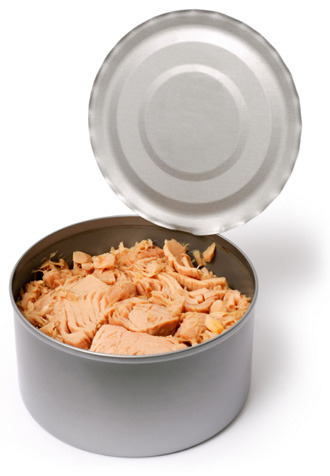
A few days ago, I opened a can of tuna fish (a brand I have never bought before)  and it was really stinky.  Usually a can of tuna has a fishy odor, but this was especially pungent.  I rinsed the can-full under tap water for a while -- a practice I have recently developed with tuna, believing that doing so helps make the fish less stinky -- but even after doing that, there was a high level of stinkitude.  I made my casserole and everything, washed out the can, washed my dishes.  But still, hours later, even the next day, there was a distinct tuna stink coming out of the sink drain.  Yeesh.


I'm not mentioning any names, but the brand of tuna that was especially stinky might have been Bumblebee.
(Photo from Root Wellness)


So, why so stinky, tuna?

  • The answer is a little different depending on whether the fish lives in saltwater or freshwater.

Saltwater Fish


Shoot. This is too small for you to read it.  Some of the fish on this list are snapper, sharks, mackerel, seatrout, bluefish, bonfish, and tuna.
(Poster available for $6 from Roy's Field Guides)


  • Seawater is about 3% salt.  The amount of salt that an animal can withstand in its cells is about 1%.  Therefore, fish need to have some special ability to help them survive in an atmosphere that would otherwise kill them with its saltiness.
  • Actually, fish have all sorts of mechanisms to handle that extra salt.  They have special enzymes in their gills to filter the salt out of their plasma, their kidneys filter out more of the salt that the gill enzymes missed, and then they get rid of still more salt by urinating up to a third of their body weight each day.  That's a lot of fish pee in the ocean.
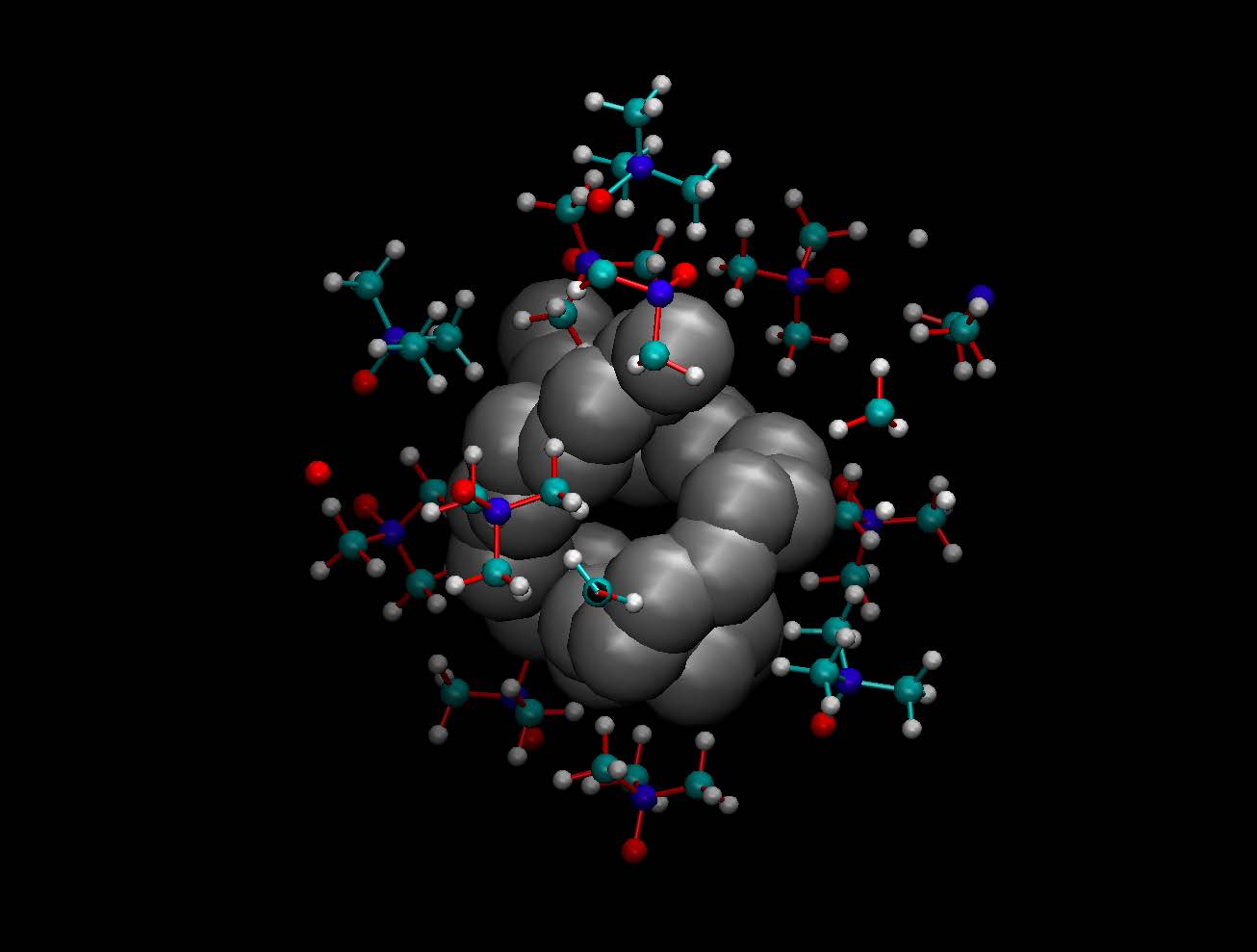
  • But they have another special salt-ridding mechanism, a compound called trimethylamine oxide (tri, or 3, + methyl which you know best from methane + amine, which means derived from ammonia), commonly abbreviated as TMAO.  (no, not too much information + laughing my ass off, just TMAO.)


Trimethylamine oxide, or TMAO.  
(Image from The Berne Group)

  • This compound is an osmolyte, which means it helps cells maintain a good balance of fluids.  Osmolytes are like sponges, bringing fluid into and out of a cell as it needs more or less water.  
  • In addition to being sponge-like, TMAO has an extra capability of essentially canceling out the effects of too much urea in a cell.  Since fish are trying like mad to get rid of all that salt, and one of the ways they're doing it is by manufacturing insane amounts of urine, they've naturally got a bunch of urea in there.  The TMAO helps the fish keep on living even with all that urea inside 'em.
  • TMAO is pretty fantastic, if you're a fish.
  • Once a fish is killed, however, the TMAO starts to break down.  It loses its oxide and it becomes a straight-up amine.  And amines, derivatives of ammonia, smell BAD.  
  • Dead fish actually develop lots of amines, not just the trimethylamine, and those smell bad too: cadaverine (formed when lysine in muscles break down), and putriscine (formed when glutamine in skeletal muscles breaks down).  If you recognize the words cadaver and putrid in those amine names, you are on the mark.
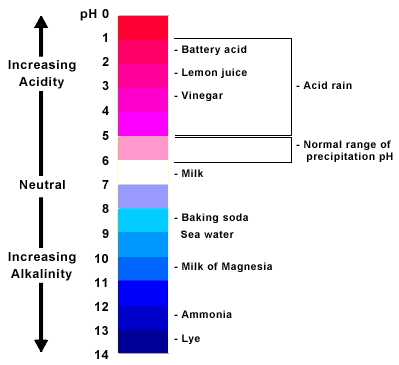
  • Fortunately for us, there is a solution (hah, chemistry pun).  These amines are all basic -- I don't mean that as in "simple," I mean that in terms of their chemical pH.
  • To neutralize a base, you add its opposite on the pH scale, or an acid.  What's a common acid people keep in their kitchens?  Lemon juice!  Thus, squirting lemon juice on dead fish turns those stinky amines into salts, and they don't stink anymore!


Ammonia and amines are at the bottom of the base/alkaline end.  Lemon juice is up near the top.  The two together are a match made in heav--well, at least, they result in an unstinky salt.
(Image from the Science Company)


  • Yes, boys and girls, that's why we squirt lemon juice on fish.  To de-stink the fish.
  • Vinegar or tomato juice, other common kitchen acids, will also work.
  • Rinsing the fish in tap water also helps.  The water just plain washes off some of the TMA, so there's less of the stinky stuff to smell.  So my idea of rinsing the tuna first was not all in my head; it really can help.
  • Tuna, by the way, is a saltwater fish.


Fish + lemon = happy fish-eating people
(Photo from Dorit Baxter)

Freshwater Fish

Types of freshwater fish shown here include catfish, bullhead, bass, sunfish, and crappies.
(Poster available for $6 from Roy's Field Guides)

  • You're already thinking that, since freshwater fish don't have to have all those special compounds and urinate like crazy to get rid of saltwater, freshwater fish won't stink so bad.  You are correct.  Mostly.
  • It's true, freshwater fish don't have the TMAO to become TMA after they die.  But they can have other compounds that are stinky.
  • Freshwater fish tend to eat algae.  Bottom-feeder fish (e.g., catfish, halibut, carp) especially eat a lot of blue-green algae.  This algae gets turned into compounds (geosmin and 2-methylisoborneol) which build up in the muscle tissues of the fish.


Catfish, eating algae.  People find a catfish or two to be useful in an aquarium.
(Photo from Aquariums Life)

  • These two compounds have very noticeable earthy scents.  It's geosmin you're smelling when it first starts to rain and the soil is disturbed.  These two compounds often show up together, making a dirty, muddy smell.  If your water has a muddy, dirty smell, chances are, it's got both these compounds in it.  
  • These earthy, dirty-smelling compounds are why most people avoid bottom-feeder fish.
  • But these compounds are also bases.  Which means adding an acid will neutralize them.  Which means, again, lots of lemon juice will help.
  • By the way, many people have the idea that a bottom-feeder fish is one that eats poo.  This is incorrect.   Bottom-feeders skip the poo and eat the algae that grows at the bottom of their environment. 

The Upshot

  • The fish are just doing what they need to do to get by.  They didn't stink until they got killed.
  • The things that make them stinky are not harmful -- just rinse and add lemon juice.
  • However, if the smell is really overpowering, like, it really smells rotten, that is a sign that the fish has been sitting and decaying for too long.  In that case, throw it out.
  • But most of the time, add lemon & enjoy.


Tuna with lemon slices and capers -- ooh, that's another good source of acid -- and pappardelle pasta.
(Photo and recipe by Danielle Driscoll at findingsilverpennies.com)


Sources
American Society for Nutrition, What makes fish smell "fishy"?
Everything2.com, Why fish is served with lemon juice
Miami New Times, The Science Behind the Fishy Smell in Smelly Fish
Scientific American, Why do some fish normally live in freshwater and others in saltwater?
ChemGuide, Introducing Amines
Brad A. Seibel and Patrick J. Walsh, Trimethylamine oxide accumulation in marine animals, The Journal of Experimental Biology, 205, 297-306.
Paul H. Yancey, Water Stress, Osmolytes, and Proteins, Integrative & Comparative Biology, 41(4), 699-709.
HyperPhysics, Georgia State University, Acid-Base Reactions
Vivienne Baille Gerritsen, The earth's perfume, Protein Spotlight, June 2003
Paul Westerhoff et al., Seasonal occurrence and degradation of 2-methylisoborneol in water supply reservoirs, Water Research, 39 (2005) 4899-4912.

Sunday, August 7, 2011

Apple #540: Kosher

A friend of mine got a box of that new Smurfs cereal the other day. I was looking at the nutrition information and the box in general when I noticed the Kosher symbol on the box. I said, "At least it's kosher."


My friend laughed and said, "Of course it is. There's no meat in there."

I said, "I think kosher is about more than just meat. I think it's actually kind of complicated."

He was skeptical, but since I couldn't remember any details, I couldn't bolster my argument further. So it was time to call on the Apple Lady. (Who is me, yes, but just go with it for the sake of the phrase.)

  • Kosher, or Kashrut, is a series of dietary laws as indicated by the Torah (to us Gentiles, that's the first five books of the Bible). These laws are supposed to be kept year-round.
  • Kosher does cover many more foods than just meat. A lot more.
  • Kosher laws can be broken down into two main categories: foods you can and can't eat, and how the food you can eat must be prepared.

Foods You Can and Can't Eat
  • You can eat the meat, milk, and eggs of some animals but not of others.
  • Land animals are kosher if they have split hooves and chew their cud. Both of these things must be true.
  • --Examples of kosher animals are cows, sheep, goats, various types of deer, and bison.
  • --Animals that don't meet this criteria include pigs, rabbits, squirrels, dogs, cats, horses, camels, etc.
  • The rules covering birds are fairly complex, but basically you can't eat predatory or scavenger birds.
  • --Birds you can eat include chickens, ducks, geese, turkeys, and pigeons.
  • --Birds that are restricted include hawks, crows, vultures, etc.

This is a sheet of stickers of kosher animals. A helpful way to remember which meat and poultry are kosher.
(Photo and 10-pack of sticker sheets from And Thou Shalt Read)

  • Fish and seafood must have fins and scales.
  • --Tuna, salmon, pike, flounder, carp, and herring are all kosher seafood.
  • --Shellfish, lobster, catfish, sturgeon, and all water mammals are not kosher.
  • No reptiles, amphibians, or worms are kosher.
  • No insects, except for four types of locusts, are kosher. This last law is one of the things that makes food preparation complicated.
  • From all of the above kosher animals except fish, no blood can be eaten. This is another law that affects food preparation.
  • Wine or grape juices made by Gentiles are not to be eaten.
  • --Long ago, lots of non-Jews used wine as sacrificial offerings to their gods. The Jews wanted nothing to do with this idolatry, so to be sure they had no part in it, they didn't want to drink any wine or even grape juice that had been made for pagan purposes.
  • --Whole grapes are OK
  • --Any fruit juice flavored with grape juice may not be OK; it must be certified kosher.
  • --Baking powder is made with cream of tartar, which is a by-produce of wine-making. Baking powder therefore must be certified kosher.
  • --Beer flavored with fruity grape products must be certified kosher.

Most people think of Manischewitz as the only kosher wine. But there are lots of kosher wines. Here are just a few.
(Photo from Cornichon.org)


How Food Must be Prepared
  • Animals and birds that are kosher have to be slaughtered in specific ways.
  • --They have to have been slaughtered; they can't have died of natural causes or have been killed be another animal.
  • --The slaughter must be done using a very sharp blade with no nicks, and the animal must be killed with one quick, deep stroke of the knife across the throat. This is to ensure that the death is as humane as possible.
  • --If there are any signs of disease, the animal cannot be eaten.
  • --The animal must also be inspected for "flaws in the organs." Flaws may include adhesions or punctures in the lungs, or adhesions or holes in the stomach. If the animal has these or other flaws, the animal cannot be eaten.

The shochet, or butcher, checking the knife in between each slaughter, or shechita. It's hard to see here, but the knife is flat and broad and rectangular.
(Photo from Pidyon, which has photos of the entire shechita process)


  • Since no blood can be eaten (this doesn't apply to fish), the blood must be removed from the meat.
  • --Most of the animal's blood drains out with the quick knife-stroke to the neck.
  • --Still there may be some blood left. The best way to remove the rest is either to broil, soak, or salt the meat. This has to be done within 72 hours of the slaughter.
  • --No blood also means that blood spots in eggs are not to be eaten.
  • The sciatic nerve and its adjoining blood vessels are also not to be eaten.
  • --It takes a lot of time and effort to remove these, so usually the entire hind quarters of the animal are removed and sold to non-kosher butchers.
  • The fat surrounding the vital organs and the liver may not be eaten.
  • Because of all the rules surrounding the slaughter of animals, in rural communities, the rabbi and the butcher are often the same person.

Anything Kosher that Touches Non-Kosher Becomes Non-Kosher
  • This is another rule that falls within food preparation, but it gets so pervasive, I thought it deserved its own heading.
  • Once you've got your kosher meat slaughtered and butchered appropriately, you then must make sure that meat and dairy are to be kept separate.
  • --Fish and dairy together are OK (e.g., lox and cream cheese bagels are OK). Red meat and dairy or poultry and dairy together are not.
  • --This means they can't be on the same plate at the same time, nor can they be prepared using the same utensils or pans.
  • --Dishes used to prepare each must be washed in separate dishwashers, and sponges or towels used to clean the dishes must be kept separate.
  • --You should also ensure that all the meat and its fats are removed from your mouth before eating dairy.
  • --You can do this by rinsing your mouth, eating a neutral food like bread in between, or else by waiting three to six hours in between.

Setting up your kitchen so that it's in compliance with the laws of kosher, including the separation of meat and dairy, can be an extremely involved, extensive process. For a list of things to do to make this happen, see Chabad.org's page on Koshering Your Kitchen.

  • Because separating meat and dairy becomes so extensive that it affects pretty much everything in the kitchen and in the laundry, food and utensils are often labeled to indicate to which they belong:
  • --fleishik = meat
  • --milchik = dairy
  • --parve or pareve = neutral
  • In general, eggs, fruits, vegetables, and grains are parve.


Various ways of labeling a food parve.
(Images from Anagrammer)

  • Parve becomes a pretty important indication.
  • --It means the food is neither meat nor dairy, so you can eat it between the two and allow yourself to eat one within 3-6 hours of the other.
  • --It also means that this neutral food has been handled in a way that it's within the laws of kosher. That is, it hasn't touched a non-kosher food and thus become out of bounds.
  • Fruits and vegetables seem like they'd automatically be kosher/parve, but bugs like fruits and vegetables too, and remember, all insects (except for 4 types of locusts) are not kosher.
  • --Fruits and vegetables therefore must be inspected for bugs and carefully cleaned prior to eating.
  • With modern, processed foods, you've got people making foods in huge batches in huge kitchens with utensils that could have touched all sorts of non-kosher foods, or situations in which meat and dairy products could have been prepared using the same equipment. So lots of ingredients that you might not think of as affected by the laws of kosher actually can become questionable, if not problematic.
  • --Shortenings and oils. Are they animal or vegetable? Are they produced in a plant that does both? If so, are the utensils for animal and vegetable oils kept separate?
  • --Emulsifiers. These may also be animal or vegetable and the same questions apply. They're named as polysorbates or glycerides or sorbitans, most often the things on a label that you can't pronounce. They're in all sorts of processed foods, from margarine to doughnuts to cake mixes to ice cream to peanut butter to breakfast cereals (ahem) to candies.
  • --Flavorings. Sure, the label says "all-natural." But is it animal or vegetable? How was it prepared? Same questions apply.

The fact that this rice-based cereal has a kosher symbol on the box actually means a lot. A great deal of thought and effort and inspection is behind that certification.
(Photo by Joshua Coughlin at Flickr. He says this is the 80s version of the cereal, but it's not. It's the 2011 version.)


In sum, these laws are quite extensive. I'm sure I haven't even captured all of them here. The ramifications of the rules extend throughout kitchens and the laundry. With modern food manufacturing and processing methods, it's nearly impossible to know if a food has been prepared according to kosher standards.

There are companies whose sole purpose is to send kosher investigators to food manufacturers to inspect their methods and utensils to determine whether the laws of kosher are being upheld or not. If a manufacturer's product line passes the inspection, these companies then certify the company's product with the kosher or parve labels. This is done on a product-by-product basis.


The K in the circle is the most widely-known symbol for kosher food. But there are all sorts of symbols that indicate kosher certification.
(Image from Burton 2 at MIT)


Many of these rules turn out to be beneficial to your health, for one reason or another. Some non-Jews choose kosher-labeled packages because to them, that's an indicator that the food was made according to procedures that are healthy and clean. But the sites I consulted about this were very careful to say that health and cleanliness are not the primary reasons why Jews keep kosher. They do it because the Torah says to.

Sources
Judaism 101, Kashrut: Jewish Dietary Laws
Chabad.org, Kosher, Kosher Basics and multiple subsequent pages
Orthodox Union, How do I know it's Kosher?

Friday, April 22, 2011

Apple #519: Deviled Eggs

As we are about to celebrate Easter, eggs are everywhere.  In TV commercials, in ads online, in the grocery store.  While thinking of various ways to prepare eggs, I remembered deviled eggs.  My mom used to turn our dyed eggs into deviled eggs eventually.  It occurs to me to wonder how we get deviled eggs on Easter, which is about as anti-devil as it gets.

Put more simply, what does it mean to "devil" an egg?


Deviled eggs.  The eventual fate of the Easter egg.
(Photo from CountryTime Recipes)

  • "To devil" some sort of food dates back to the late 1700s.  It meant to add heavy seasonings or lots of hot spices to a dish.
  • The idea, apparently, was to make food "hot" or "spicy as the devil."
  • In the 19th century, the hot spices were expanded to include spicy mustards or cayenne or curry.
  • Originally, deviling seems to have been done more often to meats, such as kidneys or ham.  Remember deviled ham?

Underworld deviled ham gets its name and its "sharp flavor" from the spices and condiments -- mainly mustard -- that are added.
(Image from Wacky Packages)

  • But eventually, the deviling was done to eggs, too.
  • You'll notice that in recipes for deviled eggs, mustard is a primary ingredient.  Our yellow mustard today is pretty mild, but perhaps once upon a time the mustard was hotter or spicier.  
  • The paprika which is to be sprinkled on top at the end may have once been a source of heat.  But in most recipes today, it's considered more of a garnish and it's usually listed as optional.  In my encounters with deviled eggs over the years, the paprika has appeared less and less often.

See? Not much paprika here.  But they did get all fancy and piped the filling into the whites.
(Photo and recipe from myrecipes.com)

  • I did find some recipes out there for spicy deviled eggs.  Here's one that looked like it might be especially tasty:
      • 12 eggs, hard boiled and peeled
      • 1/2 cup mayonnaise
      • 1 tablespoon Dijon mustard
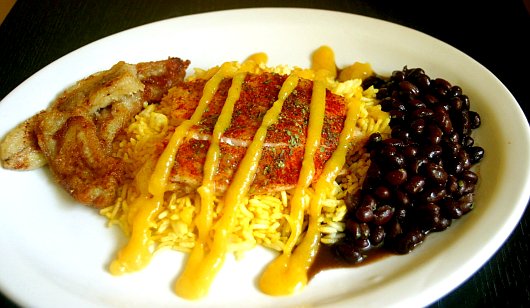
      • 1/4 cup shredded cheddar cheese
      • 1 jalapeño pepper, minced
      • 1 green onion, minced
      • 1 tablespoon fresh parsley, chopped
      • 1 tablespoon horseradish
      • salt & pepper to taste
      • cayenne pepper
      • Cut the eggs in half. Carefully remove the yolks so as not to break the whites. Set the whites aside and put the yolks into a mixing bowl.
      • Into the mixing bowl add the mayonnaise, mustard, cheese, jalapeño, onion, parsley, and horseradish.  Mash the yolks with the back of a fork and mix well. Salt and pepper to taste.
      • With a teaspoon, scoop the mixture into the whites. Sprinkle each with cayenne pepper.
      • Cover carefully and refrigerate one hour before serving. (Recipe from deviledegg.org)

The deviled eggs shown here have smoked salmon on top, and the yolks are mixed with 3/4 tablespoons of Tabasco sauce.  That's another way to get some heat into those eggs.
(Photo and recipe from Blisstree)

  • I also saw a number of recipes out there that call for bacon, that oh-so-popular ingredient.  I imagine you could add bacon pieces to the recipe I listed above. 

These eggs have bacon pieces on top, and the recipe calls for adding 4 teaspoons of bacon fat to the yolk mixture. That's optional, though. Also on top is shaved white cheddar.
(Photo and recipe from Chow)


Happy Easter, and enjoy those eggs!

Sources
The Straight Dope, What's up with "deviled" eggs, ham, etc.? October 12, 2004
The Food Timeline, FAQs: eggs, deviled eggs

Sunday, August 30, 2009

Apple #406: Gristle

You know those little pieces of hard, white stuff in ground beef? It's called gristle.

Sure, you've heard that before, but what the heck is gristle?

It's cartilage.

Smooth, solid, and elastic, it's the stuff that makes your ears hold their shape but remain flexible, and it's what most of your nose is made of.


Cartilage in the nose.
(Diagram from the Free Dictionary)


Your larynx (a.k.a. voice box) is made of cartilage. Your xiphoid process (a.k.a. sternum) is made of cartilage. Cartilage also covers the ends of any bones where they meet at bendable joints.

Cartilage is also what an embryo's skeleton is made of and as the embryo matures, the cartilage becomes bone.

You've probably encountered cartilage / gristle when you've cleaned chicken parts. It's the knobby white stuff that isn't as hard as bone and it's sure not meat.


Cartilage, or gristle, in a chicken thigh.
(Photo from Home Ec 101)


Apparently, when the hard-working butchers are grinding up the cow to make ground beef, they aren't as careful to remove all the cartilage. So it gets ground up along with everything else and then much later, you discover it as a little knobbly white thing in your hamburger.

By the way, if you search for the word "gristle," or images of gristle, you'll find a lot of references to and pictures of Madonna. This is because her ex-husband, Guy Ritchie, said that her four-hour-per-day workout regimen pared her down to such an extent that trying to be romantic with her was like "cuddling up to a piece of gristle."

Obviously Guy Ritchie was angry about a lot of things, but there are a lot of photos of Madonna out there in which her arms are pretty scary-looking.


(Photo from the Telegraph, sourced from Home Talk Entertainment where you can see some even less flattering photos)


Sources
Webster's 1828 dictionary, gristle
Online Etymology Dictionary, gristle
Medical Free Dictionary by Farlex, cartilage (redirected from gristle)
Daily Mail, "Making love to Madonna 'was like cuddling up to a piece of gristle,'" October 20, 2008

Sunday, August 3, 2008

Apple #332: Welcome to August

Not sure this needs any introduction. Except to say that August roughed me up pretty badly a couple of times in the past. But in accordance with my pledge that this year will be like the phoenix, I am determined not to let that happen this year.

  • The word "august" probably comes from a word that means, essentially, indicated by the augurs (prophets or prophecies) as being favorable.
  • In terms of the calendar, though, the 8th month is called August after Caesar Augustus, adopted son of Julius who established the Julian calendar, which is very close to the Gregorian calendar that we use today. This emperor was also called "venerable ruler."
 
 
Statue of Julius Caesar Augustus (and also Cupid at his ankle), which now stands in the Vatican.
(Photo from Wikipedia)


  • The term "august" can also mean all sorts of wonderful things, depending on which dictionary you consult, such as:
      • profoundly honored
      • marked by majestic dignity or grandeur
      • befitting a lord or one with exalted birth
      • inspiring reverence or admiration


Ragweed, not goldenrod, is the bane of allergy-sufferers' existence.
(Photo from WQAD)


  • The French Republic calendar used to call the 8th month Thermidor, or "hot month." (Actually, this month ran from about mid-July to mid-August in the Gregorian calendar.)
      • That word "Thermidor" may remind you, as it did me, of Lobsters Thermidor. What's the connection, you ask?
      • Okay, if you'll remember your French history for a moment, after Robespierre and the French Revolutionaries stormed the Bastille and all, they started hacking off the heads of royalty left and right, and they got totally out of control. This period is considered the "Reign of Terror."

This is not at all how I pictured Robespierre. He looks way too namby-pamby to have orchestrated several years' worth of executions. But, in fact, he did. In his mind, he was "weeding out" people who would undermine the Revolution.
(Photo of portrait from Wikipedia)

      • A few years later, Robespierre was overthrown (his head was cut off, actually), and the Reign of Terror was considered to be ended. This happened during the month of Thermidor.
      • Fast forward about a century, and in 1891, a French play called "Thermidor" opened. Though the Revolution had ended long ago, political tensions in France were very high and people were sharply divided along class lines. The play caused such an outcry that it was banned after only three performances.
"Night second scarcely allowed the actors to speak. A more astonishing scene was never seen in any theatre. Pandemonium reigned in the auditorium. The house was packed, and . . . the excitement was intense. . . . Lissagary, the editor of the Bataille, threw cents, whistles, and one-franc coins on the stage. He was requested to leave the proscenium box. Others were forced to quit the scene of the action . . . 'A mort Sardou' [death to the author of the play] was heard. . . . there could be no doubt of the presence of a large number purposely on hand to fight the play down. . . . At each lull the artists would begin, soon to be lost in noise and whistle. . . . After the spectacle, the street was full, and I am told that the police had to clear the way and carry off a good many shouters."

--New York Times review, Sardou's Ill-Fated "Thermidor," February 15, 1891
      • The night the play opened, the story goes, a French chef at the Marie restaurant in the Boulevard Saint-Denis in Paris invented the dish called Lobster Thermidor in honor of this play. Or perhaps, given the way the lobster is prepared, it is in honor of the decapitation of Robespierre.
      • In brief, here's how you make Lobster Thermidor (for a more precise recipe, check out the Old Foodie):
          • Start with a live lobster. Split it in two, lengthwise, while it's still kicking.
          • Season it all up, give it some oil, and roast it in the shell for about 15-20 minutes
          • While your lobster is roasting, make a stock of white wine, fish stock, and meat gravy, add some French-like spices and some chopped shallots. (Some people add mushrooms, or they use Sherry instead of white wine, etc.)
          • Reduce the stock, add a very thick Bechamel sauce (oh, so French!) and mustard.
          • Eyeball the amount of sauce you've got and add about 1/3 that amount's worth of butter. Can you feel the French yet?
          • Take the meat out of the lobster shells and give it a rough chop.
          • Pour some of your creamy-buttery sauce into the lobster shells, put the chopped lobster back in there, cover it with the rest of the sauce.
          • Add more butter and Parmesan cheese, and put it all back in the oven again to brown it up.

Lobster Thermidor, as served at Andre's in Las Vegas. According to someone who commented on the photo, this was the best lobster ever.
(Photo by ccaviness on Flickr)


  • Although Lobster Thermidor was not invented in the month of August, and technically the overthrow of Robespierre took place in what is now our July, I will now think of Lobster Thermidor in connection with August.

So that's the month of August. The month that is favorable for kings, assassinations, weeds, decapitations, and flayed lobsters. It's all making sense now.


Sources
Online Etymology Dictionary, august
OneLook, august
E. Cobham Brewer, Dictionary of Phrase and Fable, 1898, Months
Columbia Encyclopedia, sixth edition, Thermidor
The Old Foodie, A revolutionary dish, January 24, 2006

Tuesday, July 1, 2008

Apple #326: Tilapia

Okay, remember that dinner party where we wound up talking about outer space? Well, one of the things we ate at that dinner party was some very tasty tilapia, prepared by our talented and thoughtful host.

I am not normally a fish-lover -- it's the texture that gets to me first, and then the fishy flavor, so lots of fish is pretty much off my menu. But I enjoyed the tilapia. There was a lemony sauce on top, nothing too overwhelming, but enough to give it a bit of sweet flavor. It was kind of like the fish version of chicken.

We all commented on it, complimented our host of course, wondered where it came from. (Aha, thought I. Some Daily Apple material here.) I guessed South America. Sounded like a good enough guess to everyone.

  • My guess was wrong. Tilapia comes from North Africa. The most prevalent species of Tilapia is the Nile Tilapia.
  • One thing to note is that some people confuse Nile Perch (Lates niloticus) and Nile Tilapia (Oreochromis niloticus). They are actually different types of fish.

Nile perch (Lates niloticus)
(Image from Wikipedia)

      • Nile perch live mainly in the major lakes of Africa
      • They have an almost pointy head, and they are silver with a blue tinge
      • They are super aggressive eaters, and will eat bugs, crustaceans, and other fish, including its own species.
      • Nile perch is very popular and has been introduced to a lot of places, but because it's so aggressive, it has either eaten or almost eradicated several species.

Nile Tilapia (Oreochromis niloticus)
(Image from the Southern Regional Aquatic Center)


  • Nile Tilapia like to eat water plants and algae, but they'll also eat little tiny animals and plankton. They don't filter the plankton the way that carp do. Instead, they secrete a mucous on their gills, the plankton gets trapped in the mucous until it forms a ball, and then the fish eats the ball of mucous and plankton. Ew.
  • They generally prefer warm fresh water, but they can tolerate brackish or salty water, too. They don't like true saltwater as much, though, so that means they tend to prefer living and swimming in rivers rather than in sea water. You can, of course, also raise them in ponds and tanks.

Nile Tilapia swimming around. One of the things they like to eat is mosquito eggs. So some scientists think they might be helpful in reducing the spread of malaria.
(Photo from FishChannel.com)


  • They don't mind a lot of nitrites in the water, and they're very resistant to diseases that tend to wipe out other types of fish.
  • They also spawn and grow quickly, so it doesn't take long before you can eat them. This is why lots of countries around the world are raising and eating tilapia.
  • Because they grow so quickly and easily, even in poorer conditions, they can become an invasive species, too, if they are not managed properly.

A bunch of farm-raised Nile tilapia that have just been caught.
(Photo from fishfarming.com)


  • But now, lots of people raise tilapia, mainly on fish farms, all over the world.
  • Most of the frozen tilapia sold in the US comes from China. Some food advisory people say to avoid tilapia raised in China and Taiwan because they tend to live in waters that are more polluted than what people in the US would allow.
  • But you can also get fresh tilapia that's grown up in Central America, in countries like Honduras, Ecuador, Costa Rica, and Trinidad and Tobago.
  • It's also raised in various places in the US, such as in Virginia and South Carolina. But it's such a relatively easy fish to raise, and it tolerates tank life very well, that probably you could find fresh tilapia that comes from just about any place.
  • In fact, they are so prolific that people in Indonesia used to regard them as pests, until they started eating them.

Fillets of Nile tilapia
(Photo from fishfarming.com)

  • Because it doesn't have a very strong fishy flavor, tilapia is becoming increasingly popular in the US. In fact, it is now the fifth-most consumed fish in the United States, behind other favorites like tuna and salmon.
  • Some chefs, though, poo-poo the tilapia. "Insipid," they call it. "Sponge-like," "flavorless," and "trash fish." These chefs are too good for the tilapia, apparently.

What grilled tilapia could look like on your plate
(Photo from MyRecipes.com's 7 Ways with Tilapia)


  • Mainly, you can grill it, broil it, or bake it -- pretty much the same as with most fish.
  • One easy recipe says to put the fillets on a piece of foil, give them each a tablespoon of butter, salt & pepper them, add some garlic, basil, and chopped tomato. Pour a cup of white wine over the lot, roll up the foil, stick it on the grill (medium heat) for 15 minutes until they're flaky. And that's it.
  • Another one that requires only slightly more work sounds pretty good to me, too: Tilapia with balsamic butter sauce. Simmer the vinegar and some garlic in a saucepan until it reduces, for about 5 minutes, set it aside. Salt & pepper the fish, put them in a skillet with some oil, and saute them for about 2 minutes per side. Then add some butter to the vinegar sauce, pour it over the fish, and you're done.

If you prefer spicy, you might want to try the Tilapia with Spicy Mango Salsa
(Recipe and Photo from In the Kitchen)


And with that, I am taking my leave for a bit. I'm going off on vacation. I'll be back probably on Sunday. Not sure whether I'll be able to give you a new entry on Sunday night or not. We'll see.

In the meantime, enjoy those fireworks and watermelons!


Sources
Len Spoden, "Two Sides to Every Tilapia," The Washington Post, August 8, 2007
Aquaculture blog, Tilapia Culture, February 3, 2007 -- a great overview
American Tilapia Association, FAQs for Tilapia -- these links open separate Word documents, which in some cases are not what the links say they're going to be.
Thomas Popma and Michael Masser, "Tilapia: Life History and Biology," Southern Regional Aquaculture Center, March 1999
Randy Sell, Department of Agricultural Economics, North Dakota State University, Tilapia

Tuesday, April 29, 2008

Apple #313: Monsters and Braunschweiger

The topic of Braunschweiger has come up way too many times in the last few days for me to ignore. It came up in an e-mail conversation with a good friend not long ago. Then I overheard some people at work talking about it. Finally, this weekend, a friend and I went to a restaurant that was, shall we say, non-vegan friendly, and a Braunschweiger sandwich was on the menu. So it is clearly time for me to tell you all about Braunschweiger.


BUT FIRST, A NOTE FROM OUR MONSTER

Before I do, I first want to tell you about a little something I keep forgetting to mention. Some time back, I gave you all the link to one of my favorite blog sites, Stefan Bucher's Daily Monster page. There's also a permanent link to it over there in the right sidebar. He's now doing a slightly different version, but for a while there, he was drawing monsters and posting sped-up videos of the monsters being drawn, or coming to life as it were. Visitors to his website, without any prompting, started posting their own little stories about the monsters, giving them names, histories, methods of birth, etc. Bucher started making his monsters more colorful, more people posted stories, everybody started having more and more fun.

And after 100 monsters, Stefan made a book out of the whole thing. A tangible, you-can-hold-it-and-turn-the-pages book. The book was released some time in February. I'm bringing this up now because I, your intrepid Apple Lady, was one of the people who submitted stories to the Daily Monster page, and some of my stories were selected for inclusion in Stefan's book. In return for those stories, Mr. Bucher kindly sent me a copy, which arrived at my door just the other day.


The book, as you can see, is called 100 Days Of Monsters, and you can buy it through Amazon for around $12. If you click on the link to the Amazon page, you can see shots of what the pages look like, and if you scroll down the Amazon page, you can get an idea of how Stefan Bucher's drawings and people's subsequent postings worked. Or you can just go to his Daily Monster page and see what he's up to now, which gives you pretty much the same idea.

The good thing about the book is that the stories are sampled down to some of the very best. And you can read the stories side-by-side with their respective monsters. The DVD that comes with the book allows you to see the animation of these particular monsters coming to life, which is really fun because he starts with a blob, and sometimes you think you can see the monster within the blob, but then he takes it in a different and usually delightfully surprising direction.

In the book, Mr. Bucher used everyone's real names, even though most people posted their stories online using screen names. So if you buy a copy and read the stories, perhaps you might be able to figure out the true identity of your Apple Lady (that is, if you don't know me personally already).

But even better than that, the monsters are really creative and slightly goofy, and some people's stories are wonderfully funny. I read several of the stories when the book arrived, and some of them made me laugh so hard and so long, I had to wipe tears from my eyes. And I'm not even talking about my own stories! (har har) I haven't read them all yet because I want to save some of them for the next time I need a really good belly-laugh.

So check out 100 Days Of Monsters (with DVD). I guarantee, you'll be glad you did.


NOW, BACK TO OUR BRAUNSCHWEIGER

Perhaps you may have noticed the occasional package of Braunschweiger in your grocery store's meat department. You can usually find it somewhere near the hot dogs or the bacon or the packaged lunch meats. I know I've noticed it, in the distinctive yellow and orange Oscar Mayer package, and I wondered what the heck it was.


What Braunschweiger looks like in the package and out of it, sliced. Kraft, which owns the Oscar Mayer brand, makes its own Braunschweiger, but they didn't have any pictures of it, nor did they even have any information about it on their website. The Braunschweiger in this photo is available from Bavaria Sausage, Inc.

  • Turns out, it's liver sausage. Or, to be more German about it, liverwurst. Livers of various animals -- which animals seems to depend on who's making the sausage -- are seasoned and cooked and then smoked.
  • Some people say the word "braun" in Braunschweiger means "smoked." But actually the name comes from the German town, Braunschweig, which gets Anglicized to Brunswick.
  • In making your Braunschweiger, you could use pig livers, chicken livers, goose livers, or some combination thereof, whatever you prefer. Most people seem to use pork liver.
  • You have to make sure you have enough fat so it'll stick together, so people generally recommend using pork liver that's about 50% fat, or else adding bacon fat or lard or whatever fat source you prefer. Cook it all up, then chill it. That will make the grinding easier.
  • Once it's well-chilled, grind the mixture in your processor with salt and pepper and various spices -- many people recommend nutmeg -- until you've got a puree.
  • Then pack that puree into some loaf pans, or get out your sausage casings and stuff. Refrigerate your pans or links for a couple of days, and Bob's your uncle, you've got Braunschweiger!

If you want to know more details about what spices to use when you make your Braunschweiger, or how to get your own pork livers right from the pig, check out some of these sources. I'll warn you ahead of time, some of these pages are not for the faint-of-stomach.

One slice has about 5 grams of fat. One slice of Oscar Mayer beef bologna, by comparison, has 8 grams of fat. One slice of Oscar Mayer Genoa salami has 3 grams of fat. So it seems to be not that much different nutritionally from other sausagey types of meat.

If you want to know what you can make with your Braunschweiger, lots of people seem to like it in dips or spreads:

But you can always slice it and put it on a sandwich:


Here's what it looks like in sandwich form, this one called the Curse of '49, with Muenster Cheese, tomato, onion, and mustard. You can buy this sandwich for $6.25 from the Brown Bag in Columbus, Ohio.


And now you know.


Additional Sources
Fit Watch, Free Online Calorie Counter, Braunschweiger
Merriam-Webster dictionary, braunschweiger