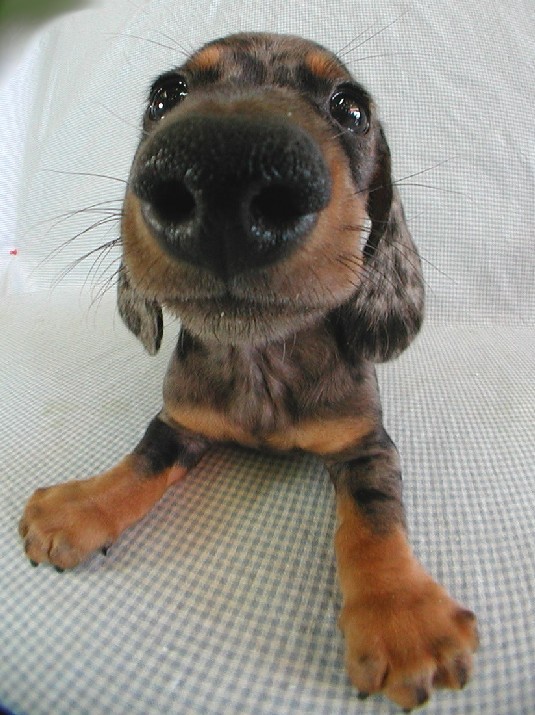
Showing posts with label animals - dogs. Show all posts

Monday, August 26, 2013

Apple #649: Service Dogs & Air Travel

Last time, I did an entry about dogs on airplanes.  I found out about how people can travel with their pet dogs (or other pets).  Basically, the rules are you can keep your pet dog with you in the cabin if your dog is really tiny.  Otherwise, the dog flies cargo.

But I did wonder about service dogs.  Most service dogs are much larger than the tiny size limits the airlines impose for pets in the cabin.  So are the rules for service dogs different?  Can people take their service dogs on board?  Or do size rules apply for service dogs, too?

And what does the TSA do when someone comes through the line with a dog, whether it's a service dog or a pet?


I wish I could say they'd let your service dog fly in the cockpit.  This is Nathan, and he's a service dog for the Coast Guard. So he gets to ride on Coast Guard airplanes.
(Photo by Cyndi Perry, from Coast Guard Compass)

Service Dogs -- Basic Rules

  • In a nutshell, yes, service dogs can travel in the cabin with the passenger.
  • Size rules do still apply, though.  The rules are a little less stringent than the rules for pet dogs, but the animal has to be able to fit under the seat or at the animal owner's feet without obstructing an aisle or another passenger's space.  If the service dog can't fit in the space available in the cabin, it has to travel in a carrier in cargo.
  • There are some exceptions to this rule. For longer flights such as to Hawaii or the UK, service dogs may travel in the cabin.
  • Airlines are not allowed by law to charge extra to travel with a service dog.  Whether the dog is with you in the cabin or in cargo, you won't be charged.
  • Some airlines will also allow you to ship your service dog's carrier as a checked bag, free of charge.
  • If the service dog is with you in the cabin, it has to be on a leash or harness, and it should also be wearing a vest or other garment that clearly indicates the animal is not a pet but is working.


This service dog vest is clearly marked and it includes an identification pouch. This one costs $60. They seem to fall in the $50-$75 price range.
(Photo from ServiceDogPatches.com)

  • You will not be required to show any kind of documentation that you need the service dog with you.  
  • Some working animals are designated as Emotional Support Animals (ESA).  These animals are there to help people who experience some kind of psychological or mental health distress.  If you are traveling with an ESA, you will probably be asked to show proof (like a signed letter) that a licensed medical professional has said you need to have this dog with you.
  • Whether your animal is a service animal, an ESA, or a pet, it's best to let the airline know as soon as possible, well in advance of the flight, that you'll be traveling with a dog. 


This service dog is probably too big to be allowed in the airplane cabin.  But look what a good dog she is!
(Photo from The Blackburn Review)

 Service Monkeys

  • Pretty much the same rules apply to service monkeys.  
  • Yes, there are service monkeys. Or helper  monkeys, as they're more often called.


A Capuchin helper monkey in action.
(Photo from Blogapova)

 TSA Screening of Service Animals

  • Basically, the TSA (Transporation Security Administration; the security people at the airport) are going to screen both you and your service animal.
  • Again, you'll need to have your animal on a leash or a harness, and the animal needs to be wearing some kind of identification saying this is a service animal. You should also tell the security officer that your dog is a service animal.
  • You and your dog on a leash will walk through the metal detector.  The dog can go before or after you, or you can go at the same time, they'll leave that up to you. 
  • If you don't want to go through the metal detector you & your dog don't have to.  But you would in that event have to submit to a full pat-down.  And the dog would still have to be "inspected." I think this means visually, and also a check of the garment the dog is wearing.
  • The security officer does have to ask before touching your service animal.  The security officer will know better than to pet, play with, distract, or feed your service dog. 


A woman and her service dog, Hosta, going through the metal detector in Kansas City. Hosta is still on his leash as he goes through the detector.  She's actually training her dog to be a service dog, so she and several other handlers are taking their dogs to the airport for trial runs.
(Photo from KSDS Puppy)


Since Hosta set off the alarm -- probably because of his leash -- he had to get patted down.  He didn't mind.
(Photo from KSDS Puppy)


Hosta the service dog waiting while his owner is patted down.
(Photo from KSDS Puppy)


Hosta the service dog waiting patiently for his bag.  OK, that doesn't really have to do with TSA screening, but I included it because I thought the picture was funny.
(Photo from KSDS Puppy)

  • If you set off an alarm but your dog doesn't, they'll give you further screening and they'll let you keep your dog with you.
  • If your dog sets off an alarm and you don't, they'll separate you and the dog while they give the dog further screening.  They won't take off the dog's harness/vest/backpack, but they'll search it to see what the dog might be carrying in there.
  • Wouldn't that suck if your service dog were a mad bomber and you didn't even know it?
  • Seriously, though, I'm not sure what they do if they find, say, explosive material on the dog but not on you.  Remove the explosive stuff, first of all.  I guess they'd probably detain you and the dog until they found out who put the explosive stuff in your dog's pocket.
  • One final note on this topic: If you've gone through security and you go outside to let your dog, you know, do its doggy thing, when you come back inside, you and your dog will have to go through the TSA screening again. 

 TSA Using Dogs, Too

  • While searching for information on this topic, I found a whole bunch of news articles about how the TSA is using dogs to screen passengers for bombs, guns, and any explosives.  They're hoping the dogs will help to reduce the long lines of people waiting to go through metal detectors.
  • Dogs have been used to screen cargo for several years now.  But dogs screening passengers is relatively new -- even though the TSA were given the approval to do that many years ago.
  • The passenger-screening dogs can detect a "vapor trail" of explosives, meaning they can detect a suicide bomb vest, a backpack containing explosives, or a firearm.  When the trained dog detects an odor of explosives, the dog will sit next to where it found the scent.
  • The breeds they're using include Labrador retrievers, Vizslas, German shepherds, and Belgian malinois -- all breeds with an especially keen sense of smell, or they're good with people, or both.


One of the TSA working dogs.  Note the TSA patch on his vest.
(Photo from NBC-2 in Florida)

  • In early July, they announced they're trying out the dogs in Honolulu, Tampa, Indianapolis, Chicago, Denver, and Washington Dulles. If all goes well there, they'll use more dogs in more airports.  I think they must have since decided it's going all right, because that dog in the picture above was being used at the Southwest Florida International Airport in Fort Myers.
    • The GAO (General Accounting Office) is skeptical about all this because according to their tests, the dogs weren't all that effective.  They said the TSA wasn't meeting the requirement that the canine teams get 4 hours of training every 4 weeks, the TSA doesn't keep track of which dogs are best at finding which  type of explosive material, and sometimes the dogs miss explosives or they say they've found something when there aren't any explosives present.
    • Apparently, also according to he GAO, the reason the dogs are being used on passengers at on some airports and not others is because officials at some airports have concerns about the "composition and capabilities" of the passenger-screening dogs, and they've said you can use the dogs on cargo at our airport, but not on people. 
    • The TSA responded to that report by saying, we're going to do better about complying with training requirements, and we'll keep doing assessments of the passenger-screening dogs that are being used so we can see where we need to improve.
    • Further evidence that the TSA doesn't have this down quite yet: in May, one TSA bomb-sniffing dog in Atlanta bit a passenger in the stomach.  The woman took a picture of the bite, and it looks pretty bad, actually.  The wound has now healed, the woman got a bunch of rabies shots, but she needn't have because the dog had been up to date on its rabies vaccine.
    • The woman wasn't even flying.  She was waiting in the baggage area to meet her sister, and the dog came up to her and bit her.
    • Now, here's another question: what happens when a TSA bomb-sniffing dog meets a service dog?  And what if the service dog is carrying explosives?  One hopes that it would all go well from a dog-civility standpoint.   But is this a scenario the TSA are trained to handle?


    The TSA names their bomb-detection dogs after victims who were killed in the 9/11 attacks.  These bomb-sniffing Labrador puppies in training are named Hoey and Hatton.
    (Photo by Reuters, from Travelers Today)


    Sources
    National Service Animal Registry, Flying with Service Dogs and Emotional Support Animals
    Alaska Air, Service and Emotional Support Animals
    American Airlines, Service Animals
    Delta Airlines, Service Animals
    United Airlines, Service Animals
    Transportation Security Administration, Service Animals and Passengers with Service Dogs and TSA Dogs & Aviation Security
    NBC News, TSA dog bites passenger at Atlanta's Hartsfield-Jackson airport, May 13, 2013
    Atlanta Journal-Constitution, Explosives-sniffing dog bites woman at airport, May 10, 2013
    CBS This Morning, TSA trying out screening with dogs, July 3, 2013
    Houston Chronicle, TSA tests bomb-sniffing dogs in a select few airports, July 4, 2013
    USA Today, GAO questions using TSA dogs to screen passengers, January 31, 2013
    The Hill, TSA ineffectively using bomb-sniffing dogs, GAO report finds, February 1, 2013

    Monday, August 19, 2013

    Apple #648: Dogs on Planes

    When I recently traveled by airplane, one of the passengers on the first leg of my trip had a very small dog with her.  While we were waiting for boarding to start, she had the dog on a leash, and he was pretty docile, sniffing various things, watching me very closely as I ate my tuna sandwich.  When it was time to board, she put the very small dog into a dog-carrier that had a shoulder strap.  It was about the size of carry-on luggage.  She also had a purse and another carry-on.


    This is very similar to the dog I saw, and the carrier is similar too.  Except the one I saw was pink.
    (Photo from Animal Planet)


    I might have thought nothing of this, but on my return trip, a different woman had her very small dog with her.  It looked like a miniature Boston terrier.  Again, I noticed the dog while waiting to board.  She & the dog were both napping, the dog lying across her stomach like a small belt.  I lost track of the two once we boarded, but after the flight when I was walking through the airport, I saw the two of them, the tiny Boston terrier now on a leash, at one of the food stores.  The dog was sniffing about but otherwise waiting patiently while the woman picked out an apple.

    So I had to find out.  Dogs are allowed on planes?  And they're allowed in airports?  What are the rules about dogs and airplanes?

    • First of all, regardless of whether your dog travels in the cabin or in cargo, you will have to show that your pet is healthy.  You'll have to get a health certificate from your vet that says your pet is healthy and will be OK to fly.
    • After that, the rules about taking dogs on airplanes differ, depending on where the dog will be traveling.  You've got 2 options: in the cabin, or in the cargo space. 

    In the Cabin

    • This is the friendlier option of the two because this means you get to keep your dog with you.  But in order to be allowed to bring your dog on board with you, many many conditions must be met.
        •  Only very small dogs are allowed in the cabin. 
        • The dog has to be able to fit comfortably in a carrier that measures (depending on the airline) 8-9 inches high x 12-13 inches wide x 15-23 inches long.  Some airlines also require that the dog in the carrier must fit under the seat.
     
    This soft-sided dog carrier is 9" x 10" x 15".  And it's camouflage.  And it's got Martha Stewart's name associated with it.  All of which may be a bonus, or it may make you gag.
    (Photo & carrier from PetSmart. It's currently on sale for $48) 


    If you've got your pet in a carrier on board, most airlines will say the carrier has to fit under the seat in front of you.
    (Photo from PetRelocation)

        • The dog must be older than 8 weeks.
        • You might want to be even safer and wait until the dog has had its vaccinations, which happens at 10-12 weeks.
        • Some airlines say the dog + kennel can't weigh more than 20 pounds.
        • Some airlines say certain breeds, even if they are small enough & old enough, are not allowed to fly.  Snub-nosed dogs such as pugs, shih tzus, Pekingese, and bulldogs, which already have breathing difficulties and may not handle the changes in air pressure, are often not allowed to fly. This goes for snub-nosed cats too.  The Humane Society says it doesn't matter which airline, don't bring these types of animals on a plane; it's too dangerous.
        • If you want to bring more than one small dog with you, the airline may refuse.  That is, they might let you take one, but not more than one.
        • Some airlines have a limit on the total number of dogs & cats on board.  So your dog may meet all the criteria, but the airline could say, sorry, we've already got 5 dogs in the cabin on this flight, and we can't allow another one. 
        • If your dog meets all these criteria, bringing your dog on board will cost you an extra $100 to $125, depending on the airline, each way.  You don't have to buy an extra seat, especially since the kennel will probably have to be stowed under the seat in front of you.  But you will have to pay an extra fee.
        • Each airline has slightly different rules, so if you do want to bring your dog in the cabin with you, check with your airline to see what they require.


    Here's another type of small-dog carrier.  This one is a backpack but it also has a telescoping handle and the wheels so you could tow it around like a carry-on.  It measures 18.5" H x 11.5"W x 13"L.  This is the Casual Canine Deluxe Backpack Pet Carrier On Wheels from Amazon. Egad, it's $73.

    In Cargo

    • From what I've read, if you can't take your dog in the cabin, I think you're better off not bringing the dog at all.  Because dogs flying cargo can encounter all sorts of problems.  But first, the rules.
        • The pet carrier must have solid sides and it must be large enough for your dog to be able to stand up without hitting his or her head and wide enough so your dog can turn around easily.


    Here's a solid-sided pet carrier that you could use for in-cargo travel. It opens at the top and at the front, and it has a handle.  Water cup, dachshund, cat, and parrot not included. This Petmate Two Door Top Load 24-Inch Pet Kennel, Metallic Pearl Tan and Coffee Ground Bottom sells on Amazon for $39.

        • The carrier must be properly labeled with your identification and the final destination.
        • The carrier must have 2 plastic dishes, one with food and one with water, that attach to the inside of the carrier door.  Some people put ice cubes in the water dish because they won't spill, but they will gradually melt so the animal will have water. 
        • Some airlines also require that a small bag of food be taped to the top of the carrier -- though I don't know what that would do except drive your pet nuts with the smell of food it couldn't reach.
        • Some airlines also require some kind of padding in the carrier, like a blanket or a newspaper or a doggy pad.
        • Some people take the extra precaution of attaching a battery-powered fan to the inside of the carrier.  This isn't required, but many airlines think it's a good idea. 


    This is a large-pet carrier, but I'm not really fond of it.  There isn't a lot of ventilation.  The door is a grid and there are some openings on the upper sides & back, but there's no ventilation on top, and the the lower sides are solid.  This is typical of the larger-dog carriers that I saw.  I don't know why they give the big dogs less ventilation.  Seems like they ought to have more.  This is the Remington Pet Kennel, 40-Inch for Pets 70 to 90-Pound, Beige/Remington Green. Amazon says they don't have any in stock right now, but it looks like you might be able to get it from Walmart.

    • "Cargo" used to mean that the pets were put in the same place with the baggage.  Many newer jets now have a special area separated from the baggage compartment where animals are kept.  
    • But the pet cargo space is still under the belly of the plane where there are no people to look after the animals during the flight, which means many problems can happen.  
        • Someone's pit bull was in the cargo hold for a really long flight, and in that time, it chewed on its kennel trying to get out to the extent that the dog seriously injured its mouth. Who knows what would have happened if the dog had managed to get out of its kennel.  
        • Someone else's Golden Retriever gnawed at the zip ties holding its kennel door shut, the zip ties got lodged in the dog's throat, and the dog had to be euthanized.


    These 31 kennels each contain a working dog that worked for the military spotting IEDs in Iraq.  They're being brought back home to the States. This situation is a little unusual, in that 31 dogs were transported on a single plane, and several dog caretakers were on hand at each stage of the 3-stop flight to make sure everything went smoothly.  But imagine this on a smaller scale, and that might give you an idea of what the pet cargo area might look like on a commercial flight.
    (Photo from Move One)

    • The pet cargo area does have ventilation and heating or cooling necessary to allow the pets to travel safely--most of the time. But conditions can get a bit dicey.
    • If the air temperature outside gets above 85F or below 45F, the cargo hold's ability to compensate is not as good and your pet could be at risk for becoming overheated or freezing.  In fact, many airlines won't let you put your pet in the cargo hold if the weather forecast predicts temperatures above or below those limits.
    • But sometimes--heck, often--those forecasts are wrong, and the temperature can go higher or lower than expected, and your pet could be at risk.  Some pets have died in the cargo hold for this very reason.
    • It's also possible that the flight could be delayed and the cargo hold could get too hot, or your pet could get dehydrated.
    • A member of the ground crew is supposed to put the pets into the cargo hold, but it sometimes happens that a dog busts out and gets loose on the runway.  One cat escaped and was lost in the airport for more than 2 months.  


    Ground crew loading dogs for flight in cargo.  The dogs don't look too sure about this.
    (Photo from Animal Radio)

    • Other things can go wrong with the cargo loading.  One cat's kennel was stacked on top of another, and the one on top fell, landed on the door which broke, and the water spilled, and the cat was so severely dehydrated and malnourished by the end of the flight, it had to be euthanized.
    • So while there are fewer restrictions on bringing your dog along in cargo, there are also a lot more risks.  In fact, most airlines require you to sign a liability waiver, meaning you won't try to sue them if your dog dies in the cargo hold.  To me, that says, don't do it if you can avoid it.


    OK, now I'm just enjoying these pictures of dogs in carry-on luggage, and by posting more of them, I'm totally undermining my stern warnings.  This is the Snoozer Roll Around 4-in-1 Pet Carrier, Red & Black, Medium, also available through Amazon. It currently sells for $71.


    The Data

    • The airlines are required to report animal deaths, injuries, or losses, but their reports are pretty out of date.  Some guy named Jol Silversmith who is interested in all sorts of arcane facts that must be divulged by law has been keeping track of animal incident reports on a much more current basis.
    • According to that data, from January to June 2013, there were 11 animal deaths, 4 animal injuries, and 2 animal losses.  That's for in-cabin and in-cargo travel both.  That doesn't seem like a lot, less than 1 death per month, but it doesn't say how many animals flew, so it's hard to know the percent risk of pet-death or -injury due to airplane flying.
    • If your pet does die during the flight, the airline will pay for a necroscopy (like an autopsy) to find out why your pet died.  They report the results of the necroscopies, and that's where this data comes from.
    • Besides overheating or overcooling, something that seems to happen a lot is the flight worsens existing health conditions, like heart disease or kidney problems or cancer, that not even the vet knew about.  These animals are smaller than we are, and their hearts and kidneys and blood vessels may not be as good at withstanding the pressure changes.
    • So you can take your dog (or cat or other pet) on a flight with you.  It just might not be the best thing for the dog, especially if it would have to fly cargo.
    • The Humane Society agrees with me. "The HSUS recommends that you do not transport your pet by air unless absolutely necessary."  That's their boldface, not mine.


    Pugs and other snub-nosed dogs especially should not fly.
    (Photo and fridge magnet from Zazzle)

    More Tips

    • If you absolutely do have to bring your dog on the plane, here are some good ideas, whether the dog is flying cargo or in-cabin:
        • Make sure your pet's collar can't get stuck on the carrier door.
        • Put your identification & contact info on the pet's collar as well as on the carrier door. 
        • Clip your pet's nails before the flight.
        • Don't feed your pet 4-6 hours before the trip.
        • Don't give your pet tranquilizers, unless the vet says to do so, and gives you tranquilizers specifically for air travel.
    • Carry a photograph of your pet so if your dog does bust loose, you can show people what he or she looks like.
        • Start getting your pet used to the carrier at least one month before air travel.  Do everything you can to make sure Mitzi is as calm & comfortable in there as possible.  You do not want her freaking out in her carrier in the cargo hold and possibly injuring herself when there's no one around to help her.


    I'm going to say it one more time.  While it might be nice to have your dog with you when you get to wherever it is you're flying, it's probably better for the dog not to get on that airplane in the first place.

    Related entry: Service Dogs on Planes


    Sources
    DogFriendly, The Real Scoop on Pet Air Travel in 2013
    For Dummies, Traveling with Your Dog by Jet Plane
    The Humane Society of the United States, Travel Safely with Your Pet by Car, Airplane, Ship, or Train
    Huffington Post, Pet Deaths in Airplanes Continue, Pressuring Airlines to Change Policy, October 4, 2012
    Animal Planet, 5 Tips for Taking Your Small Dog on a Plane
    Mother Nature Network, Family mourns pug's death on transatlantic flight, November 16, 2011
    Third Amendment, Animal Incident Reports Month by Month

    Monday, September 29, 2008

    Apple #343: Underdog

    There have been lots of exciting upsets this past weekend. In football, Michigan beat Wisconsin in an absolutely astonishing fourth quarter comeback, 27-25. In Formula One racing, Fernando Alonso, who started 15th out of 20 drivers, zipped up to the front of the pack and won the first night-time race at Singapore. And in baseball, the Milwaukee Brewers beat the Chicago Cubs to edge past the New York Mets for the wildcard spot in playoffs for the World Series.

    So this suite of upsets has me thinking about underdogs.


    Screen shot from Hoosiers, perhaps the underdog sports movie of all time.
    (Photo from ESPN, which has a blow-by-blow of, what else, watching the movie. And here's the definition of Hoosier)


    THE UNDERDOG IN COMPETITIONS
    • The term means "the beaten dog in a fight."
    • This definition is sort of interesting because usually, one decides that one is rooting for the underdog before the contest begins, or even as it's going on and it looks like one competitor is about to get trounced. But this definition says that the underdog is one who has already been beaten.
    • So I would amend this definition, actually. I think that the reason people root for the so-called underdog is because they hold out hope that the competitor who is currently behind and maybe even hurting could still win. They're hoping that the one who is behind will not end up being the underdog but will in the end turn out to be the top dog.
    • There's also a story that gets floated around about how people used to saw logs over a pit, using a two-person saw. One guy stood on top of the log and worked his end of the saw while another guy stood in the bottom of the pit and worked his end. Supposedly, the guy on top of the log was called the "top dog" and the guy in the pit was called the "under dog."

    How the saw pit worked, where there may or may not have been a top dog and and under dog.
    (Image from The Phrase Finder)


    • That's the story, but nobody can find any reference to those terms being used in conjunction with any description of that method of sawing logs. I've mentioned the story here because some sites toss that story around as if it's undisputed fact. It might actually be fact, but it's in dispute because there isn't very good evidence for it.
    • I was going to list some famous underdog sports movies, but then I realized that pretty much every sports movie except for maybe Brian's Song is an underdog story. Rocky, Hoosiers, The Karate Kid, even Slap Shot (Paul Newman, RIP).
    • Here's a bit of verse from 1859 written in honor of the under dog. Please notice that this guy says that he doesn't care which of the two competitors is right, only that he's going to pick the one who's not the favorite. Which is just as arbitrary a way to choose which competitor to support as is supporting the one everybody else thinks is going to win.
    The Under Dog In The Fight
    I know that the world, the great big world,
    From the peasant up to the king,
    Has a different tale from the tale I tell,
    And a different song to sing.
    But for me - and I care not a single fig
    If they say I am wrong or right wrong,
    I shall always go for the weaker dog,
    For the under dog in the fight.
    I know that the world, that the great big world,
    Will never a moment stop.
    To see which dog may be in the fault,
    But will shout for the dog on top.
    But for me I shall never pause to ask
    Which dog may be in the right
    For my heart will hear, while it beats at all.
    For the under dog in the fight.
    Perchance what I've said I had better not said,
    Or 'there better I had said it incog.
    But with my heart and with glass filled up to the brim
    Here's health to the bottom dog.
    --David Barker, 1859
    • Incog. Way to work that rhyme, Mr. Barker. Hmm, as I type this, it occurs to me that "Barker" is most likely a pseudonym. Clever incog, that is. Har!

    THE UNDERDOG
    IN THE DOG WORLD

    Now I want to get literal about the "dog" part of the term. People talk a lot about the hierarchy of dog packs, so is there an underdog in a pack of dogs? Is that underdog as easy to spot as the alpha dog is?
    • In a pack of dogs, there is a pretty strong social hierarchy. They live by this hierarchy, and they are the most comfortable when everybody knows what their place is and they all stick to what they're supposed to do in their roles.
    • The leader of the pack is the alpha dog -- usually the biggest and strongest dog or the most assertive. The second-in-command is the beta dog. Depending on how many dogs are in the pack, you can name them successively for the subsequent letters of the Greek alphabet.
    • The last dog in the pack is named for the last letter of the Greek alphabet: the omega dog.
    • One site that gives advice for dog owners says that people tend to "root for the underdog" so dog owners who have several dogs may try to be extra-affectionate to the omega dog out of pity. But the alpha dog will see this and start to feel anxious about his position, and so to re-assert his dominance he will pick a fight with the omega dog to put him back in his place.
    • How can you tell which one is the omega dog?
    1. Always gives up first in a tug-of-war or other struggle.
    2. Gives attention or affection to other dogs first, especially by licking around their mouths.
    3. Looks away when other dogs or people try to make eye contact.

    The little dog on its back is showing the larger dog that it is subordinate. Of the two dogs, that would be the omega dog. And actually, the guy lying on the ground is acting like a subordinate dog, too. I think Cesar Millan, who always advocates that people should be "calm, assertive pack leaders" would say that's not a good idea.
    (Photo from The Fun Times Guide to Dogs)


    • In order to make sure you're not rooting for your omega dog and actually making life worse for him or her, the best thing to do is make sure your alpha dog gets everything -- food, toys, affection, etc. -- first, and the omega dog gets all that stuff last. It may not seem fair to you, but the dogs will all be much happier. Sarah Anderson at the Canine College of California has many more helpful tips on this subject.

    UNDERDOG IN THE TV WORLD

    No discussion of underdogs would be complete without mentioning Underdog, the cartoon TV show.
    • Underdog is a "humble shoeshine boy" (actually a dog) who can turn himself into a superhero, in this case, Underdog. His name when he is not Underdog is simply Shoeshine Boy.
    • The most important thing about Underdog is that he is not fancy, or extra suave or especially smart, or even especially strong. In fact, sometimes he starts to feel a little wobbly, at which point he must open his ring and take his vitamin pill for extra energy.
    • He must often fly to the rescue of his one true love, TV reporter Sweet Polly Purebred. She of course manages to get herself into all sorts of jams. When she cries out, "Oh where, oh where has my Underdog gone?" Underdog's superior canine ears hear her cries, in response to which he dashes into a nearby phone booth to transform himself into Underdog. "Have no fear, Underdog is here!"

    Shoeshine Boy running to turn himself into Underdog and save Sweet Polly Purebred
    (Image from Patrick Bowsley's Cartoon Art blog)


    • And -- I forgot this -- he rhymes.
    • Underdog's nemeses were a pinstripe-suit wearing mafia wolf named Riff Raff, and an evil scientist named Simon Bar Sinister, who sounds remarkably like Lionel Barrymore in his later years.
    • The best, though, is the chorus of the Underdog theme song:
    Speed of lightning, roar of thunder
    Fighting all who rob or plunder:
    Underdog! Underdog!


    If you want to see part of an episode, here's Part IV of The Forget-Me-Net


    Something sort of existential is happening in this episode. The people of Washington have forgotten who Underdog is, and who they are. Once they're reminded of Underdog's identity, they remember their own.

    Of course I find it highly significant that it is the alphabet that helps to break the curse.


    Sources
    Online Etymology Dictionary, underdog
    The Phrase Finder, Top dog
    Susan Daffron, Retaining Pack Harmony, Pet Tails
    Canine Social Structure, PetPlace.com
    Sarah Anderson, Two or More Dogs, Canine College of California
    IMDB, Underdog
    Toon Tracker, Underdog
    DJ Clawson's Underdog Home Page

    Friday, December 23, 2005

    Apple #135: Great Danes

    The other day, I stopped in at the pet store to look at the puppies. Just to look, you understand. They had several very delightful puppies, but one in particular caught my attention. It was a Great Dane, still a puppy and gangly in the legs, but her paws were quite large and indicated that she would grow to be a Big Dog.

    Normally I don't go for the Big Dogs, but she seemed unusual. She had white fur with blue-black spots all over. One eye was dark colored, but the other eye was dark colored on top, and a lighter blue on the bottom, as if her eyes were spotted like her fur. She looked at me through the glass of her cage and I had the distinct impression that we understood something together.


    The spotted Great Dane (blue merle) in the picture is similar to the one I saw in the pet store. She is 8 weeks old, and so is the boxer sitting in front of her. (Photo from Hunypunkin's blog)

    Alas, I had to leave her in the store (no pets allowed in my apartment, my apartment is WAY too small for as big as she would become, etc.). But I have not forgotten her and so I am curious to find out more about her breed. I was especially curious to know how much exercise Great Danes need. When I've seen people walking them, they seem to walk sort of gingerly, as if their legs are fragile because of their size. Yet also because of their size, wouldn't they want to be pretty active?

    • The first thing to note about Great Danes is their size: 28 to 34 inches high. That's almost a yard tall. That's roughly half my height.

    This is the Great Dane Lady's prize-winning Great Dane. Note that the tip of this dog's ears come up to the shoulders of the woman holding his leash.

    • Great Danes can weigh anywhere from 100 to 200 pounds, depending on their sex and other characteristics.
    • I know you're thinking, Can I ride that Great Dane like a pony? In fact, although this is an enormous dog, even if you put only a small child on its back, you can cause serious damage, possibly even to the point of paralyzing the dog.
    • This breed dates back to the way olden times (like, before 1000 A.D.) and is the result of crossing Mastiffs with Irish Wolfhounds to make a dog that could hunt wild boars. Apparently, Mastiff + Wolfhound = huge and strong, yet sleek and agile.
    • Exercise is definitely an issue for Great Danes. While still a puppy, it is important not to allow the dog to gallop for several hours at a time because it can injure its growing bones.
    • As adults, Great Danes do need plenty of exercise, at least one long walk per day. But perhaps because of potential joint issues, especially in the hips where this breed is prone to injury, it might be a good idea to assume a more stately pace, and lengthen the distance you walk together.
    • Great Danes also need a soft bed to lie down on, again, to avoid damaging their joints.
    • Another issue related to their size: Great Danes' food bowls should be placed chest high. They won't need to bend down to reach the food, which will help prevent digestive problems and will also avoid potential damage to shoulder joints.

    This is Gambler, eating from a dish placed appropriate to his height. You can see how he likes it. (Photo from DaDane of DaWeek)

    • The specific digestive problem that Great Danes are prone to is bloating, meaning the stomach swells with gas or air. This may sound like no big deal, but it can progress very rapidly within minutes, and the stomach gets all twisted, so that often it is fatal. Large dogs with deep chests are often at risk for this sort of thing. Lots of things can lead to bloating, such as improper food, eating too quickly, or high stress. One Great Dane adoption agency recommends keeping a bottle of antacid on hand at all times, and the number to call the vet handy.
    • Great Danes like to be around people, and one of the ways they express their fondness for you is to lean against you. This might be nice, but since they're so big, you might not enjoy it that much, especially if the person the dog is leaning against is a small child. Some people recommend training Great Danes not to do this.
    • They also like sitting on your lap and offering you their paw to shake or touch. They definitely like to be given attention.
    • Generally, Great Danes don't bark much, but they will bark to let you know if there's a real problem. However, because Great Danes like people so much, and because they're good at towing things around, if a thief is friendly enough to the dog, it may even go so far as to help the thief carry things out of your house.

    This Great Dane is ready to go! (Photo from a posting at Terrific Pets)

    • Because it's very difficult to bathe a dog of this size, many vets recommend frequent brushing and grooming, which will help reduce the number of baths the dog will need.
    • Oh, and the name has nothing to do with Denmark. "Great Dane" is an English translation of the French grand Danois. Why the French called the dogs Danish, and why the English persisted in doing that is unknown.
    Sources
    Dog Breed Information Center, Great Dane
    Great Dane Adoption Society (UK), Caring for Great Danes and information about bloat
    Harlequin Haven Great Dane Rescue FAQ's
    Yahoo Pets, Great Dane
    For a great place to adopt a Great Dane in the Midwest, check out Great Dane Rescue in Ohio

    Tuesday, November 8, 2005

    Apple #122: Dachshunds

    When I was growing up, my family had two dachshunds, first one who lived to be 16 and then another who lived to be almost 17. Because the first dachshund was in the house when I was born, I always sort of took them for granted, in a way. I put links to pictures of dachshunds up here before, but I thought it might also be nice to learn a few things about them.

    • Dachshunds were bred in Germany over the course of several hundred years for their particular long, low shape to make them good at hunting badgers. The word "dachshund" means "badger hound," or "badger dog."
    • Not only did their shape make it easy for them to burrow into a badger hole, the dogs were also bred for their tenacity and strength, essential if one is planning to engage in a fight with so notoriously stubborn an animal as a badger.
    • Dachshunds have also been used to hunt other animals such as foxes, rabbits, and even wild boars.
    • As most dachshund owners will attest, the dogs retain their feistiness today and may get in quarrels with dogs much larger than they are. As our vet once said, "Dachshunds have no idea that they're smaller than anybody else."
    • They are generally chipper, curious, and companionable. They like going for walks very much.

    This dachshund is named Kevin. He keeps a blog about dogs in London.

    • The first dachshunds were brought to the US in 1887. By 1914, they were in the top 10 most popular entries in the Westminster Kennel Club Show.
    • When World War I hit, however, people were suspicious of anything German, and this included dachshunds and dachshund owners. Some dogs were even the victims of stonings. After the War, people came to their senses, fortunately, and the dogs have grown in popularity ever since.
    • Dachshunds may have one of three types of fur:
      • Smooth coat -- short, sleek fur, most typically pictured on greeting cards and the like
      • Longhaired -- soft, silky, wavy at the ends, the fur is longer especially under the body, from the ears, and from the tail. These types of dachshunds are generally considered to be more docile. In my own limited experience, this was the case.
      • Wirehaired -- coat is more similar to the smooth coat, except fur is coarser, thicker, and rougher.
    • Dachshund fur tends to take one of three color schemes: uniform reddish-brown color, uniform black, or reddish-brown with an overlay of black. Less often, dachshunds may be blue-black, cream, or dappled.

    Smooth-haired Dexter, Willy, Pepper and Del, from people's eye view. All were adopted or rescued (see Modern Pooch).
    • Dachshunds come in two sizes, Standard and Miniature. Miniature varieties weigh less than 11 pounds, and Standards weigh over that, usually around 20 pounds.
    • In Germany, an additional category is used, called Kaninchenteckel, or rabbit dachshund. German breeders measure chest circumference as a means of determining type of dachshund, and this particular type's chest should not exceed 11.8 inches.
    • Because of the dachshund's long back, it is important to make sure a dachshund does not get overweight. Extra pounds can create a precarious sag between the stout but far-apart front and back legs. The undue strain on the dachshund's back can lead to back pain, slipped discs, even paralysis.
    • For the same reason, it's also important to keep your dachshund from jumping onto high places (which is most furniture, especially for miniatures). And when you pick up a dachshund, be sure to support its back.
    • Dachshunds will bond well with people, especially if they are socialized at a young age. They don't yip a lot, though they may have a neighborhood nemesis such as the postal carrier or the garbage collector.

    • They're fairly easy to housebreak and to train, or at least it seemed pretty easy for my mom to teach our dogs to do tricks or not to do Other Things.
    • Since dachshunds were bred to be hunting dogs, they might want to do things like go investigate Very Interesting Smells, or roll in stinky smells to disguise their own odor, or try to bury toy bones under the extension cords in the house. But in my experience, they don't tend to chew up your stuff or cause other damage to the house, the way some other breeds do.
    • Gergweis, Germany, has been dubbed the Dachshund Capital of the World. Here, dachshunds outnumber people 2 to 1. Tourists can rent the dogs by the hour to take them for walks.
    • Recently, the popularity of dachshunds has taken on a new form: Dachshund racing. Most breeding clubs oppose these races, due to the breed's predisposition to back problems, and also for fear that the same thing will happen to dachshunds as has happened to greyhounds.
    If you're thinking of adopting a dachshund into your home, check out the Dachshund Rescue Web Page, which helps to find homes for dachshunds in need.

    Sources
    Dachshund Rescue Web Page, Dachshund Information
    Steven Michelson, Dachshunds
    Breeds of Dogs, Dachshunds
    Wikipedia, Dachshund and Dachshund racing

    Friday, June 24, 2005

    Apple #84: Detroit & Dachshunds

    DETROIT & DACHSHUNDS

    Preparing to leave for a trip, I have just a few tidbits for you:
    • The word "Detroit" is French for "straits."
    • Detroit was established in 1701 as a trading post on the Detroit River by a Frenchman named Antoine de Lamothe Cadillac.
    • In 1763, Chief Pontiac, a leader of the Ottawa tribe, held Detroit in a siege during a rebellion after the French & Indian War.
    • There have been three race riots in Detroit, one in 1863, one in 1943, and most recently, one in 1967, one of the worst race riots in our country's history. Notably, all occurred during wartime.
    • Detroit is the 8th most populated city in the country, with 5.5 million people.
    • The Detroit River provides drinking water to over 5 million people.
    • The concert locale now called DTE Energy Music Theater (formerly known as Pine Knob) was the number 1 summer concert venue in 2003.
    • MC5, from Detroit, is often credited as the forerunners of heavy metal, while the Stooges, also from Detroit, are considered the godfathers of punk. Detroit also claims to be the birthplace of techno music in the mid-1980s.
    • Other musicians forged in Detroit include Bob Seger, Eminem, Kid Rock, Ted Nugent, Madonna, George Clinton, Aretha Franklin, Anita Baker, Diana Ross, Stevie Wonder, Smokey Robinson, and Marvin Gaye.
    • Oh yeah, and Detroit is home to the automobile industry, with Ford, GM, and DaimlerChrysler's headquarters located here, along with countless of their parts manufacturers.
    DACHSHUNDS

    Okay, after that, take a look at these pictures:

    what's this?

    tail wagger

    group photo

    Source
    dictionary.laborlawtalk.com, Definition of Detroit

    Monday, January 10, 2005

    Apple #23: Seeing Eye Dogs

    SEEING EYE DOGS, or Guide Dogs for the Blind

    I recently helped a blind man find some things in a store. He had a dog with him, but the man was looking for things on the shelf, and of course the dog was no help with that. Then when the blind man was ready to leave the store, he told the dog to lead him out, but the store was busy and the dog seemed to be overwhelmed by all the people and the stuff in the store, and the dog wasn't really leading anywhere, just sort of walking dazed. So I walked them both to the door.
    • The first systematic effort to train dogs to help blind people was in 1780, in a Paris hospital for the blind. Then, during the First World War, a German doctor left his dog alone with a blind man when he was urgently called away. When he returned, he got the distinct impression that his dog was looking after the blind man. So he began what became a series of schools throughout Germany that trained dogs to help men blinded in the War.
    • Generally, German shepherds, Labrador retrievers, golden retrievers, and sometimes mixed breeds are trained to be guide dogs. These breeds are known for their stable temperament, their sociability with people, and their ability to respond to commands.
    • Depending on the institute responsible for training the dogs, a dog may be bred especially to become a guide dog. As puppies, they are trained to be obedient and sociable. Then before they are 2, they attend a four-month course of specialized guide-dog training. After the dog successfully completes this training, the dog is then matched with a blind person, and the two work together with a sighted person for about 3 weeks to get used to each other.
    • Dogs are color-blind and have no idea when traffic lights change. Their owners learn to listen for changes in traffic patterns to know when it's safe to cross the street. Then they will tell the dog, "Forward," and the dog will begin walking across the street.
    • Only dogs trained by The Seeing Eye Inc., in Morristown, New Jersey, are supposed to be called "seeing eye dogs." Otherwise, they're called guide dogs or leader dogs.
    • Volunteers can help by going to guide dog schools to feed or walk or pet the puppies and get them used to new people. Some schools also allow volunteers to raise puppies that will eventually be trained to become guide dogs.
    • People who want to train guide dogs for a living undergo a three-year apprenticeship before receiving their license.
    • Some schools charge as little as $150 for a dog. Some schools provide the dogs free of charge.
    Here are some recommendations for what to do when you meet someone who is blind and how to treat his or her guide dog. Some of the things I did right, some of the things I didn't do too well.

    Also, when I was maybe 14, I read this book, Light a Single Candle, about a girl who goes blind because of glaucoma and she has to go to blind school, which is awful, and then she gets a guide dog. I know it's a young adult book, but it was written by a woman who is herself blind, and the descriptions of what it's like to be blind make it seem like it's not that foreign an experience, and the whole process of how she gets a guide dog I found really interesting.


    Sources
    The Seeing Eye Inc.'s FAQs
    Southeastern Guide Dogs Inc Obtaining a Guide Dog FAQs
    International Guide Dog Federation History
    Guide Dogs for the Blind Training