Showing posts with label books. Show all posts

Tuesday, January 20, 2015

Apple #698: Albatross

I heard someone on the radio say that albatrosses mate for life.  Which, it occurred to me, means that an albatross is saddled with another albatross for life.

Ba-dum ching.

Seriously, folks.  I did want to know more about these not-mythological birds in general, and I also wondered where that idea of an albatross as a terrible thing you're stuck with all your life came from.  Did it originate with old Samuel T., or was it in the lore before he wrote it down in his Rime?

But first, of course, this:


THE POEM


  • Yes, it seems that the idea of an albatross as a burden one can't get rid of originated with the Rime of the Ancient Mariner.
  • Here's the deal.  When the albatross first shows up, following the ship, the crew take it as a good omen.  And good things seem to happen while the albatross is with them.
At length did cross an Albatross,
Thorough the fog it came;
As if it had been a Christian soul,
We hailed it in God's name.

It ate the food it ne'er had eat,
And round and round it flew.
The ice did split with a thunder-fit;
The helmsman steered us through!

And a good south wind sprung up behind;
The Albatross did follow,
And every day, for food or play,
Came to the mariner's hollo!

In mist or cloud, on mast or shroud,
It perched for vespers nine;
Whiles all the night, through fog-smoke white,
Glimmered the white Moon-shine.
  • Then the wedding guest asks the Mariner, well, if that was all so good, why the long face?  And the Mariner says: 
With my cross-bow
I shot the ALBATROSS.


Engraving by The King of Engravings, Gustav Doré
(Image hosted by the University of Adelaide)

  • No good comes of this, of course. The wind drops, the sun gets hotter than blazes, and everyone says it's the Mariner's fault.
And I had done a hellish thing,
And it would work 'em woe:
For all averred, I had killed the bird
That made the breeze to blow.
Ah wretch! said they, the bird to slay,
That made the breeze to blow!
  • Then you get the most famous and best-est lines:
Water, water, every where,
And all the boards did shrink;
Water, water, every where,
Nor any drop to drink.

The very deep did rot: O Christ!
That ever this should be!
Yea, slimy things did crawl with legs
Upon the slimy sea. 
  • It gets even worse.  They have no water to drink so they finally have to bite their arms to moisten their mouths with their own blood.  Then DEATH shows up and the whole crew, one after another, drops dead.  Plunk, plunk, plunk.
Four times fifty living men,
(And I heard nor sigh nor groan)
With heavy thump, a lifeless lump,
They dropped down one by one.
  • The Mariner, however, does not die.  Terrible as it is floating around on this ship full of dead guys, he does not die.
  • But then he sees some water snakes, and he thinks they look beautiful, their colors and how they swim across the water.  Delighted by their beauty, 
A spring of love gushed from my heart,
And I blessed them unaware:
Sure my kind saint took pity on me,
And I blessed them unaware.

The self-same moment I could pray;
And from my neck so free
The Albatross fell off, and sank
Like lead into the sea.
  • Later, he has a vision in which he hears two voices talking about him.  One of them says, basically, "Is this the one?" and the other one says, "Yeah, this is the jerk who shot the 'harmless albatross.'"  They say he's done penance for this deed, but he's got more penance still to do.  More bad things happen on his ship, which winds up sinking, and he asks to be forgiven for his sin of killing the albatross, but basically he's condemned to tell his story for the rest of his life.

OUR CONCEPT TODAY


  • Really, it isn't the albatross itself that is hanging around the Mariner's neck.  It is his sin of killing the bird that haunts him. 
  • But that's not how we remember it.  We think of it as the albatross itself that is the burden one cannot shake.
  • That's very unfair to the bird.  And very much not in keeping with the moral of the poem:
Farewell, farewell! but this I tell
To thee, thou Wedding-Guest!
He prayeth well, who loveth well
Both man and bird and beast.

He prayeth best, who loveth best
All things both great and small;
For the dear God who loveth us,
He made and loveth all. 
  • The Mariner abjures us not to kill or curse beasts but to love them, and to love human kind as well. 
  • So, going around essentially using the name of "albatross" as an insult is not quite in keeping with the spirit of the poem.  Maybe that's why the Mariner has to keep telling his dag-goned tale.  Because we refuse to get it right.  We keep blaming the albatross.

THE BIRD


With the Mariner's injunction in mind, what are some useful things to know about the bird itself?

  • Albatrosses have the longest wingspan of any bird: up to 11 feet.
  • Think about that for a minute.  Their wingspan is as long as two men are tall.

This kind of gives you some idea of the size of an albatross' wingspan.
(Photo from Wallpaper Abyss)

Or this photo might give you an even better indication of the bird's overall size.  They are not small.
(Photo from zoochat)


  • With that huge wingspan, they can glide for hours without moving their wings once.  
  • Since they're gliding, and they don't have to flap their enormous wings, they can glide and glide and glide for hours without landing to take a rest.
  • This type of gliding has a specific name: dynamic soaring.  If you want to know the physics involved, check out this article from IEEE.  Yes, aerospace engineers are studying the albatross.
  • Researchers speculate that they fly while sleeping.  Yes, with their eyes closed.
  • They drink salt water.
  • They can do this because they have a special gland that filters out the extra salt in their blood, and then the salt is excreted through some tubes in the bill. 
  • They also have a powerful sense of smell.  This is what guides them to food sources that can be swimming up ahead for hundreds or thousands of miles.
  • They prefer the ocean and stay at sea for years at a time.  About 5 months after they are hatched, they spend the first five to ten years of their life at sea, without ever coming to land.
  • The main reason they do land is to find a mate, do the deed, lay one egg, and the pair take turns looking after it until it hatches.  Once the chick is old enough to fly, they all take off and don't see land again for maybe as long as a decade.
  • Cornell, which is where all the bird specialists are, hesitate to say that albatrosses mate for life.  They go only as far as to say they "form very long-lasting pair bonds." 

A pair of albatrosses looking after their chick.
(Photo from Wallpaper Abyss)


Albatross in flight
(Photo from RSPB.org.uk, an organization working to conserve the albatross. Check out their site to find out how you can help.)

  • There are actually 22 species of albatross.  All are threatened, some are endangered, some are critically endangered. 
  • Most live in the Southern Hemisphere, around Antarctica, Australia, South America, and South Africa.
  • 3 species live in the North Pacific, around Japan, Hawaii, Alaska, and California.
  • Albatrosses eat squid, crabs, shrimp, krill and fish, but researchers recently discovered they also eat another kind of animal.
  • There are these bizarre-looking gigantic fish called ocean sunfishes.  They get to be over 3 meters long and they weigh one or two tons.  They hang around on the ocean's surface, eating whatever wanders by.


This, by the way, is an ocean sunfish. Weird-looking thing, isn't it?  This one lives in an oceanarium in Denmark.
(Photo from Advanced Aquarist)

  • But unfortunately they get parasites. Crustaceans that latch onto the fish's body and do their icky parasitic thing.
  • A few years ago, a bunch of Japanese researchers observed a school of sunfish all headed in the same direction.  And they figured out they were following the path of an albatross flying above it.  They couldn't figure out what for.  
  • Then the albatross flew down and picked a crustacean off one of the fish.  While the albatross was bobbing in the water, enjoying its crunchy lunch, other fish swam up next to the albatross and sort of showed off its side, as if to say, "Here's another one; eat this one."
  • Researchers hesitate to say that this is a thing lots of albatrosses do on a regular basis -- they haven't seen enough evidence of many albatrosses doing this in many places at many times -- but they are intrigued enough to wonder if this is a habitual thing, and if the albatross might be helping out other fish in similar ways.
  • For these sunfish, having an albatross hanging around seems to be definitely a good thing.
 
If you want to see albatrosses live & in the flesh, Cornell's Lab of Ornithology has an albatross cam.  It's not up at the moment, but they say it will be soon, when the mating season starts.  Check Cornell's page that lists all their bird cams.


I've saved the best for last.  How could anybody shoot anything this fuzzy?
(Photo from Cutest Paw)


Albatross!


Sources

Samuel Taylor Coleridge, The Rime of the Ancient Mariner, (reproduced at Poetry Foundation)
National Geographic, Albatross
Cornell Lab of Ornithology, FAQ: Bird Cams - Laysan Albatross
Darren Nash, Scientific American Blog, Tetrapod Zoology, A symbiotic relationship between sunfishes and . . . albatrosses? Say what? February 1, 2012

Monday, July 1, 2013

Apple #643: There She Blows

I have a request! Daily Apple reader Matt Kish* asked me the following:

My question is, why did whalers shout "Thar she blows!" when sighting a whale, regardless of the actual gender of the whale itself? To the best of my knowledge, both male and female whales were hunted and killed. This question was brought up at a Stump the Scholars panel at the Moby-Dick Marathon in New Bedford in January, and even the collected Melville scholars were unable to come up with a decisive answer.
I'm shaking in my apple-shoes a bit at this question because if even the Moby-Dick scholars don't know the answer, I'm guessing I might have a hard time finding it out.  But who knows? Maybe I could get lucky and come across something obscure.

[*normally I change the names of people who ask me questions to protect their identity and also have some fun with giving my friends exotic names. I didn't in this instance because Matt's book is really cool, and I wanted to give you a little nudge about it and tell you that there is no way I ever would have finished reading Moby-Dick without it.]


I have some theories about why it's "she" in "There she blows," but as any good English lit student knows, the best place to start is with the text itself.

Here's the passage in Moby-Dick where the phrase occurs:

[chapter 133] while but two thirds of the way aloft, and while peering ahead through the horizontal vacancy between the main-top-sail and top-gallant-sail, he [Ahab] raised a gull-like cry in the air. “There she blows!—there she blows! A hump like a snow-hill! It is Moby Dick!”
Ahab knows Moby Dick well enough to know that he's male.  So why say "There she blows?"  Why not say "There he blows?"


The spray, or blow, from a sperm whale.  This is what the whalers would keep their eyes peeled to see, even before the body of the whale might be visible.
(Photo from Whale Spotter)

Theory 1: It's Only Because Ahab is Insane; Then Everyone Copied Him


Could this be a peculiarity of Ahab's or Melville's or anyway of this book's?  Could it be that Moby-Dick gained such popularity that we now think that every nineteenth-century whaler said this, when in real life nobody else said this?

Answer: No.  It was a common phrase at the time.  Here's some evidence.

In Reverend Henry Cheever's The Whale and His Captors (1853), they use the same cry:
"For the first time in our now ten weeks' passage from the Hawaiian Islands, on this New Zealand Cruising Ground, we heard, day before yesterday, that life-kindling sound to a weary whaleman, THERE SHE BLOWS! The usual questions and orders from the deck quickly followed.  
'Where away?'
'Two points on the weather bow!'
'How far off?'
'A mile and a half!'
'Keep your eye on her!'

From J. Ross Browne's Etchings of a Whaling Cruize (1846) quoted in Moby-Dick,   
“There she blows,” was sung out from the mast-head. “Where away?” demanded the captain. “Three points off the lee bow, sir.” “Raise up your wheel. Steady!” “Steady, sir.” “Mast-head ahoy! Do you see that whale now?” “Ay ay, sir! A shoal of Sperm Whales! There she blows! There she breaches!” “Sing out! sing out every time!” “Ay Ay, sir! There she blows! there- there- thar she blows -bowes -bo-o-os!”

In this instance, they've spotted a whole bunch of whales (a shoal of them), yet the cry remains "she."


In this rendition, the spray from the whale is pretty enormous.  The people in the whaling boats are having a rough time of it.
(Image from the National Archives of Canada, from the Canadian Museum of Civilization)


I found other examples (see Sources below), but for the sake of not beating the point to death, I think it's safe to conclude that it wasn't just Melville or Ahab being weird, but it really was what people actually said at the time.  I also think, since my first example followed Moby-Dick's publication by only 2 years and my second preceded the book by 5 years, that they weren't simply mimicking Moby-Dick, either.

So I'm ruling out Theory 1.  My next idea comes from how the feminine gender is used and when the masculine gender is used to refer to the whale(s).

Theory 2: The Spout is Female, the Whale is Male


A book by James Cooper Wheeler called There She Blows! A Whaling Yarn (1909) provides some especially good examples in support of this theory.  As in Moby-Dick, the whalers also use the feminine to give the signal:
"Jonas, is that a whale?"
He caught it like a flash, and answered:
"Of course it is! Sing out quick before the officers catch on and get the credit."
"There she blows!" I yelled, and I think the whale must have been deaf if he did not hear me himself.
Here, the hero yells out "There she blows" after seeing the spray, and then refers to the whale as male.  Only a few lines later, someone else on the whaling ship does the same thing:
[T]he Old Man stiffened to an attitude of intense attention:
"Thar she blows! Thar she blows! Thar she blows! Thar she white waters!"
This last wad a wailing screech, and the Old Man called, his voice eager as a terrier's whine:
"What do you make of him, Mr. Stoddard? That sounds to me like sperm whale, sir!"
"It's a long bull, sir! And sperm all right."
A pattern seems to be developing: when referring to evidence of the whale, the feminine pronoun is used.  But when the whale itself is discussed, the masculine pronoun is used.

The same thing happens again a bit later.  The whale has been identified as male, but when he surfaces to breathe and shoots up the tell-tale spray of water, the feminine is used again:
The whale disappeared now, and Jonas said he had sounded, but would come to the surface again before long. I held my breath and searched that stretch of black water as though I was looking for gold. Again I was the lucky one--I guess I had the best eyes--and I caught the black spot and the mist spray of the spout before the others:
"Thar she blows! Thar she blows! Thar she blows!"
The immediate referent of the "she" is the spout.  So maybe it's only the spray of water, the signal, that's feminine, while the whale itself is whatever sex it was born with.


In this engraving depicting Dutch whaling in the Arctic, everybody's circling to get the whale, whose spume of spray is clearly visible.
(Image from Wikipedia)


If that's true--and I'm not saying it definitely is, I'm only proposing a theory--why?  Could it be that the spray-spout was given a feminine gender in the same what that, say, ships used to be referred to as feminine?  (They're not anymore, by the way.  Most navies around the world have agreed that it's outmoded to do that, and it is now official policy to refer to ships using the neuter gender.)  Perhaps there are some similarities between the rationale for calling ships "she" and calling a whale's breathing-spume "she."

Sub-Theory A: Just as Ships are Feminine Because of Grammar, So Also is the Spout

 
  •  If we're going to go with this idea, then it will be helpful to know why ships are referred to as female.  Then we can see if the same concept applies to the spout.
  • As with many old habits of grammar, nobody is quite sure where the practice of referring to ships as female originated.  
  • But some very educated guessers surmise that in the languages which were forerunners to English, the word for "ship" was feminine.  However, the OED says that ship most likely came from the Old High German word schiff.  I don't know what gender that word had then, but in today's German, schiff is neuter.
  • On the other hand, the wiseGEEK says that "In most Indo-European languages with grammatical gender, the word for 'ship' is feminine."  So maybe my supposition about German being the best source of ship is off-target, and maybe the true root of the word does have a feminine gender.  
  • So I'm not ruling this explanation out, but I don't think it's a hard and fast, absolute answer.


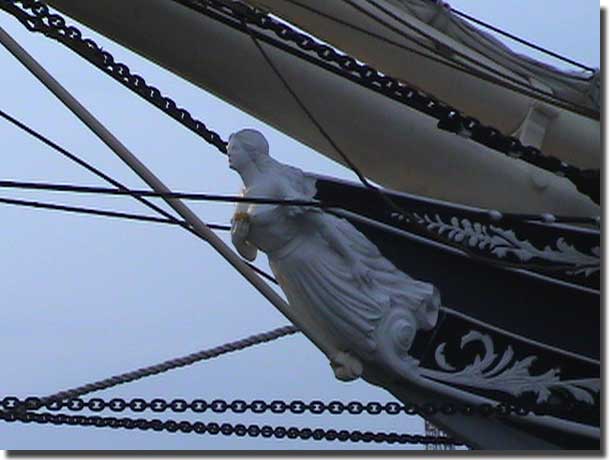
From the 16th to the 19th centuries, it was popular to put figureheads on the prows of ships. The ship-bound statues were supposed to ward off bad luck, and if the crewmates did drown, the spirit of the figurehead would lead the sailors' spirits to heaven.  Very often the figureheads were female.
(Photo of the 1877 Elissa from Ahoy - Mac's Web Log)

  • But let's pretend that's right, and let's pretend that the root-word for spout influenced the gender in English.  What is the gender of the word for "spout" in other European languages?
    • spout
      • French bec or jet both masculine
    • spray
      • German Sprühnebel masculine
    • fountain
      • French fontaine feminine
      • German Fontäne feminine
      • Latin fons masculine
  • This isn't an exhaustive list by any means, but it sure isn't looking very conclusive in any particular direction.  I think I'm going to conclude that if it's only the spray-spout that's regarded as feminine, it probably isn't for any reason having to do with the gender of some root word.

 
Engraving from J. Ross Browne's Etchings of a Whaling Cruise
(Image from Ten Pages [or More])

Sub-Theory B: Just as Ships are Feminine Because of Male Bias, So Also is the Spout

  • Another possible reason for why ships were called "she" back in the day may have had to do with the fact that only men were working on them.  
  • It was even considered bad luck to have a woman on board ship -- though sometimes the captain's wife sailed with the ship, and it was even noted in some instances that women made better navigators.  But on the whole, it was nearly always men who crewed the ship.  So they decided the gender of the ship, and they generally decided it was female.
  • Various readings of this practice have been offered, such as that "the ship was the only woman allowed at sea and was treated with deference and respect," or that ships were expensive and required a lot of maintenance just like a woman, or that a ship was given a feminine gender "to show a certain kind of sympathy with or affection for the thing." 
  • Regardless of the rationale, one thing that does seem to hold true is that the ship was regarded as "other."  It's not one of us men, but different, but it has more personality than an "it," so therefore it's female.


Currier & Ives print of whaling
(Image from somewhere on this Tumblr page)

  • If the whale is male--and it seemed that since female sperm whales tend to hide out at lower depths where they protect their calves, most often the whales that were encountered were male--and if the spout is the first sign of the whale, the thing that identifies the male whale and is therefore in a kind of allegiance with the men onboard the ship, and is therefore something they have a kind of affinity with yet are also apart from because they're not out there in the water with it, then the spray-spout is given a feminine gender.
  • Or that could be a lot of hoo-hah.
  • (Russian ships, by the way, were masculine.)
I think I'm going to sum up Theory 2, that the spout is feminine even while the whale may be masculine, by concluding that while that theory might be accurate, I can't put my finger on a particular reason that seems to be a hard and fast explanation of why that might be so.  So I'm not going to say that's definitely the deal.


Watch out for that tail.
(Image from Full Stop)


People who want to give Moby-Dick a thorough gender-based reading might have a lot of fun playing with the concept of the sea being feminine and the spout being more of the sea than of the whale.  Or you might want to play around with the idea of the whale being the male whalers' prey, and so even if they know the sex of the whale to be male, the spray-spout which is its harbinger could be whatever gender they want, and since they want it to be "other" and therefore easier to hunt and kill, they settled on feminine.

Those concepts are for other folks to duke out in literary circles.  Not for your Apple Lady who tries to deal in verifiable fact as much as possible.  So I'll leave those possibilities right there, as only possibilities (which could also be a bunch of hoo-hah). 

Theory 3: It's Easier to Say

  • You try shouting "There he blows!" and then "There she blows!" and you'll see what I mean.
  • It might come down to something as simple as that.

The Real Answer

In case you haven't figured this out already, the real answer is "I don't know for sure, and nobody else seems to, either."  (Sorry I couldn't do better for you, Mr. Kish.)

The End.


(Image from the NY Review of Books)


Related entry: Ambergris


Sources
Reverend Henry T. Cheever, The Whale and His Captors (1853), at EyeWitness to History

James Cooper Wheeler, There She Blows! A Whaling Yarn (1909)
Capt. John A. Cook and Samson S. Pederson, Thar She Blows (1937)
New Bedford Whaling Museum, Whales and Hunting
Long Island History, Whaling & Fishing
Columbia County Historical Society, Whaling Terms and Phrases
Glossophilia, Why is a ship a she?
GlobalSecurity.org, Naming Ships
Steve Krause, Gender in German
Reverso, spray in German, and other words in other European languages
Timeless Myths, Women on Board Ship - Bad Luck

Monday, December 17, 2012

Apple #615: Christmas Ghost Stories

If you know the Christmas song "It's the Most Wonderful Time of the Year," you'll recognize these lines:
There'll be scary ghost stories
And tales of the glories of
Christmases long, long ago.

I've wondered about this passage for years.  Apparently it used to be somebody's tradition to tell ghost stories at Christmas time. Really?  Is this true?  When did that tradition start?  A Christmas Carol is the only Christmas ghost story I can think of.  Are there others?


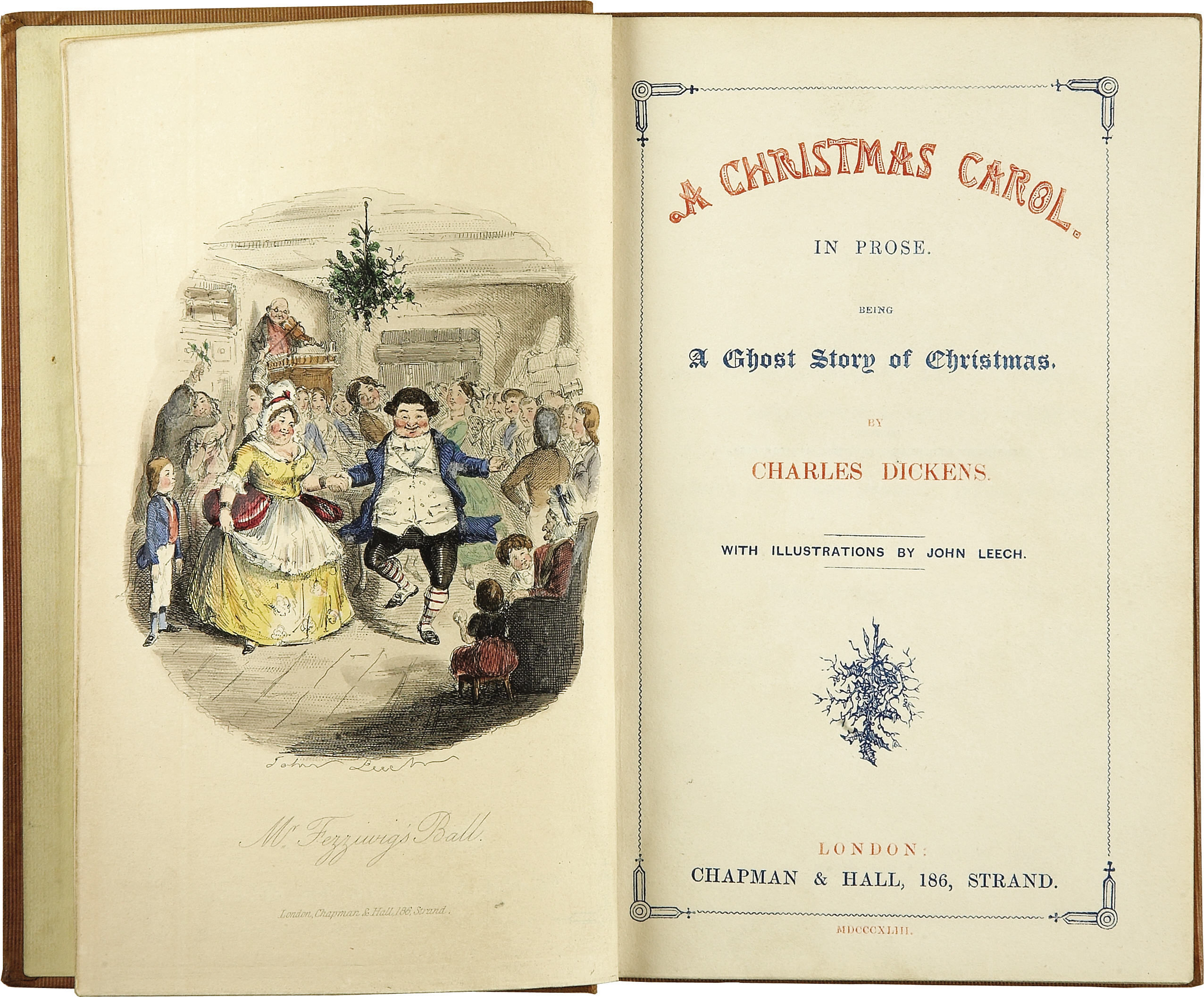
  • According to many Victorian scholars, A Christmas Carol (1843) is the origin of the practice of telling Christmas ghost stories.
  • Other Christmas ghost stories followed that.  I'll list some of those for you in a bit. But first, let's see if we can trace the practice any farther back than Dickens.

Older than A Christmas Carol
  • One guy, Jim Moon, says that a passage from Washington Irving's Sketch Book (1819) suggests that some Christmas ghost telling went on back then.  In a section titled Old Christmas, the main character, Geoffrey Crayon, visits the Squire on Christmas Day and describes this scene:
When I returned to the drawing-room, I found the company seated around the fire, listening to the parson, who was deeply ensconced in a high-backed oaken chair, the work of some cunning artificer of yore, which had been brought from the library for his particular accommodation. From this venerable piece of furniture, with which his shadowy figure and dark weazen face so admirably accorded, he was dealing forth strange accounts of popular superstitions and legends of the surrounding country, with which he had become acquainted in the course of his antiquarian researches.
  • I don't know if "popular superstitions and legends" count as ghost stories, but Mr. Moon says they do.


  • Mr. Moon further says that if we broaden our concept from Christmas time to a more pagan winter time, then Shakespeare's A Winter's Tale counts as a Christmas ghost story.
  • In that play, the pregnant Queen, Hermione, is suspected of infidelity by her (rather deranged) husband and thrown into prison.  There, she gives birth and dies, and then later she appears in a dream to the guy who was told to take the newborn to a remote place, and she tells the guy to name her daughter Perdita.  
  • Dead Hermione does a lot of shrieking, so I suppose that counts as being a ghost. But I'm not sure I agree with Mr. Moon that this makes A Winter's Tale a Christmas ghost story.
  • Another source says that the oral tradition and ghost stories and Christmas all go together as far back as Shakespeare's time, but it doesn't offer any specifics.
  • Many people say there's definitely a relationship between Christmas traditions and pagan festivals a ghost stories. They say that, since it was the custom to celebrate the death of the old year and the birth of the new around what is now our Christmas time, those pagan people most certainly would have told ghost stories.
  • But I haven't found a single Celtic winter ghost story to back up their claim. Some of these sites mention something they call "Sluagh-Sídehe of Brug na Bóinne." Then they all repeat the exact same gibberish-y kind of stuff that doesn't make a whole lot of sense.  They've all clearly copied & pasted it from each other, with no elaboration or explanation.  I can't find any other source that mentions this story, let alone explains it. So I'm chalking that one up to Internet hogwash.
  • Besides that particular errant path, most of the Celtic ghost stories seem to center around the festival of Samhain, or basically our Halloween.  Not Christmas. 


You can always read some Irish ghost stories and see if any have to do with Christmas. You might find one, but as far as I can find out, probably not.
(Photo from Following Celtic Ways)

  • Jim Moon, the guy who said A Winter's Tale counted as a Christmas ghost story, says, "[A]s plausible as this ancient pagan theory of Christmas ghost stories is, unfortunately any proper evidence to support it has melted away like snow on Boxing Day. And the standard scholarly view is that there is nothing to point to the existence of the tradition in pre-Victorian times."
  • So I think we'd better consider A Christmas Carol to be the point at which Christmas ghost story-telling started, and go forward from there.

Newer Than A Christmas Carol (1843)
  • The first thing that comes up is another Dickens story, this one called "A Christmas Tree" (1850) One place where you can find this story is in The Complete Christmas Stories of Charles Dickens, but I suspect, since it's a short story, it's probably been collected or anthologized lots of places. 


  • In this story, the narrator is an adult and remembering all the things that used to be on his Christmas tree when he was a child, and all the stories and plays and music that the ornaments on or near the tree remind him of. He follows his memory back through time and over various landscapes to describe various scenes. During one of these mental wanderings he describes this scene:
There is probably a smell of roasted chestnuts and other good comfortable things all the time, for we are telling Winter Stories--Ghost Stories, or more shame for us--round the Christmas fire; and we have never stirred, except to draw a little nearer to it.
  •  OK, so that's only a reference to the practice of telling ghost stories, not a ghost story in and of itself.


  • Henry James's The Turn of the Screw (1898) could be regarded as a Christmas ghost story.  It opens, in James's characteristic, maddeningly contortionist prose, on a scene where people are sitting around telling ghost stories on Christmas Eve in a creaking old house.
The story had held us, round the fire, sufficiently breathless, but except the obvious remark that it was gruesome, as, on Christmas Eve in an old house, a strange tale should essentially be, I remember no comment uttered till somebody happened to say that it was the only case he had met in which such a visitation had fallen on a child. The case, I may mention, was that of an apparition in just such an old house as had gathered us for the occasion—an appearance, of a dreadful kind, to a little boy sleeping in the room with his mother and waking her up in the terror of it; waking her not to dissipate his dread and soothe him to sleep again, but to encounter also, herself, before she had succeeded in doing so, the same sight that had shaken him.
  • So, to paraphrase, the ghost story that was told just before the novel opens is of a ghost ("apparition") that appeared to a little boy, who got scared and woke up his mother so that she would see the ghost, too.
  • The real ghost story, the one that forms the bulk of the novel, was written down, and the member of the party who knows it says it's too horrible to tell, but he'll write to have the pages sent to him. The next day (Christmas itself) the guy sends his letter, and that is the last time Christmas is ever mentioned.  So if you didn't remember that The Turn of the Screw had anything to do with Christmas, you are most certainly to be forgiven.


  •  Another author with the last name James got into the Christmas ghost story act.  M. R. James (The M. R. stands for Montague Rhodes) wrote several ghost stories from 1892-1935. James remarked in the appendix to his first volume of ghost stories: "I wrote these stories at long intervals, and most of them were read to patient friends, usually at the season of Christmas."
  • The Telegraph says that he actually composed the stories at Christmas, while at King's College, Cambridge.  I'm not sure that's accurate, but if he did write them at Christmas and with the intent that they should be told at Christmas, that would double the Christmas-nature of his ghost stories.  
  • The BBC dramatized some of his ghost stories in the 1970s and revived them again in the 2000s.  Here is "A Warning to the Curious" starring Christopher Lee.


  • It begins, "Every Christmas Eve has its ritual, when those invited make their way for the appointed time. Out of the darkness, while the master waits."
  • Pretty creepy -- and Christmasy.  This guy might win the Christmas + ghost story prize.


  • Much more recently, Susan Hill published The Woman in Black (2011).  It, too, opens on Christmas Eve, when a group of people are telling ghost stories. Our hero, Arthur Kipps, simply can't bring himself to tell the ghost story that he knows. He leaves the party and goes home to reflect on his memories, and then we get the story.
  • A solicitor, Kipps was assigned to the case of a Mrs. Dablow, recently deceased. He was told to go to her house, which is called Eel Marsh, attend her funeral, sort out her papers and effects and dispose of her estate.  Once he arrives in the very British and foggy locale, he begins to experience all sorts of unexplained phenomena, including visitations by the Woman in Black herself.


  • Which reminds me.  The Harry Potter books could be considered Christmas ghost stories, most especially The Deathly Hallows.  He and Hermione (named for the Queen in A Winter's Tale?) visit the graveyard in Little Hangleton. After Harry finds the grave of his parents, an old woman gets their attention and leads them to her house. They realize she is Bathilda Bagshot, the most important magical historian of their age. What they don't know is that Bathilda has already died. . . .
  • She's technically not a ghost, only a corpse inhabited by another creature. But I thought that was one of the scariest parts of all the Harry Potter books, and it took place on Christmas Eve. I think J.K. Rowling might have done that on purpose.

Why Christmas ghost stories?
  • I don't think I started out wondering why Christmas ghost stories became popular.  But now that I've looked at these various examples, that question is crossing my mind.
  • I think it probably has to do with the fact that Christmas falls at the darkest time of the year, and there's a lot of change happening.  The days will start their shift from more-dark to more-light, and the Christmas story tells us that by some miracle, God came to live among us. If God could do that on this day, why not other beings from the other world as well?  
  • So I'm thinking A Christmas Carol might be the ultimate Christmas ghost story: it happens on Christmas Eve and Christmas day, there's not one ghost but three, God works through them to effect change so there's definitely the Christian aspect of Christmas, and like the calendar, the main character experiences a revolution.  Maybe that's why it's the one Christmas ghost story we continue to tell again and again in so many ways.


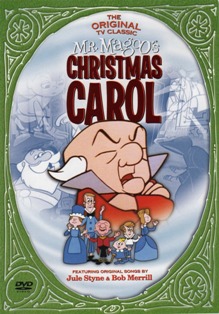
There's even a Mr. Magoo's Christmas Carol.
(Photo from Wikipedia)
Sources
Jim Moon, Christmas Spirits Part I: The Origins of Ghost Stories at Christmas, Hypnogoria

Tim Beckley, The Lost Tradition of Christmas Ghost Stories, UFO Digest, February 2011
Charles Dickens, The Complete Christmas Stories of Charles Dickens
Henry James, The Turn of the Screw
The Literature Network, The Turn of the Screw
"Collected Ghost Stories by M R James: A Review," The Telegraph, October 28, 2011
"M. R. James's Christmas Ghosts," Electric Sheep, August 15, 2012
The Woman in Black by Susan Hill, Spooky Reads

Monday, January 23, 2012

Apple #567: Ambergris

In keeping with my previous entry whose subject was inspired by a book I was reading, I thought I'd investigate another topic similarly inspired. I've been reading Moby-Dick. Slowly, about three pages a day, since October. If I had to read many more pages at a time, I'd have given it up long ago. But I'm determined to make my way through it for once.


Actually, I know I'd never have made it this far without the aid of Matt Kish's book of illustrations (pictured above right). I read about three or four pages of the novel at a time and then reward myself by looking at the illustrations that correspond with the pages I've read. My copy of Moby-Dick (above left) is not the edition he used when he drew his illustrations so the pagination is slightly off. But the difference is negligible. I happen to know Matt from my bookstore days, but even if I didn't I would still recommend his book of illustrations as an invaluable aid in reading the original.
(Photo by the Apple Lady)


I recently read the chapter about ambergris. It's such a mysterious substance, and I have to admit, I didn't quite believe Ishmael's explanation or description of it. So I thought I'd find out for myself.

I don't think Ishmael would take this amiss. In fact, I think that looking up the information outside of the narrative would be perfectly in keeping with the book.

Anyway, here are a few facts about ambergris:

  • Ambergris is a waxy substance that originates in a sperm whale's stomach. 


This is a sperm whale mother and her calf. Sperm whales are named for the material in their huge skulls called spermaceti, which is a gooey substance when wet and waxy when dry. Scientists still aren't sure what it's for, but they suspect it helps the whales retain their buoyancy.
(Photo from Amazon AWS)


Males can grow to be 50 meters long and weigh 50 tons. This diagram gives you a good idea of the size of a sperm whale.
(Illustration from National Geographic)

    • Sperm whales eat giant squids. Giant or colossal squids, by the way, happen to live in the very deepest waters and the whales have to dive down to get them. The spermaceti might have something to do with enabling the whales to dive that deep.
    • Squids have beaks. The whales can't digest the beaks, so they stay in the whale's stomach. The beaks are pointy and sharp, and they look remarkably like parrot beaks.


    The beak of a giant squid, up close. The beak functions as the squid's jaws and mouth, the thing it uses to clamp down on its prey. The beak of a colossal squid is about the size of a man's hand.
    (Photo from Te Papa's Blog)


    This fellow is showing the location of a squid's beak. This is not a giant squid but a Humboldt squid, but it keeps its beak in the same place.
    (Photo from KATU News)

    • As the squid beaks get sloshed around in the whale's stomach, they scrape the insides of the stomach. (Cuttlefish beaks have the same effect, by the way.) The stomach's reaction to this irritation is to produce ambergris.
    • I can't find a very good explanation of ambergris' function in the whale's stomach. Is it a protective coating? Something to encourage the whale to expel the squid beaks? I'm not sure. One site says that ambergris is "a cholesterol derivative."
    • That's probably the best answer available. Scientists don't know much about sperm whales in general. Because the whales spend most of their time swimming at such distant depths, it's very hard to study them. So a lot of what we "know" about sperm whales is guesswork at best. Our theories about ambergris are mostly that: theories.
    • Somehow the whales expel the ambergris, either by vomiting or by excretion. It floats around in the ocean until it gets washed up on shore as a black, thick, foul-smelling liquid. Like, run-away-it-stinks-so-bad. Like, pew-that's-cow-manure-plus-something-fishy bad.
    • But once it's dried ("allowed to age" is how it's delicately put) its fragrance changes completely. It's still a bit musky but it also takes on a lighter, mossy fragrance. Altogether, people find the scent of ambergris so velvety and enchanting, they only want to smell it more.
    • Once it's dried, ambergris can be white, ash-gray, yellow, or black.
    • The word "ambergris" comes from the French for "gray amber."


    What black ambergris looks like. This ambergris washed up on shore around or near New Zealand. Looks a lot like regular stones, doesn't it?
    (Photo from ambergris.co.nz)

    • The lighter-colored the ambergris, the better the aroma, and the higher its value.
    • Ambergris has been used, most obviously, in perfumes. It is reportedly the slowest of perfume materials to evaporate, which means it holds its scent for an incredibly long time. Queen Elizabeth I used to perfume her gloves with ambergris.
    • Ambergris has also been used as a type of glue. It even used to be used in cooking. Dissolved in wine, ambergris is said to produce a heady aphrodisiac. Louis XV enjoyed foods flavored with ambergris.
    • Trade in ambergris is now banned in several countries to discourage whaling. But people do still find it on shore, and the sale of found ambergris does continue. 


    A few years ago now, this woman found a huge lump of ambergris on South Australia. Ambergris is pretty light-weight for its size, but this hunk is so large, it weighed 15 kg. Its value was estimated somewhere around $300,000.
    (Photo from Laputan Logic, original source unknown)


    • If anyone is selling large quantities of ambergris perfume, chances are they got it commercially, which means they got it from a sperm whale that was killed and harvested.
    • Part of the reason ambergris is so valuable is because it is so rare. Not only is whaling banned in most of the world, which thus reduces the amount of ambergris on the market, but its occurrence to begin with is not all that common. One source says that "approximately 1% of the population" of sperm whales produces ambergris. So even if you did hunt down all the sperm whales, chances are, you wouldn't find ambergris inside most of them.

    [imagine a photo of a small bottle of ambergris here]
    Small bottle of a tincture of ambergris. "Tincture" means it's been dissolved in alcohol. The liquid is a pale gold color. The person who made this says she uses only beach-found ambergris. She sells her ambergris tincture for $85 per 10 ml bottle.
    (I would link to the photo but she says her entire site is copyrighted and she doesn't want anyone to use anything whatsoever from her site. So you'll have to go to her site if you want to see what an ambergris tincture looks like.)

    • Synthetic ambergris scents are used in perfumery today, perhaps most famously as one of the scent components in Drakkar Noir (and in another men's cologne, too: Cool Water). I wouldn't say that synthetic ambergris smells like Drakkar Noir, but it may be one of the notes in that cologne's overall scent.


    Drakkar Noir: a whale of a cologne? Har har har!
    (Photo and cologne available from Amazon)

    • One of the reasons I wanted to do this entry is because I have been wondering, the whole time I've been reading Moby-Dick, how much I could trust Ishmael (or Herman Melville). Has what we know about sperm whales changed a lot since that novel/scientific treatise was written? Am I taking in a lot of outdated, now factually incorrect information?
    • I am happy to report, at least as far as the information about ambergris goes, Ishmael was absolutely on the money. In fact, in some ways, he provided more facts about ambergris than I did. Here are some excerpts about ambergris:
    "Dropping his spade, [Stubb] thrust both hands in[to the dead sperm whale's stomach], and drew out handfuls of something that looked like ripe Windsor soap, or rich mottled old cheese; very unctuous and savory withal. You might easily dent it with your thumb; it is of a hue between yellow and ash color. And this, good friends, is ambergris, woth a gold guinea an ounce to any druggist.
    . . .
    "Though the word ambergris is but the French compoud for grey amber, yet the two substances are quite distinct. For amber, though at times found on the sea-coast, is also dug up in some far inland soils, whereas ambergris is never found except upon the sea. . . . ambergris is soft, waxy, and so highly fragrant and spicy, that it is largely used in perfumery, in pastiles, precious candles, hair-powders, and pomatum. The Turks use it in cooking. . . . Some wine merchants drop a few grains into claret, to flavor it.
    . . .
    "By some, ambergris is supposed to be the cause, and by others the effect, of the dyspepsia in the whale. . . . I have forgotten to say that there were found in this ambergris, certain hard, round, bony plates, which at first Stubb thought might be sailors' trousers buttons; but it afterwards turned out that they were nothing more than pieces of small squid bones embalmed in that matter."
    --Moby-Dick
    • Could Ishmael be the world's first Apple Lady?

    Sources 
    Merriam Webster, ambergris
    Lexicus, definition of ambergris
    Online Etymology Dictionary, ambergris 
    Ambergris.co.nz, identification 
    Tony Burfield, Ambergris Update, Feb-Mar 2005 
    National Geographic, Sperm Whale 
    Oceanic Research Group, Sperm Whales: The Deep Divers of the Ocean 
    Enchanted Learning, Sperm Whales

    Saturday, August 8, 2009

    Apple #402: Oceans

    Ladies and gentlemen, I have a new love. It's a book.

    It's really cool and also beautiful, it's always at hand when I need it, yet it doesn't interrupt when I want to do something else. We never fight. Best of all, it teaches me something new all the time.

    The book is called Ocean: The World's Last Wilderness Revealed, and it is huge.


    It is 12" x 10", 512 pages, and nearly 6 pounds, to be exact. It is so big because everything you could imagine having to do with oceans in any way is discussed and described and photographed in this book. Every page is in full-color, photographs galore. There are atlases of the oceans. There are explanations of ocean currents, of plate tectonics, and of salt farming. There is a fully illustrated guide to species, from bacteria and protozoa, to sponges and molluscs, to birds and reptiles and mammals.

    Each page has one huge photograph of something spectacular -- a gigantic fish, for example -- and then surrounding the large photograph are smaller photographs of related things -- smaller fish or similar fish or fish that live in the same region -- with paragraphs of explanatory text around them. So each page is chock full of information and really cool things to look at besides.

    Here are some of the facts I've learned so far:
    • Oceans are the largest habitat on earth. Yet because of the depth of the water, we know very little about them. We have better maps of the moon.

    See? Look at all that ocean.
    (Photo from Kennesaw University)


    • Free divers pooh-pooh the oxygen tank. They simply hold their breath. The deeper they go, the more their lungs get squeezed by the pressure of all that water above them. But at the same time, their blood vessels expand, so they're all right. Some free divers have gone as far as 600 feet deep -- that's on one gigantic breath.
    • 600 feet might not seem like much. But compare this: in 1960, two guys took their ocean diving craft called the Trieste into a really deep part of the Mariana Trench -- the deepest place on earth. They dove down 35,797 feet. In their powered craft, it took them 5 hours to get down there. No one else has dived as deep since.
    • There are mountains on the sea floor. These are called seamounts, and they have to be at least 3,300 feet tall to qualify (El Capitan in Yosemite is 3,300 feet tall). Yet they are completely submerged. There are some 100,000 of them on the ocean floor.
    • Lobsters migrate. On their spiky little arms, they walk in single file across the ocean floor.
    • There's a place on the coast of Namibia called the Skeleton Coast where the desert goes right into the sea. I mean, the ocean waters are lapping against the desert sands. This seems to defy all logic. You would think that all that ocean water would rain down on the coastline and water that desert, but no. It condenses into a near-permanent fog, the wind usually blows off the water into the ocean, and the desert stays desert.

    The Skeleton Coast
    (Photo by Pepix2007 on Flickr)


    • It is called the Skeleton Coast because all that fog and the high winds and the overall insanity of the place make it very hard for ships to navigate, and countless ships have run aground there. Survivors who make it to land encounter a long walk through desert and then they have to cross a mountain range before they find any people.
    • Birds that steal food from the mouths of other birds are called kleptoparasitic birds.
    • There's something called a Prickly Redfish that looks like a huge lumpy carpet. It's actually a kind of sea cucumber, and it crawls across the seafloor on its orange tube feet. It's considered a delicacy in East Asian cuisine.

    (Photo from the Australian Government Reef Monitoring program)

    • The fur of the sea otter is the densest of any mammal on the planet. Because its fur is so dense, the sea otter's skin never gets wet, even though it spends its entire life in the water.
    • Sometimes old coral reefs get so sculpted by the ebb and flow of tidal waters that they get carved away on the sides and underneath until they stand up out of the water like tables, or mushrooms. These are called champignons, which is French for mushrooms.

    Champignon in a lagoon, I think in the Indian Ocean
    (Photo by Donald & Esther)


    The carving action of the water is more dramatic on this champignon.
    (Photo by Ben Stobart, Aldabra Marine Programme)


    • Most marine mammals (sea lions, seals, penguins, walruses, etc.) are completely carnivorous. No vegetarians there.
    • There's a sinkhole off the coast of Belize called the Great Blue Hole. It's a 480-foot hole in the limestone reef and because of its depth, the water has a brilliant blue color. People do go diving there, but it's treacherous because of the stalactites hanging down from the walls and the fact that sharks like to hang out in it.

    The Great Blue Hole. Not kidding about the blue.
    (Photo from Biocassanova's blog)


    • The Cookiecutter shark has lips that hold its victim in place and then its teeth bites cookie-shaped chunks from its prey.
    • Juvenile zebra sharks have stripes. Adult zebra sharks have spots.
    • Polar ice can be different colors. If it's white, it has a lot of air bubbles trapped in it. Older ice that's had most of the air bubbles compressed out of it is blue. Sometimes an iceberg can flip over, in which case the algae growing on the bottom becomes visible, and the ice appears to be green.
    • You've probably heard of the fjords in Norway. But did you also know that there are fjords in Chile? That's what the Andes mountains descend into on the southwest coast of Chile. There are 21,500 square miles of fjords down there.

    These people have gotten off the M/V Mare Australis cruiseliner and are taking the optional trek on the ice fjords on the Chilean coast. Note the blue ice!
    (Photo from Explore UK, which has more information about this cruise)


    • The vampire squid is bioluminescent (glows) and it has things called photophores on the tips of its arms. When a predator tries to get it, the vampire squid thrashes its arms and releases sparkles of light all over the place into the water. The flashing lights distract the predator and by the time the sparkles have died out, the squid has escaped.
    • A polar bear's paw may be over 12 inches wide.


    I'm telling you, this book is magnificent. Oh, I forgot to mention: I got it for $6.50 from my local Border's.

    Tuesday, July 8, 2008

    Apple #327: Summer Reading

    I love books. I love reading. Reading is one of my favorite things to do. I like holding books, I like paging through them, I like looking things up in books. I like going to libraries (I used to be a librarian, you know), and I like going to bookstores -- used or new -- and finding treasures. I like books with pictures in them. I like listening to people read books to me. I like reading before I go to sleep at night, and I like reading while I eat my lunch.

    My dad said to me once, looking up from a book he was reading, "Aren't books wonderful things? Somebody took the time to write all of this down so other people could read it. Magnificent."

    My thoughts exactly.

    As you probably know, I was off on vacation for a week. I went to one of the best places in the world, ever, and it was beautiful there. I did quite a few outside things, but I also did a ton of reading. I was there with my parents, and at two or three points throughout each day, in between running errands or fixing this & that, we would stop for lunch or a snack and read. At the beginning of the day, we'd start out with the paper, and then as we finished with that, we'd each move to our respective novels and histories. By night time, the three of us would all be sitting around the coffee table -- my dad in the big wooden rocking chair, my mom in the blue upholstered rocking chair, and me on the couch -- reading. Familial bliss.

    Want to know what we were reading? Okay.

    My dad:

    • Mr Lincoln's Army, and then A Stillness at Appomattox by Bruce Catton. They are 2 of the 3 volumes in the set called The Army of the Potomac. My dad read out loud a few passages to my mom and me, one in which Lincoln paid a visit to General McClellan who was taking his time about things. Lincoln said to McClellan, "If you don't want to use the army, I should like to borrow it for a while." My dad likes Civil War histories almost as much as he likes World War II histories, but he especially likes Bruce Catton's writing style. John Miller, one of Amazon's reviewers agrees: "If every historian wrote like Bruce Catton, no one would read fiction."


    • He finished those two and moved on to Panama Fever: The Epic Story of One of the Greatest Human Achievements of All Time-- the Building of the Panama Canal, which is just out this year, and something my mom brought home from the library for him. It has several photographs, and my dad always starts a history book at the photos and reads forward from there. He showed me one photo of the locks when they were closed, no water on the side from which the photo was being taken. I don't know the height of those enormous metal doors, but the person standing in front of them looked about the size of a wee pencil in comparison. He also read out that Panama had several feet of rain one year when the canal was being built. Yes, that's feet.
    • Waiting in the wings for him are several P.D. James mysteries. He likes P.D. James quite a bit. He says sometimes the things that happen are distasteful, but he enjoys the writing so much he's willing to overlook the unsavory parts. The next one on top of the pile is A Taste for Death (Adam Dalgliesh Mysteries, No. 7).

    My mom:


    • Immediate Family by Eileen Goudge. She told me it's about four friends, one of them a man, and each of the friends has a different and somewhat dramatic thing going on. One of the friends, a woman, really wants a baby. So the wife of the man tells him to go get her pregnant, which he does (reminded me of The Big Chill). In the meantime, someone also seems to have been involved in the shooting of the girlfriend of an aging rock star. My mom said she knew right away who the guilty culprit was, but having figured out that mystery certainly didn't ruin her interest because she read the whole thing in a day or two, even stayed up late one night to finish it.
    • I didn't see the title of the next book she started, but I know that she bought a copy of Henri Nouwen's Our Greatest Gift: Meditation on Dying and Caring at the used book store one day. She really likes Henri Nouwen, and when she sees one of his books (used) that she doesn't already have, she'll buy it. She said the way she reads his books is a page or sometimes only a paragraph at a time, and then she puts it down and thinks about it, lets it sink in for a while.
    • To make up for the fact that I didn't see the title of the next thing she read, I'll tell you that she also likes novels by Jan Mitford, the Miss Julia series by Ann B. Ross, and she liked quite a few novels by Elizabeth Berg. Recently, she read One True Thing by Anna Quindlen, and she liked that. She sometimes likes Tess Gerritsen (scary, says my mom), and every once in a while when she can't find anything else she'll read a Danielle Steele and sort of put up with it.
    Me:


    • The Men and the Girls by Joanna Trollope. That is a thoroughly stupid cover and does not fit her writing style at all. Joanna Trollope is one of my recent finds, and fortunately she is wonderfully prolific, so I almost always find a book of hers that I haven't read yet. She takes a situation in marriages or families -- second marriages with step-children, for example, or couples who are unfaithful with friends, or young women who are searching for careers and romance at the same time, or in this case, older men (60s ish) who are married to younger women (early 30s ish) -- and shows how it plays out in two families. Trollope is really good at making the children real and moving among everybody's point of view, keeping you up to date on what everybody is thinking. When they start freaking out, she lets you follow along as they figure out why. She's very big on no self-pity, and if a character gets too caught up with a particular house or apartment at the expense of someone else, you can bet that character is going to wind up the loser.
    • I'm also wading through You Must Remember This by Joyce Carol Oates. This is the fourth JCO novel I've read in a row (I have my reasons), and it's getting a little old. She usually combines a tale about somebody who suffers some extraordinary violence at the beginning with some sort of cultural situation. In one book, the cultural situation was the lawyers and how corrupt they can be, in another it was doctors. In this one, it's the Cold War and bomb shelters. That topic never interested me to begin with. The place where I've paused in this book has taken a break from the personal story and is spending time on Eisenhower and bomb shelters and panic about nuclear war, and I find it dull. As soon as the story of incest with the uncle picks up again, I might get back into it. But this might be one that fades away.
    • Mrs. Eckdorf in O'Neill's Hotel, by William Trevor, is one that I'm reading with great interest. In this novel, Mrs. Eckdorf is a photographer who finds out about very personal, heart-wrenching stories and goes and takes photographs of the people involved and publishes it all in documentary-like coffee table books. She's shown up at the O'Neill Hotel in Dublin because she believes some terrible tragedy happened there in the past, and she's determined to find out what it is and get pictures of everybody still caught up in the tragedy. But the people who live in this dilapidated hotel that is sometimes used for prostitution do not cooperate with Mrs. Eckdorf's plans. Mrs. Eckdorf, sometimes prone to shouting at herself in German in the middle of the street, kind of loses it. I find this book especially interesting to read during our current mania for tell-all memoirs. William Trevor has such a deft and gentle touch, and this novel is no exception. The novels of his I like best are those that deal with people who are off their rockers. So in my estimation, this is at the top of my list of his books.


    • From the library, I checked out a copy of Mrs. Pollifax and the Second Thief on tape, to listen to in the car on my drive back. I like to listen to books on tape as I'm driving long distances, but I make sure to pick novels that don't require intense thought, otherwise I tend to drive past exists and other places where I'm supposed to turn. My mom and I used to read Mrs. Pollifax books back when I was maybe 12 or so, and when she declared that the newer ones weren't as good, I took her word for it and left them behind. This title is the 16th of 22 and it's not too bad. Anyway, if you're not familiar, Emily Pollifax is a grandmother, a member of her garden club, has studied karate for enjoyment for years, and winds up becoming a spy for the CIA. Listening to this book now, I think the CIA sounds more British than American, or at least her two handlers, Carstairs and Bishop, seem far more gentle than I imagine most CIA guys to be. She gets into all kinds of scrapes (in this one, she's in Sicily being followed by many suspicious cars and being tracked by a notorious international assassin). Her adherence to manners, decency, and common sense are what help to get her out again. And she sometimes has the help of a dashing fellow agent named John Sebastian Farrell. In this one, Farrell is wounded and needs her help.

    Hopefully, at least one book from all these titles will pique your interest and you'll check it out from your local library or book store. If you're not interested in any of these but you'd like some more suggestions, click on my label entries about art and books, and scroll down to find a few entries about other books and authors.

    Or of course, a great place to look is at your local library's web site. Usually, libraries have lists of recommendations under such titles as "Recommended Reads" or "Reader's Advisory" or "If You Liked [Author Name Here]." Your local library is a great resource. Don't be afraid to ask the librarians for suggestions. For a librarian, that's the very best kind of question to be asked -- in my opinion, and I think most librarians would agree -- because you get to talk to people about books and what they like to read. Yum.