Showing posts with label seasons - winter. Show all posts

Monday, November 17, 2014

Apple #689: How the Body Adjusts to Cold Weather

The temperatures are starting to drop, some parts of the country have already gotten snow.  But it struck me last week, when temperatures fell from a surprising 70 degrees down to 45, how different 45 degrees feels at the end of fall versus what it feels like at the beginning of spring.

This time of year, when it hits 45, everybody starts pulling out their heavy coats and winter sweaters, putting on gloves and hats, blowing on their hands to keep them warm.  In the spring, that same 45 degrees feels luscious.  Everything's melting, the sun is out, the air feels balmy, everyone's unzipping their coats, going bare-headed and without gloves.  So what's the deal?


Like it or not, cold weather is coming.  Are you ready?
(Photo from Ask Bob Carr)


I've always thought the fact that we react to the same temperature so differently depending on the time of year was all a matter of perspective.  Context.  It's been warm, now it feels colder, and ooh boy, we don't like it.  Or, it's been cold, now it's warming up, and ooh boy, that's nice.

I looked this up (as your fearless Apple Lady is wont to do) and it turns out, it is not just in our heads.  It is in our bodies, too.

  • Scientists estimate that it takes our bodies somewhere between one and two weeks to adjust to a major change in temperature.  This could be cold weather becoming warm, or warm weather becoming cold.
  • But we are better at adjusting warming temperatures rather than warm temperatures becoming cold.  As one anthropologist says, our bodies are better adapted to warm weather and "Our bodies are just not as good at dealing with cold."
  • But our bodies do make some adjustments.
  • First, you get goose bumps.  This doesn't actually do all that much for us anymore now that we humans aren't covered with a coat of fur.  But if we were still furry like our animal relatives are, the constriction of the hair follicles would lift the individual hairs slightly above the skin, trapping warm air beneath the fur and giving us an extra layer of insulation.  As I said, we don't have fur anymore, so even though we still get goosebumps, they don't do us that much good.


See how the goose bumps make the hair stand up?  Now, if this were long and densely packed animal fur instead of sparse and thin body hair, you can imagine the warm air that would be kept all nice and cozy under there.
(Photo from Beliefnet)


    • By the way, the big scientific word for goosebumps is "horripilation." This is because animals' fur stands up not just when they're cold but also when they are threatened and want to scare the heck out of any would-be attackers, a.k.a. they want to make themselves look horrifying. 
 
  • The next cold weather response is that our muscles shiver.  This is a fast way of producing a lot of heat -- 5x the amount of body heat prior to shivering.  When we shiver, our muscles contract rapidly over and over.  But since shivering expends a lot of energy and it doesn't do much else for us, shivering is typically a short-term solution, one that our bodies abandon if the cold persists for too long.


Yes, this is bad clip art, but it gets the idea of shivering across.  Also, see how he's got his arms crossed in front of his chest?  This is another unconscious response to the cold that we often have.  We are trying to warm up and protect the most important part of our body: the core.  So this guy may look cold, but his body is trying its best to keep him warm in spite of the cold.
(Image from Clipart Panda)

  • The next thing, and the longer-term solution, is our blood vessels constrict.  Your body is trying to manage blood flow, and since blood carries heat with it, it's trying to be judicious about how much heat it's sending where.  It doesn't want to send too much blood/heat to the extremities like fingertips, toes, end of the nose because those parts of the body are not as essential as things like the internal organs and the brain.  
 
    • I don't know about you, but I have noticed when I'm out walking in the winter for any length of time that I might feel chilly in my hands and face, but I'm snug as a bug in my torso.  This is the blood vessel constriction plan working very well.


Cross-section diagrams of blood vessels. At the left is what the blood vessels normally look like, in the middle is what blood vessel constriction looks like, and finally at the right, what blood vessel dilation looks like.  It's not that the blood vessels themselves get bigger or smaller, but rather that the muscle cells in the blood vessels expand or constrict, allowing more or less space in the vessel for blood to pass through.
(Diagram from Wikipedia)
  • But your body is not so draconian that it believes it can entirely abandon your fingertips, toes, and end of your nose.  Those things are pretty helpful.  So it will periodically stop doing the constriction thing and switch to dilation -- expanding the blood vessels to allow blood flow back to the extremities to keep them nourished and from getting so cold they get frostbite.  
 
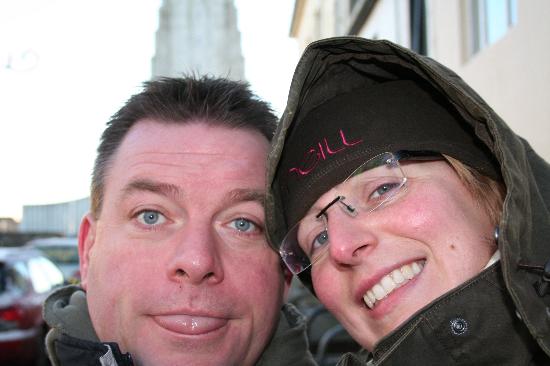
    • When your cheeks turn red from cold and your nose turns pink, that's blood vessel dilation happening.  The pink in your cheeks is the extra blood flow going to your face.
 

These people's faces have turned pink because their bodies are trying to keep their faces warm, even as it's cold outside.  Blood vessel dilation in the face at work.  (These people are in Iceland, by the way.)
(Photo from TripAdvisor)

  • If you stay out in the cold and your body has to continue to deal with it, your body will switch  again from dilation back to constriction.  Because really, those internal organs are pretty important.  After enough time in the cold, your body will make that brutal decision to sacrifice your fingertips, your toes, or the end of your nose if it has to.  This isn't some namby-pamby parlor game, after all.  This is the preservation of your life we're talking about here.
  • Something else that happens along with blood vessel constriction is an increase in blood pressure.  Less room for the blood to move around in, the higher the pressure on the blood vessels.  This is why, for example, people are more prone to getting heart attacks while shoveling snow.  
  • But what's more likely to happen before you have a heart attack from elevated blood pressure is that your body will try to reduce the pressure by reducing the amount of fluid in your system.  Which means your body will decide it's got to get rid of that excess urine, and you'll have to go to the bathroom.  
 
    • That's right, when you've gotten your kid all bundled up like Ralphie's little brother and you've sent him outside, don't be surprised if he runs back in half an hour later, saying he's got to go to the bathroom.  His not trying to be annoying, it's just his body helping him to survive the cold.


Yes, right about now is when he'll have to go to the bathroom.  Thank the cold air for that.
(Screen shot sourced from SpartanTailgate)

  • Sidenote: You might be wondering, how does the nose running fit into all this?  Is that another blood vessel construction/fluid expelling thing at work?  Well, no.  That is just your nose doing its own thing.
  • Your nose's job is to warm, moisten, and filter the air your breathe in so it doesn't hit your lungs all dirty and cold and dry.  Hack, hack, just the idea of that makes me want to cough.  That's what your nose does all the time, courtesy of the nose hairs and mucus in there.  
  • But when it's really cold out, that cold air is also especially dry.  So your nose has to work extra hard to add more moisture to that air to keep everything nicely humidified for you.  Then, when you exhale through your nose, that extra moisture is going to get pushed back out toward the end of your nose, which because of the cold outside is getting a little chilly.  The cooler temperature at the end of your nose will make the moisture condense there, and so you get a runny nose. 

[I don't think you really want to see a picture of a runny nose, so we'll pass on this image opportunity.]

  • OK, so we've got blood vessel constriction and blood vessel dilation going on, with maybe a need to urinate more frequently and perhaps a runny nose thrown in for good measure.  Now, if I go inside, all those anti-cold-weather reactions will settle down and relax in the warmer inside air.  But the key is, over the course of a couple of weeks' worth of going outside to the cold and coming back in, your body gets better and better at managing that trade-off between constriction and dilation.  So when you go outside, your body is already kind of prepared to go into cold-weather-response mode.  You don't feel the cold as much on Week 2 as your did on Week 1.
 
  • "Physically, you never get used to the cold. It's cold! If it's cold, it's cold! And you go out there and your body feels it, but I think mentally, living in it, it's not such a shock to you. I took the dog out last night, it was 20-something degrees and I'm like, 'Yeah, I'm in my shorts, but I did this the day before, and the day before …'"


Clay Matthews takes his dog out in 20-degree weather while wearing his shorts.  I think that means his body has gotten used to cold weather.
(AP Photo from the Courier-Journal)
  • After a very long time of being exposed to very cold temperatures, you body will also change its rate of metabolism--that is, the process by which your body converts food into energy.  This is something that happens to deep-sea pearl divers, or to researchers who stay in the Arctic for a year or more.  But after that amount of time having been exposed to such cold temperatures, their bodies will speed up metabolism in order to generate more heat.  So after several months of this hardy-cold living, they will be able to tolerate diving in 50 degree water without a wet suit, or walking around the Arctic camp in T-shirts.
  • For the rest of us who merely have to adjust to the change in seasons in more moderate climates, there are some things we can do to help our bodies make the transition:
 
    • Layer your clothes -- For example, wear a warm sweater over a short-sleeve shirt over a long-sleeve shirt.  The extra layers will help your body when it first encounters the cold -- and believe me, it will know it's cold out from the cold air that hits your face.  Once your body's made its adjustments and is warming up, you can open your coat or take off a layer.
    • Stay hydrated -- even though your body will try to respond to the higher pressure by getting rid of excess fluid, everything will work better with moisture.  Especially if you are exercising (e.g. running) in the cold, you'll want to keep hydrated so your nose can continue its essential humidifying activities and so you can keep your muscles from cramping.
    • Take off your cold clothes when you get inside -- cold air will be trapped in your clothes, though you may not have noticed that while your extremities weren't getting much blood flow.  But once you get back inside where it's warmer, your body will try to warm up those fingertips and ankles and feet again, and it will also realize, hey, I've got to try to fight against the cold air stuck in the pants cuffs and sock wrinkles and whatnot.  Do your body a favor and shuck off all those cold clothes when you get inside and change into snuggly warm things.
    • If you want to try to speed up your body's acclimation to winter weather, you could try taking cool showers or cool baths.  Many people say this does help speed up your body's response mechanisms to cold weather, so you become better-acclimated sooner.  Do not immediately plunge your body into a bathtub full of ice and sit there for 15 minutes.  Also do not try this if you have an existing hearth condition.  Be judicious about this.  Take a cool shower for 5 minutes, get out, towel off thoroughly, and warm up.  Remember, your goal is to speed up the process, emphasis on that word process.  Your body is not a light switch that turns off and on suddenly, but rather a serious of interconnected mechanisms that work best when they work together.  You want to help your body, not punish it.

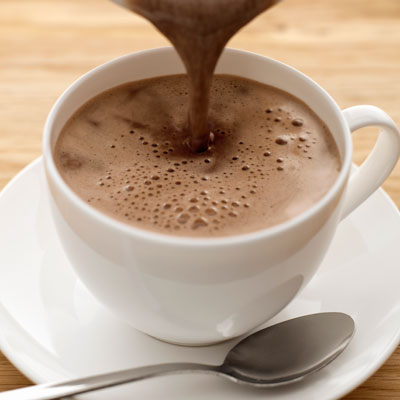
Once you've done all that, then have a cup of hot chocolate. Specially recommended by your Apple Lady!


Sources
Emily Sohn, Cold Weather's Coming: Is Your Body Ready? Discovery News, September 19, 2013
Cool Antarctica, How humans deal with and survive extreme cold
Laura McMullen, 6 rules for working out in cold weather, NY Daily News, December 5, 2013
Mich Smith and Lolly Bowean, As winter wears on, bodies adjust to the chill, scientists say, Chicago Tribune, February 8, 2014
Medicine.Net, Goose Bumps
NPR, Why Does Cold Weather Cause Runny Noses? January 24, 2009
Cold Showers, Ice Bath Benefits and Considerations

Sunday, February 9, 2014

Apple #661: Blizzards

So about a week ago, I was out & about in the woods, as I am wont to do.  It started snowing, which I of course enjoyed.  Then the wind picked up and the snow got thicker.  It didn't take long before my coat was coated with snow, my gloves, the front of my pants, and later when I took off my hat which is brown, it was white with thick snow.  The trees were creaking and cracking in the wind, and the snow was coming down diagonally, stinging my cheeks.

But since I was wearing my super sweater, plus sweater tights under my pants, and various other warm and cozy garments, I was snug as a bug and digging the heck out of the crazy weather.  Some guy and I crossed paths--one of the few people I saw out & about too--and he grinned and said, through the wind and snow, "Awesome, isn't it?"    I grinned back and said, "Yeah, it is."


This squirrel and I were both digging the snowstorm.
Photo by the Apple Lady


I did wonder, though, was I out in a blizzard?  When does a regular old snowstorm cross the line into blizzard-land?


Crossing the bridge to blizzard land?
(Photo by the Apple Lady)

  • For a snowstorm to be classified as a Blizzard, the following criteria must be true:
    • The wind must reach speeds over 35 mph for 3 hours or longer
    • Visibility must be less than 1/4 mile due to falling or blowing snow


Would you say this is visibility less than 1/4 mile? I really don't know.
Photo by the Apple Lady


    • It's important to note that a storm could reach blizzard status without any falling snow.  The wind could pick up loose snow from the ground and blow it around, to the point that visibility is reduced to less than 1/4 mile.  That doesn't happen very often, but it is possible.  Technically, that's called a Ground Blizzard.
    • In my particular snowstorm, even if the winds were as high as 35 mph (I did not have my anemometer on me so I don't know how fast the wind was blowing), and even if the visibility was that poor, I would have had to wait for 3 hours before calling it a blizzard.
    • I wasn't out in that weather for 3 hours, but for the amount of time I was in it, I'd say that storm at least qualified as a Snow Squall:
      • Heavy snow shower combined with gusty winds.
      • May be short in duration, but can still bring a significant amount of snowfall
      • Snow squalls are typical in the Great Lakes region. 


    At the very least, a snow squall.
    Photo by the Apple Lady

      • On the other extreme, a blizzard becomes a Severe Blizzard when
        • Winds are over 45 mph
        • Visibility is near 0
        • Temperatures drop to 10F or lower
      • Unlike in regular blizzards, duration is not a factor.  I guess they figure, if things get that bad, it doesn't matter how long it lasts, it's just plain bad. 

      If you want to see what the effects of a severe blizzard look like, check out what recently happened in Slovenia, plus other parts of Europe:


      Sources
      CBS Chicago, Blizzard vs. Snowstorm: What's the Difference?
      National Geographic Daily News, What's the Difference Between a Snowstorm and a Blizzard?
      Weather.com glossary, snow squall; blizzard & severe blizzard
      Encyclopedia Britannica, severe blizzard
      About.com, 9 Types of Snow Storms

      Friday, January 25, 2013

      Apple #621: Naming Winter Storms

      Questions about why winter storms are getting named first came up in November.  I found an article about it and posted it to the Daily Apple news feed on facebook.  It seemed like that article covered all the bases and a full Daily Apple would only be redundant, so I left it at that.

      But I see that some people are still asking questions, and it seems that the controversy about this practice is continuing.  So I thought a full Daily Apple entry was in order after all.


      The Weather Channel's list of names they plan to use for winter storms.  Won't winter storm Ukko be fun?
      (Image from weather.com)

      • The Weather Channel is the only weather service that is naming winter storms.  They came up with this idea in November 2012, and they're the ones deciding which winter storms get names and what to name them.
      • NOAA's National Weather Service (NWS), which is essentially the official weather service for this country, and the American Meteorological Society (AMS), which is the leading society of licensed meteorologists, are not participating in the TV channel's practice of naming winter storms.
      • The National Weather Service is the official meteorological body that names hurricanes and tropical storms.  Unlike hurricanes and tropical storms, the NWS has not named winter storms for several reasons:
        • winter storms can weaken and redevelop across a wide area, making it difficult to determine where one storm starts and another begins
        • a winter storm can be very erratic, with several centers that may not be well-defined, so it's difficult to determine who will be affected, and how, by a "single storm."
        • since the weather within a winter storm area can vary significantly (e.g., fog and rain in one area, heavy snowfall in another, wintry mix of ice and snow in still another), it may be confusing to call such a range of weather by a single name.

      The radar maps below show what can happen with winter storms. In this system, there was a southern branch of this storm that was mainly freezing rain, though the northern swath also included freezing rain.  After a while, the southern branch broke away.  So was that 1 storm that became 2?  Would you then keep talking about the 2 branches with the same name?  Or were they really 2 storms that happened to be next to each other?


      By the way, I deeply apologize for the use of Comic Sans in these images.  But they're from 2008, so hopefully the image creator knows better now.
      (Weather radar maps from Chicago Area Weather Blog)

      • In spite of such scientifically-based reasons for not naming winter storms, the Weather Channel, a TV station, decided to start naming winter storms anyway.  They say they decided to do so because:
        • "Naming a storm raises awareness.
        • Attaching a name makes it much easier to follow a weather system’s progress.
        • A storm with a name takes on a personality all its own, which adds to awareness.
        • In today’s social media world, a name makes it much easier to reference in communication.
        • A named storm is easier to remember and refer to in the future."
      • I find it interesting that when they say "raises awareness," they do not add "about the storm." I think they're hoping to raise awareness about The Weather Channel. 
      • I think I'm guessing accurately because they also list this as their final (and I think real) reason: "Finally, it might even be fun and entertaining and that in itself should breed interest from our viewing public and our digital users."
      • In other words, they're doing it for the ratings!  For the money!  They want to make it rain for TWC! 
      • I imagine somebody at TWC pitching the idea something like this:
        • Picture this: snow is forecast across several states a few days from now.  Everyone is waiting on tenterhooks to see what TWC will name the storm.  Everyone tunes in, and then when the storm is named, everyone uses TWC's storm-name and mentions The Weather Channel when they talk about how much snow is falling.  Think of the free publicity!  It'll be practically snowing mentions of TWC!   
      • Well, that's my fanciful idea.  But in practice, things haven't worked out like that for TWC at all.


      Behind the scenes at The Weather Channel.  I see a lot of TV-related stuff.  Not much weather-related stuff.
      (Photo from Inc.)

      • After TWC named the first winter storm Athena, the National Weather Service issued an internal memo, which said: "The NWS does not use named winter storms in our products. Please refrain from using the term Athena in any of our products."
      • Publicly, the NWS said they didn't care if any private businesses wanted to go around naming winter storms, but the NWS wouldn't be doing that. 
      • (Except they do name winter storms after the fact when they can tell exactly what happened where, and they can quantify the data.)


      The NWS. Not afraid to zap bad ideas.
      (Logo sourced from The Houston Chronicle)

      • Shortly after this, meteorologists, weather forecasters & broadcasters, and just plain weather buffs from around the country started to weigh in.  Pretty much universally, they hated it.  In a nutshell, here are the reasons they gave:
        • The TWC is doing this completely unilaterally.  They're not communicating with anyone else before they name the storms. Instead of fostering communication and awareness, by acting so independently from the rest of the weather community, they're actually creating disunity and fostering confusion. ("The Weather Channel has essentially tossed effective risk communication out the window"; "Who died and made them King?!")
        • By deciding on their own and in secret when and how to name the storms, they are closing the process to scientific input.  Maybe it really would be a good idea to name winter storms, but by not allowing any peer review to take place, they're keeping their decisions at the level of gimmick, rather than a meteorologically sound practice.
        • That said, naming winter storms as if they're one unified event really isn't accurate, and it is confusing, so they shouldn't be doing it. (“In unilaterally deciding to name winter storms, The Weather Channel has confused media spin with science and public safety. We have explored this issue for 20 years and have found that this is not good science and will mislead the public.")
        • The criteria that TWC are using are very closely tied to ratings.  One of their determining factors is the amount of "impact" it will have, and they're defining "impact" in terms of the number of viewers--er, people affected.  Time of day (e.g. prime time-- er, rush hour) and day of the week (e.g., Monday vs. Saturday) are also factors.  Thus, in the eyes of TWC, not all winter storms are created equal. ("A bad winter storm here in CNY could miss out on getting named. Big lake effect events wouldn't count.")
        • Compared to hurricanes whose effects are widespread, devastating, and deadly, while some winter storms can be severe, winter storms often do not approach the same level of threat.  Especially since winter storm "Athena" happened shortly on the heels of Hurricane Sandy, it was kind of laughable by comparison. ("TWC gimmick named it Athena today. Most mets [NYers] laughing at them.")


      "Winter Storm Athena"
      (Weather map from Heavy.com)


      Hurricane Sandy
      (Weather GIF from Hurricane Season 2012)

      • So the upshot is, pretty much no weather service is joining in TWC's storm-naming games.  Instead of all kinds of happy bandwagon publicity, the real result seems to be that they've only created a vehicle that makes it all too obvious that very few people in the weather community take them seriously.  Call it Meteorology Freeze-Out Freddy. 
      • By the way, guess who are part-owners of The Weather Channel?  NBC and Bain Capital. Talk about strange bedfellows.

      Sources
      Tom Niziol, weather.com, Why The Weather Channel is Naming Winter Storms, November 11, 2012
      examiner.com, Weather Channel naming system backfires when NWS rejects Athena, November 7, 2012
      Rob Manker, Winter Storm Athena? National Weather Service tells its forecasters not to use The Weather Channel's name for storm, The Chicago Tribune, November 7, 2012
      Jason Samenow, TV weathercasters criticize unilateral action by The Weather Channel on storm naming, Washington Post blog, October 3, 2012
      American Geophysical Union Blogosphere, Weather Channel Plan To Name Winter Storms Gets Frosty Reception, October 3, 2012
      Weather Underground, MAweatherboy's blog, Why TWC Is Wrong To Name Winter Storms, November 9, 2012
      Matthew Kemeny, 'Khan' shows its wrath on midstate highways; Weather Channel names winter storms to 'raise awareness, The Patriot News, January 25, 2013
      Michael de la Merced, Weather Channel Is Sold to NBC and Equity Firms, The New York Times, July 7, 2008

        Monday, February 22, 2010

        Apple #441: Icicles

        This past week, there were tons of icicles hanging off my house.  I took a lot of pictures of them.

        Looking out the east window:


        The west side of the house, from the street:


        When I was a kid, I thought icicles were really cool and also romantic-looking.  They didn't seem to show up very often, and I don't think we ever had them on our house.  When I saw them on other houses, I was jealous.  I thought they looked old-fashioned and I took them to be a sign that whoever lived in that house with icicles was enduring a true winter, the way winter was supposed to be.

        But then at some point my parents told me that icicles were bad.  If you were a homeowner, you would not want icicles hanging off your roof because it meant all sorts of bad things about your roof and your eaves and so on.

        It seemed that other people knew this, too, because I didn't see them as often anymore.  It seemed that other homeowners knew that icicles were bad and had taken steps to ensure they wouldn't form on anything.

        This year, the precipitation and the temperatures must have been just right because there were icicles everywhere.  I'm talking huge ones.  Really long dagger-like ones, and also curtains of them all along the sides of houses.  Not just on my house, but throughout my neighborhood and, apparently, all over the city.


        These icicles are on the north side of this house.
        (Photo by the Apple Lady)

        • Icicles form when the temperature is right about at freezing, but the sun is shining.  The sun melts the snow on a roof and as the melted snow drips down, the air temperature freezes it again.
        • When that droplet of water freezes, it releases a tiny amount of heat.  That little bit of heat travels up to the top of the icicle.  
        • As the heat goes upward, it diffuses away from the icicle. So there's kind of a triangular updraft going up and away from the icicle.
        • This allows more snow and ice to melt at the top and to continue to travel down the length of the icicle, where it tries to drip off the end but because of the colder air temperature, freezes there. 

        I'm not sure how well you can see them, but there are drops of water at the end of each of these icicles.
        (Photo by the Apple Lady)


          • Icicles often get ripples in the middle of them because of the warring forces of gravity and surface tension.  Gravity is trying to pull the droplets of water down, while the surface tension inherent in water means it's being pulled sideways toward the surface of the icicle. 


          Icicles with ripples
          (Photo by the Apple Lady)

            • The way our homes are heated also contributes to the formation of icicles.  Heat that escapes through a poorly insulated roof will make the snow on the roof melt faster.  When the melting snow hits the uninsulated eaves, icicles will form there.
            • Icicles can be dangerous when they break off and fall.  My mom was once hit in the head by a falling icicle and she had to go to the emergency room.  They gave her, not stitches, but staples in her scalp. It was not fun.  You really don't want to get hit in the head with an icicle.
            • In addition to the safety aspect, icicles can signal potential problems with roof leakage.  When ice and snow build up at the edge of a roof, they form what's called an ice dam.  Basically, an ice dam concentrates a lot of moisture that keeps melting and re-freezing in one spot on the roof and after a while, the roof can't handle all that moisture and it gives up, and in comes the water.  You do not want this to happen, especially since a lot of basic homeowner's insurance policies don't protect against damage due to ice dams.

            You can see how the snow has melted on most of the roof but collected at the edge. The icicles have formed from the snow dripping off the eave.
            (Photo by the Apple Lady)

              • To prevent this sort of badness happening to your roof, make sure your home's attic and the spaces under your roof are properly insulated.  This will keep the snow from melting as quickly and forming icicles or ice dams.
              • Most building codes also require that a roof be properly ventilated.  Roof ventilation will keep warmer air flowing around the eaves in the winter time and in the summer, will allow warm air and moisture to escape and keep the roof from getting too hot. Usually this means there have to be vents under the roof's overhang (soffit vents).
              • A lot of the houses and buildings in my neighborhood are really old and the roofs were probably built before housing codes required ventilation and certain amounts of insulation.


              This older gray house looks sad with its big icicle hanging off the dormer roof.
              (Photo by the Apple Lady)

              • Another thing that can happen is that downspouts get clogged with debris and then the water trying to get out of it freezes, and the whole thing backs up into a kind of frozen fountain.

              The water trying to get down this downspout (above) apparently couldn't and forced its way out from the top and gushed down alongside the downspout. Looks like a similar thing happened to the next one, too. (Photos by the Apple Lady)


              On my roof, the gutters hang a little way from the edge of the roof. I don't know if they were built like that many moons ago, or if, over time, they have gotten pulled away from the edge. Regardless, the water spills out over the edge of the gutter and drips off both sides and forms a curtain of icicles.
              (Photo by the Apple Lady)

                • Some people go out and knock the icicles off their roofs with a long-handled broom or other such implement.  But roofing people say don't do this.  If you knock a big fat, heavy icicle off the roof, chances are it might still be frozen to part of your roof and you could wind up ripping off a hunk of eaves trough or shingles or some other crucial part of your roof along with the ice.  
                • So then you'd have to get your roof repaired, but a roofer isn't going to go up there while it's all covered with ice and snow.  Roofers have to wait until all that stuff melts before they to do the repair, and that melting snow would then probably leak through your now-broken roof into your house.  
                • The moral is, let the icicles melt and break off on their own.  Then when it's warmer, get your roof insulated properly and solve the problem at its source.

                These icicles are so long and yet so close to the ground, it would be very tempting to snap them off. But because of all that ice that has formed at the top of the icicles, you'd risk ripping off part of the eave or roof.
                (Photo by the Apple Lady)

                  • Or if you're a renter like me and can do nothing about the situation, enjoy the icicle show and take a lot of pictures.

                  I took these photos with my camera on various night settings and then adjusted the levels in Photoshop so you could see the icicles.  When I did that, all sorts of other colors showed up.


                    (Photos by the Apple Lady)


                    Sources
                    doityourself.com, Ice Melting: How Icicles Form
                    Mahalo Answers, "Why do icicles form on the gutters of a house and what can be done to prevent them from forming?" January 18, 2009
                    "Why Icicles are Long and Thin," Science Daily, February 1, 2007
                    "The Point of Icicles," Science Daily, October 4, 2006
                    Keith C. Heidorn, Weather Phenomenon and Elements, Icicles
                    Anya Sostek, "Western Pa. growing bumper crop of icicles," Pittsburgh Post-Gazette, January 12, 2010
                    DOE, Ceilings and Attics: Install Insulation and Provide Ventilation

                    Sunday, February 17, 2008

                    Apple #298: Furnace Noises

                    The house where I live has an older gas furnace. Recently, I've noticed that after it shuts off and the blower stops, something booms. I want to know what this means, and if this might require extensive repairs or if it's maybe a small issue.

                    Looking for an answer to my particular question, I discovered that furnaces can make lots of noises, depending on what's going on with them.

                    Note of caution: this list represents best guesses about what's going on. But sometimes furnace problems can be tricky to diagnose. If you have any doubts that what's going on with your furnace doesn't match what's described here, call a repair person to check it out for you.

                    Similarly, because natural gas is by nature explosive stuff, it's best to call a professional if you're uncertain about how to fix the problem.

                    That said, here are some noises that forced-air furnaces typically make and what they probably mean.

                    A boom, sometimes loud enough to shake things a bit, when the furnace ignites.
                    • This usually means that the burners are dirty.
                    • The burners are the series of round pipes underneath the flames. They have a wide opening at one end.
                    • Over time, carbon and ashy stuff accumulates on the burners. The gas builds up behind that debris until it can finally push through, and boom! the gas ignites. Sometimes the burners light one after the other in a series: boom, boom, boom, boom.
                    • If you wait to fix this problem, it will get worse until that booming ignition causes a lot of damage.
                    • Have a professional come in to clean the burners for you. It won't take long, and they shouldn't charge much to do it.

                    Forced-air furnace. The burners are those three pipes in a row with big openings at the end. Probably your furnace has more than three burners.
                    (Diagram from Don Vandervort's Home Tips)


                    Furnace is working away, and a series of booming or popping or rattling sounds occur, sometimes in or around one room.
                    • The metal ducts that carry the heat to a room or rooms are expanding, and that's what makes the booming or popping noises.
                    • If it's a rattling noise, it's possible that something in the ductwork is loose.
                    • If you can, locate the place in the ductwork where the sounds are happening.
                    • Usually, this spot will be sort of loose compared to the other ductwork.
                    • You can tighten up the location by putting a small dent in the duct metal. Or you can attach some sort of metal brace.
                    • If you can't identify the noise to one particular location and the noises seem to travel throughout the system, you can have a contractor put flexible insulation in the ductwork. That will make everything less rattly.

                    Furnace runs, then the gas flow shuts off but the blower stays on, and a series of clicking sounds occur before the gas reignites.
                    • The sensor that tells the furnace whether the gas is lit has got build-up on it and is giving the furnace bad information.
                    • The flame sensor is often a single wire or rod that sticks up in the center of the flame.
                    • You can shut off the furnace and the gas and clean the sensor with some sandpaper.

                    Someone has detached the flame sensor and is cleaning it.
                    (Photo from The Family Handyman, which has a lot of step-by-step maintenance tips)

                    • If that still doesn't work, the sensor may need to be replaced.

                    Squealing or grinding
                    • If the blower is making a squealing sound, the belt is slipping. It's the same thing that happens with cars.
                    • The belt is probably worn in one spot and needs to be replaced.
                    • If the belt is too tight, that can wear out the blower motor's bearings, and then you have a really expensive repair on your hands.

                    Furnace doesn't stay lit
                    • My furnace used to have a problem where it would turn on, but all that came up through the vents was cold air. I'd go into the basement to check, and none of the burners would be lit.
                    • So I'd have to take the cover off and re-light the thing. It was a pain because I'd have to light a match, press hard on a knob and turn it, and then light the pilot, which would in turn light all the burners. Except it usually took me several tries to get all that to happen right.
                    • In some cases, the reason the furnace keeps blowing itself out is because the gas valve is bad. This is an expensive box that sits between the gas line and the furnace, and it essentially regulates the flow of gas. If this is the problem, it will be fairly expensive to replace it.
                    • But the problem might be much simpler and cheaper to fix. Like the burners, the pilot can also get built up with crud.
                    • If there's a place sticking up where the gas comes out and you can light it the way you light the burners on your stove, that's the pilot. If there's a bunch of gray, ashy stuff all around the base of that thing, that build-up might be the source of your problem.

                    Somebody is blowing through a straw to get the crud off the un-lit pilot. But there might be too much crud on the pilot for this to do the trick.
                    (Photo from The Family Handyman, which has a lot of step-by-step maintenance tips)


                    Alternatively, you might have an electric igniter, which looks sort of like an elongated, flattened paper clip. If yours is as cruddy-looking as this one, it probably needs to be replaced.
                    (Photo from Arnold's Service Company, which sells ignitors)


                    • Call a professional to clean or replace the pilot for you. And hopefully, like mine, your furnace stop blowing itself out.

                    If you want more detailed tips on these and other furnace issues, see this really helpful guide by Mark Bower and Robert Hardy, Gas heater maintenance and troubleshooting, or The Family Handyman's Fall Furnace Tune-Up page.


                    I couldn't find much of anything helpful about noises after the furnace shuts off. I think I might have to call for a repair person and find out what's up. I'll keep you posted.


                    Sources
                    Bill Brainard, AllExperts, "Older Gas Furnace," January 5, 2008
                    Don Vandervort's Home Tips, Forced-Air Heating and Furnace Repairs
                    gas furnace ignition delay...boom, DoItYourself.com, December 28, 2003
                    furnace noise due to, DIYForums.net, September 13, 2006
                    Rheem gas furnace clicking incessantly, HVACMechanic.com

                    Sunday, December 16, 2007

                    Apple #288: Cinnamon

                    For today's entry, I considered the Christmas tree in Rockefeller Center in New York City. But in doing a little searching around, I found an already excellent entry covering all the major facts I wanted to know about the tree: what kind is it, why does it always look so skinny, where do they get the trees, etc. For these answers and more, check out Steve Nix's guide to the Rockefeller Christmas Tree.

                    Also, this year, the lights aren't fluorescent bulbs but more efficient LEDs. And they're powered by 365 solar panels installed on a nearby skyscraper rooftop. When the tree is taken down after the first week of January, the wood will be used to build homes for Habitat for Humanity.

                    I couldn't find a photo of this year's Christmas tree, so here's a video of when it was first lit on November 28.


                    Anyway, since that topic has already been well-covered elsewhere, I needed to pick another subject. So I looked around and saw a mug of tea. My favorite tea right now includes several different herbs but what makes it especially tasty is the cinnamon (I prefer bags to loose tea, by the way).

                    So here's an Apple about cinnamon.


                    (Image from Leslie Beck, RN, Canada's Leading Nutritionist)

                    • Cinnamon is originally from Sri Lanka, or what used to be called Ceylon.
                    • The oldest known written reference to cinnamon is from -- you guessed it, regular readers -- China.
                    • In the 16th and 17th centuries, cinnamon was so highly prized, European countries fought over ownership of Sri Lanka, just so they could export cinnamon.
                    • By the early 1800s, though, people figured out they could grow cinnamon in other places such as the various islands in Indonesia and Malaysia. Once there was no longer a monopoly on cinnamon, the price dropped, and people stopped fighting over it -- for the most part.


                    Sri Lanka is shown in red on this map, but you can also see the other countries where most cinnamon is grown today, including Indonesia, Malaysia, Vietnam, and China.
                    (Map sourced from High Quality Organics)


                    • Cinnamon is the inner bark of a cinnamon tree (Cinnamomum zeylanicum). It's an evergreen tree that grows best in almost pure sand.
                    • The bark is harvested during the rainy season when it's moist and pliable, then allowed to dry into its familiar curling shape.
                    • Most of the cinnamon sold in the United States actually comes from a different tree, called Cassia (Cinnamomum cassia). This tree is native to China, and it, too, is an evergreen, but its bark is coarser and darker, and its flavor is more pungent and less sweet.


                    Ceylon cinnamon on the left, Cassia cinnamon on the right. Similar, but not exactly the same.
                    (Images from Mrs. M. Grieve's Botanical.com)


                    • Though Cassia cinnamon is far more commonly available, Sri Lanka's cinnamon, or Ceylon cinnamon, is still considered the best because of its flavor, which some say is sweeter, or more "lively."
                    • Ceylon cinnamon is made from only the inner bark, while Cassia cinnamon is made from the entire bark.


                    Ceylon cinnamon bark on the left, cassia cinnamon bark on the right.
                    (Images from Gernot Katzer's Spice Pages)


                    • Cinnamon is one of the essential ingredients of the increasingly well-known Chinese five-powder spice.
                    • Several Indian dishes that call for cinnamon actually use an entire roll of bark, or quill. The quill is put into hot oil and cooked until it uncurls, this releasing its fragrance and flavor. Then other ingredients are added to the dish. The cinnamon bark is typically removed, or else it is retained but only as a garnish.
                    • If you have powdered cinnamon, though, use it quickly or else store it in the refrigerator. Once cinnamon is powdered, it loses lots of its essential oils and thus much of its flavor, and it deteriorates pretty quickly.
                    • If you think you might be keeping it for a while, cinnamon sticks will actually stay preserved longer if you store them in an airtight container, and grind only what you need when you're about to use it.


                    In a jar is possibly the best way to store cinnamon for greatest longevity -- provided that cork makes a tight seal. And if you put the jar in the refrigerator, that would help, too.
                    (Image from SoftDental)


                    • If you're not sure whether your cinnamon is still fresh, open the jar and take a good sniff or two. If it still smells sweet, it's good. If the sweetness is faint or not there at all, the spice won't do much for your food, either.
                    • Two teaspoons of ground cinnamon* will give you more than 35% of your daily requirement of manganese.
                    • You've got to have manganese to stay healthy, but you only need a little bit of it. Besides cinnamon, sources for manganese include whole grains, spinach, soy beans, nuts, olive oil, oysters, and tea.
                    • There's another reason to make sure you don't go overboard with the cinnamon -- or in this case, I should say, cassia. Cassia cinnamon contains a compound called coumarin which can be toxic in high doses. Ceylon cinnamon has much lower levels of coumarin.
                    • Cinnamon also contains a chemical called cinnamaldehyde.  Sounds like formaldehyde, doesn't it?  That's because they're chemically similar -- and similarly bad for you.  A little dusting of cinnamon on your French toast won't hurt you.  But a bunch of it at once will. (See below.)
                    • Some people say cinnamon can aid in alleviating high blood pressure and that it can also reduce blood sugar, so it is considered to be helpful to people with diabetes. But please note that if you are going to use cinnamon as an herbal remedy, you'll be safer if you use the Ceylon cinnamon -- if you can find it.


                    You can make these cinnamon buns yourself with the recipe posted at Once Upon a Cakestand


                    *EDIT: You don't really want to eat a whole bunch of cinnamon at once because it can be toxic.  There's currently a fad called the Cinnamon Challenge which dares people to eat a tablespoon of cinnamon in 60 seconds without drinking water.  Mostly it's teen-agers who've tried it, but then, so has the governor of Illinois.

                    Here's why you DO NOT want to do this: people who have done this wind up calling poison control centers or else being rushed to emergency rooms because of the toxicity of so much cinnamon.  Some people have even shown up with collapsed lungs.

                    First, you get a terrible burning feeling in your nose and throat, you can't breathe.  Because your body knows better than you that that much of the stuff is toxic, you will gag.  You will next either spit the stuff out, or if you persist in swallowing it, you'll probably vomit (if you're lucky).  When you gag, you'll puff out a bunch of the powdered spice which you then may inhale by accident.  Once the cinnamon is in your lungs, its toxicity will go to work there, and you could wind up with an asthma attack or even scars on your lungs.  Scarring of the lungs is emphysema, folks. Same as what you get from smoking cigarettes over a long period of time.  Your lungs may even collapse.  Thus you could find yourself in the hospital with a collapsed lung, needing to be put on a ventilator.

                    Your body knows this is bad stuff.  Be at least as smart as your body and don't force it to do something it knows is a really bad idea.

                    If someone has swallowed a spoonful of cinnamon, call the Poison Control Center at 1-800-222-1222.

                    Sources
                    "LEDs will light up Rockefeller Christmas tree," AP Newswire posted at CNN.com, November 21, 2007
                    Peggy Trowbridge Fillippone, Cinnamon History, About.com: Home Cooking
                    Recipe Zaar, Kitchen Dictionary, Cinnamon
                    Mrs. M. Grieve, Botanical.com, Cinnamon and Cassia (Cinnamon)
                    Gernot Katzer's Spice Pages, Ceylon Cinnamon
                    Spice-Racks.com, Cinnamon: The Truth About This Spice
                    The World's Healthiest Foods, Cinnamon, ground
                    Leslie Beck, RD, Healthy Cooking, Cinnamon -- December 2006's Featured Food
                    Department of Health and Human Services, Agency for Toxic Substances & Disease Registry, ToxFAQs for Manganese
                    Lenntech, Health effects of Manganese


                    Consequences of the "Cinnamon Challenge," The New York Times, April 22, 2013
                    5 Reasons not to Take the Cinnamon Challenge, Forbes, April 23, 2013

                    Friday, December 7, 2007

                    Apple #285: Cows in Winter

                    The building where I work is near some farmland, including a cow pasture. The other day, it had snowed a couple inches or so, and the cows were out. In the snow. I wondered what they do in the snow. Do they snuffle through the snow to find grass, or do they just wander around and eat the snow? And just in general, what do you do with cows when it snows?


                    Somebody left these cows out in the snow.
                    (Photo from Utah State Cooperative Extension)


                    • Well, apparently this is a subject of some debate among cattle farmers. Some farmers say that cows get too thin and sick if you leave them outside during the winter (this is called "outwintering"). They say if it gets icy, the cows can slip and fall and maybe break a leg. These farmers also say that high winds and rain make the animals the sickest in winter. Of particular concern is the likelihood that milk cows can get frostbitten teats. Yikes!
                    • Other farmers say the cows prefer to be outside, and as long as it's not too icy, and if you give them windbreaks -- high walls or something tall like bales lashed together where they can stand to shield themselves against the wind -- they'll be all right. Farmers who outwinter their cows generally do so because they believe their cows stay healthier if they can keep grazing all year round.

                    These cows live in the UK, where people have made limestone walls like this one all over the place. These walls act as excellent windbreaks for the cows.
                    (Photo from the Peak District National Park, Derbyshire, England)


                    • Some farmers also say it's far less expensive to keep the cows outside because, even though it requires some more work on your part, you don't have to spend as much money keeping the buildings warm. Also, you don't have to pick up the forage, bag it, bring it inside, and feed it to the cows. You'd still have to bale the hay, but you can leave it out in the field or in feeders and let the cows go get it.


                    New hay bales left out in the snow for cows to graze from, with spaces between to provide shelter for the cows.
                    (Photo from Big Oak Ridge)

                    • Apparently, cows need two basic types of food:
                        • Something for roughage, like hay or stockpiled grass or even kale. Some farmers let the cows graze and get all the roughage they need that way, but most say you have to supplement the grazing at least somewhat.
                        • Grain, which in the winter usually means some sort of corn or corn waste, but it could also mean cotton seed or, in the case of one farm, pizza crust!


                    Another way to make sure your cows get enough to eat is by "swath grazing," which involves laying down stretches of forage in the late fall and allowing the animals to graze for it through the snow during winter, as these Canadian cattle are doing.
                    (Photo by Duane McCartney, from the FAO's Grasslands of the World, Chapter 12)


                    • If you're going to outwinter your cows, you have to feed them more than you would if you kept them in the warm barn. This is because the cows need more energy to keep warm while they're outside, and they're going to move around more and get more exercise. So you have to feed them about 15% to 20% more than you would otherwise. Since cows eat about 90 pounds of food a day per cow, that's an additional 13 to 18 pounds of food per day.
                    • Farmers also disagree on the best way to water the cows in the winter. Eating snow to get water is not an instinctive behavior for cows, but after about three days, they figure it out and will eat the snow.
                    • Some farmers they'll eat the snow and do fine, as long as you make sure to turn them out into areas where the snow is fresh and clean. One Canadian farmer says, "Canadians . . . said that their cows do better eating snow than drinking large amounts of cold water."

                    Cow eating snow, after having learned to do so.
                    (Photo from Wie IST das Wetter?)


                    • Others say it's hard to make sure the cows are in clean snow, and they won't eat snow if it's crusted over, so you need to provide the cows with water tanks -- heated, if you can afford it, or otherwise you go out there yourself and crack the ice off of it for the cows.
                    • All cows will grow longer hair as winter approaches. If you put them outside, their hair will grow longer still, around six to eight inches long depending on the type of cow and your location. Some people have coats or sacking drapes made for their cows. They say the cows wearing the coats will stay outside in even the worst weather and continue to graze and feed.
                    • Cows that are ready to give birth (calve) are kept inside. Smaller cows may also be kept inside and fed until they reach a healthy enough weight to be outside. Less hardy animals can be, um, sent elsewhere.
                    • But most farmers say that, if you give the cows high-quality hay, keep a close eye on their health, and ensure that the food and water supply are adequate, most cows will actually be healthier by virtue of having stayed outside and walked around and eaten in the snow.


                    Cows in Missouri, grazing through snow in February. Agricultural researchers grew annual feed rather than hay and let the cows graze on that. They saved lots of money, and the cows did very well on the annual feed besides.
                    (Photo from the Missouri Agricultural Experiment Station)


                    Sources
                    Ed Brick, Outwintering dairy cattle: animal health issues, UW-Madison Center for Integrated Agricultural Systems
                    Jeremy Hunt, "Out wintering cattle can be worth the effort," Whitebread Shorthorn Association
                    "Significant savings make outwintering attractive," Farmers Weekly Interactive, March 12, 2007
                    Outwintering Issues Summarized by FWO from Graze-L, Owenlea Holsteins
                    Outside winter feeding on forage basics, Trumpline Stackyard, September 12, 2005
                    Watering Cows with Snow - Frequently Asked Questions, Government of Alberta Agriculture and Food
                    National Agricultural Library, All about Dairy Cows