Showing posts with label seasons - summer. Show all posts

Monday, August 3, 2015

Apple #715: Fan on High vs. Fan on Low

Let me tell you a little story about fans.  Well, two stories, actually.  Maybe three, if you count the cows.

Recently, a friend of mine was visiting.  We'll call him Montgomery.  We went to an all-day event and when we came back to my house, we discovered the A/C was not working.  Broken. Busted.  No go, Charlie.  It had been in the 90s most of the day and very humid.  So it was really hot & stuffy in my house.

I got out one of my trusty box fans and Montgomery turned it on while I tried to see if the reason the A/C wasn't working was anything I could fix.  Turned out, no, the motor was dead.  Nothing I could do about that except put in a call for a repair man.  After doing that, I sat down on the couch in front of which Montgomery had placed the fan and turned it on.


This is very like the box fans I own.  Mine are also Lasko Weather Shield models.  They do the job, and they don't rattle. You can buy this fan from Amazon for about $39.  I got mine from Target for about $10 less, if memory serves.


Normally I turn my trusty box fans immediately to the highest possible speed (3 out of 3).  Montgomery had set it to 2.  I thought, of course at the higher speed the fan will cool things off faster, or more, or better.  So I turned the fan up to 3.  Much to my great surprise, the higher speed did not feel better.  In fact, it kind of felt worse.  Like it was blowing warmer air on us, or the higher speed air was battering us but not really cooling things off.  So I put it back down to 2, and instantly it felt better.  We felt more of a cooling effect, and the speed was gentler and more lulling.  We sat in front of the fan on medium speed and talked for a long time, and felt pretty comfortable, in spite of the hot stuffiness elsewhere in the house.

I vowed to remember this lesson and try it on my own another time.  So I did and now we come to my second story.  In both senses of that phrase.

My bedroom is upstairs, and the A/C even when it is working properly does a poorer job of cooling things off up there.  So usually at night I turn on one of my trusty box fans -- exact same kind as the one Montgomery & I had used -- aimed at where I sleep in the bed.  I keep the fan positioned a fair ways away from the bed, over by the closet, because that's where the A/C vent is.  My theory is the fan will blow the cool air that comes out of the A/C vent in my direction where I'm sleeping in bed.  It is this fan that I always turn up to 3.


I also put my box fan on a chair so it's roughly the same height as my bed.  Not as high as on the stool shown in this photo.  But a similar idea.
(Photo from Lennbob on Flickr)


But after Montgomery's visit, I tried out the fan at level 2 instead.  I thought that, as with my experience with Montgomery, the fan on the lower setting would feel cooler and more gentle and pleasant, and I would save energy besides.  So I lay in my bed, waiting to feel the gentle cooling of the medium setting.  Instead, I did not feel cooled off enough.  I tried this on three different occasions, and each time, I had to get up and turn the fan up to 3.  Then I could feel the cool breeze and drop off to sleep.

So what gives?  Why did the fan work better on level 2 in one instance, and level 3 in another?  You've probably already guessed the answer.  But first, let me tell you a few things I learned about fans.

  • The little truism people like to say is: Fans cool people, not rooms.  They churn the air, and the motion of the air over your skin causes the sweat your body produces to evaporate that much more quickly, and thus your body cools off more quickly as a result.  Fans, in essence, create wind chill.
  • So a fan will help you cool off more quickly.  But it doesn't do much to change the temperature of the room.
  • There's kind of an asterisk to that statement which is the case of ceiling fans.  Ceiling fans move the air just as a box fan does, but since it's situated on the ceiling and since cooler air wants to sink while hot air wants to rise, a ceiling fan will create an entire column of air that is about the height of the room.  You will feel the breeze of the moving column of air, but that column also puts in motion the hot air at the top of the room, causing it to cool slightly and descend.  So a ceiling fan does cool the air in a room a little bit.


How a ceiling fan distributes the air and therefore regulates the air temperature.
(Diagram from the Fan Doctor)


In the summer, turn on your ceiling fan so it rotates counter clockwise and pushes the air downward beneath the fan. In winter, reverse the fan so it rotates clockwise and moves air upward beneath the fan. 
(Diagram from the Fan Doctor)

  • Former stock car racer and inventor Walter Boyd got the idea to maximize this principle when he invented the High-Volume Low-Speed fan, specifically to keep dairy cattle cool.
  • He had invented all sorts of things, from modifications to improve the safety and performance of race cars to a machine that improves the way roofing materials are applied, to a machine that raises the Jumbotron.  So I guess somebody asked him, hey, guy who is good at inventing improvements to things, can you figure out a better way to keep my cows cool?
  • The reason this is important is because if dairy cows get too hot, they don't produce milk.  They are rather sensitive creatures, it turns out, and their threshold for temperature comfort is lower than people might have guessed.  If you're putting all your dairy cows in the milking barn and it's a warm day, the dairy cows are going to get too hot to give as much milk, or maybe some won't give any milk at all, and nobody's going to be very happy about that.
  • Farmers were using fans in their cattle barns but the fans weren't doing enough to keep the cows chill (no, regular reader Jason, that is not a typo. No need to correct me).  They needed a better solution that would not cost a lot.


A dairy cattle milk barn. Note the box fans suspended above the cows.
(Photo from Modern Farmer) 

  • So Boyd thought about fans.  He noticed that if a fan is on too high, sometimes that's not comfortable.  Sometimes the speed of the fan does not make you cooler.  So it probably wouldn't solve the problem to speed up the fans the dairy farmers were already using.
  • He also knew that these dairy barns are huge, and it's of little use to have a relatively small fan in front of only one or two cows.  What you really need is to get all the air in that huge cattle barn moving.  You don't have to get it moving fast, but you have to get it moving.  So he came up with a giant fan that would move a lot of air in a large room: the high-volume low-speed fan.


Example of a high-volume low-speed fan (HVLS).
(Photo from Nelson Equipment)

  • These HVLS fans are attached to the ceiling, so they're taking advantage of that principle of moving an entire column of air.  The blades of the fan are enormously long so they'll move a lot of air.  They're also modeled after airplane propellers, not only in the materials with which they're constructed but also in the sense that the angle at which the blades are tilted will maximize the amount of airflow their motion can generate.
  • These fans were regarded as a great innovation because they did help cool those dairy barns at relatively little cost.  So dairy farmers all over the place started buying and installing these things left & right.  If you've ever been in a great big barn-like room, you've probably seen one of these.  They are installed in most of the buildings in my state's fairgrounds, for example.  
  • The HVLS fans did improve things, but not quite enough, it turns out.  The dairy farmers conducted more research over the years and discovered if they attached water spray nozzles to the HVLS fans so the cows get sprayed with a fine mist of water while the fans move the air and therefore also distribute that mist, then the cows would stay cool enough even in very hot weather to keep producing milk.  
  • Hey, nobody wants an unhappy cow.


(Photo from Apple Guardians) 


  • But the point of this HVLS story is that this Boyd guy knew that low-speed fans can sometimes be more effective than a high-speed ones.
  • There are also various laws of aerodynamics that suggest that a low-speed fan may be more effective. For example:
    • In order to 2x the speed of a fan, you have to 8x the power of the motor.  A higher-powered motor will generate more heat by its action so now you have a high-speed fan pushing the hot air it's creating as well as the hot air in the room.
    • (I also read a lot of things about mass air flow vs. volumetric air flow, but I don't feel that I understand the difference well enough to explain it to you.  Suffice to say, it led me to the conclusion that moving a lot of air slowly could be more effective than moving a little air quickly.)
  • So why the heck, if all those things are true about slow-moving fans, wasn't my box fan just as effective or even more effective at the slower speed?
  • The answer, I think, is distance.  When Montgomery was here, we were sitting very close to the fan on level 2.  Like, maybe 2 feet away from it at most.  The fan I keep up in my room I have maybe 6 or 7 feet away from the bed.  If I'd moved it closer, the level 2 speed might have felt more comfortable than the level 3 speed.  
  • But since I want the fan to move the cool air from the A/C vent in my direction, and since the moving air has to travel a lot farther to accomplish that, I need the fan to have a higher speed so it can create more force to move the air farther.  
  • (I really hope my high school physics teacher, Mr. Wisz, would agree.  No joke, that was his name.  He was the best.)


Another demonstration of the fact that distance matters.  The ceiling fan people are saying that when a room's ceiling gets higher, and thus farther away from you, you don't want to get a ceiling fan that goes really fast to make the moving air travel farther. Instead, you make sure the fan is positioned closer to you so you can better feel its effects.
(Diagram from CeilingFan.com)
  • But the point for all you fan-running folks out there is this: Don't necessarily assume that putting your fan on the highest possible speed will give you the best results in all situations.  There are lots of variables -- distance from you to the fan being one of them, but also the size of your fan, the level of humidity (air density), how much heat your fan creates in doing its job, and who knows what else.  The number of ice cream sundaes in the room.  
  • Try your fan out at a lower speed first.  Give it a few minutes, see if that's sufficient.  If it's not, then turn the thing up.  You might be surprised to find that the lower speed was better.  Or maybe not.


(Photo from FarmTek)

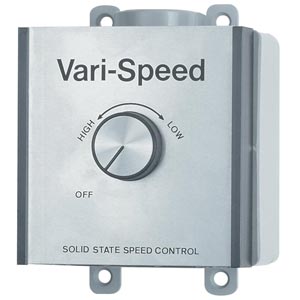
  • Bonus question: why are fans made to go OFF HI MED LOW as opposed to OFF LOW MED HI?
  • Answer: to overcome impedance (like resistance but in an electrical current), the voltage of the fan has to be high enough to get the thing going.  Then it can be turned to a lower setting.

P. S. Here's another trick I used to use in an apartment that did not have air conditioning: put a bowl of ice cubes in front of the fan. Here, they're using those freezer pack things.  Probably a better idea as they stay frozen longer.


(Photo from The Good Human)


Sources and Stuff I Read
Howstuffworks, How do fans make you feel cooler?
Mental Floss, How Does a Fan Work to Cool You Off?
Electronics Cooling, All You Need to Know about Fans, May 1, 1996
Lasko, Create a wind chill in your home with help from electric fans
SF Gate, The Direction & Speed of Ceiling Fan Rotation in the Winter & Summer
Spoke, Walter Boyd 
Architectural Record manufacturer-sponsored article, HVAC for Large Spaces: The Sustainable Benefits of HVLS Fans, December 2009
Plant Services, Walter Boyd talks about HVLS fan technology, March 25, 2011
Private University Products and News, Big Fans Improve Comfort and Efficiency across Campus
J. W. Worley and J. K. Bernard, Cooling Effectiveness of High-Volume Low-Speed Fans Versus Conventional Fans in a Free-Stall Dairy Barn in Hot, Humid Conditions, The Professional Animal Scientist, 24 (2008): 23-28 (pdf)
Wikipedia, High-volume low-speed fan
Hudson Products Corporation, The Basics of Axial Flow Fans (pdf)
Teledyne Hastings Instruments, Mass Flow versus Volumetric Flow
The Vacuum Lab, The Difference Between Volume Flow and Mass Flow (pdf)
Tangent Labs, Volumetric Flow vs. Mass Flow (pdf)
UC Boulder, Density, Mass Flow Rate, & Volumetric Flow Rate  (video)
Emerson Network Power, Achieving Energy-Efficient Data Center Cooling: Does Reducing Fan Speed Always Result in Energy Savings? (pdf)

Monday, August 25, 2014

Apple #682: Dog Days of Summer

It has finally turned humid this summer.  For weeks and weeks, the weather has been beautiful -- sunny, breezy, warm, and none of that oppressive humidity.  But a few days ago, we had a big fat thunderstorm, and it left a lot of that humidity behind.  Looks like it won't budge for the whole week, either.

Which makes me think, we have finally entered the Dog Days of Summer.

What does that mean, anyway?  I have always imaged it means this:


(Photo from Doggie Cakes)


(Photo by Snowlight at Flickr, sourced from Low Country Dog)


(Photo from The Pet Wiki)


The Dog Days of Summer: when the weather gets so hot, all the dogs are panting.

But no, that is not the correct definition.
  • The Dog Days refers to the position of Sirius, the dog star (No, not Sirius Black), relative to the sun.


Sirius is the brightest star in the constellation Canis Major (Bigger Dog). It's just below Orion -- the 3 stars of Orion's belt point to it.  The story goes that Canis Major is Orion's hunting dog.
(Image from Space.com)

  • Ancient Romans noticed that during the hottest time of the summer, the brightest star in the night sky -- Sirius -- was rising and setting roughly the same time as the sun. 
  • Some people say the Romans thought that Sirius's conjunction with the sun was adding heat to the days, and that's why those particular days were hotter.  
  • In reality, while Sirius is the brightest star in the sky, it is much too far away for its heat to have any impact on us.  


Sirius is larger and brighter and hotter than our sun -- though it's too far away for us to feel its heat.
(Image from Astro Bob)

  • The Romans were pretty smart cookies, though, so they may have known this and simply been aware that the two were in the sky at the same time. 
  • Ah, yes, here we are.  An astronomer named Geminus wrote, around 70 B.C., "It is generally believed that Sirius produces the heat of the 'dog days,' but this is an error, for the star merely marks a season of the year when the sun's heat is the greatest." 
  • (So, Weather Channel and everybody else, quit making the Romans out to be a bunch of dummies.)
  • Knowing that the two stars were in the sky at the same time, the Romans named that stretch of days the Dog Days of Summer. (Actually, the time period goes from about 15 days before the two rise together through 15 days after)
  • Exactly what part of summer that happened is also now in question.  Because of the very slow change in the Earth's orientation on its axis, when Sirius rises with the sun now is slightly different than when it rose back then. 
  • Some say it used to happen from July 23 though August 23, or thereabouts.
  • Now, however, the Farmer's Almanac says the Dog Days officially happen each year from July 3 through August 11, and everybody more or less goes along with that.
  • You kids with your smart phones, you've probably got an app that allows you to point your phone at the sky and it will tell you where the constellations are.  If you don't, this app called Star Walk ($2.99) supposedly does just that. Get an app like this, and you can see for yourself where Sirius is, and whether we're actually in the Dog Days or not.
  • (I know, he fell through the portal and he isn't coming back.)

Monday, August 17, 2009

Apple #404: Hurricanes

It's late summer, which means it's hurricane season.

Or if you're in the Pacific, call 'em typhoons. Or if you're in the Indian Ocean or in Australia, call them severe cyclones. Tomayto, tomahto, hurricane, typhoon, they're all the same thing.

As I type this, Hurricane Bill was just upgraded to a Category 3 hurricane.


I originally posted this late Tuesday night, the 18th. I see now that this image is being automatically updated with real-time data by the National Weather Center. That's pretty cool.
(Map from the National Hurricane Center)


There's an even cooler flash-based site that shows you Hurricane Bill's progress and maps out a path of what it's predicted to do next at a site called Stormpulse. It's especially cool if you turn on the clouds.


Now, about those hurricanes.

HOW HURRICANES FORM
  • The sun over the ocean heats up the water. As the water heats up, it evaporates. That creates clouds over the surface of the ocean. No big deal -- yet.
  • Once the ocean surface hits 80° F or warmer, this is when things can get dicey.
  • As you may remember from the Daily Apple entry Why is March Windy, when the temperature goes up, the air pressure drops (air molecules move around faster when it's warm, creating lots more space between the molecules, which means less pressure).
  • As areas of low pressure get bigger, they sort of suck things toward them. That's an unscientific way of putting it, but that's how it best sticks in my mind.

Basic elements to make a hurricane. But the recipe needs a few more ingredients.
(Diagram from Valdosta State University)


  • So our pocket of hot air & low pressure over the ocean is going to move. Winds blow, the earth turns, stuff like this moves. As it moves, it's going to suck things into it, because it's a well of low pressure.
  • What gets sucked into this low-pressure pocket is more air and, since it's over the water and water likes to move, more water.
  • First, the air. If the earth were flat and did not spin, the air that got sucked into this hot, low-pressure pocket might blow straight into it in a streak. But the earth is round, and it does spin. So the air flowing into it gets bent into a spin of its own.
  • The strength of that spin depends on how close the hot, low-pressure mass is to the Equator. Because of the way the earth is tilted, the effect of the spin is greater the farther you get from the Equator. So as that low pressure mass and the wind it's sucking into it moves away from the Equator, the harder & faster that air is going to spin.
  • So now we've got the movement we're so familiar with: a huge bunch of clouds over the ocean, starting to move away from the Equator, getting bigger and developing more of a noticeable spin, until that eye forms in the center (when windspeeds reach 74 miles per hour) and bingo, we've got hurricane. Right?


  • Those images you've seen a thousand times only show you the top-down view. But there is so much more going on inside the hurricane.

HURRICANE ANATOMY
  • The center of the hurricane is the oh-so-famous eye. This is where all that low pressure that's sucked everything toward it gets centered. Like some sort of drama-causing diva, it is humming along, blissfully calm while everything and everyone around it is pure chaos. Winds are calm. Sometimes the sun shines. Birds, finding themselves here, flit about.

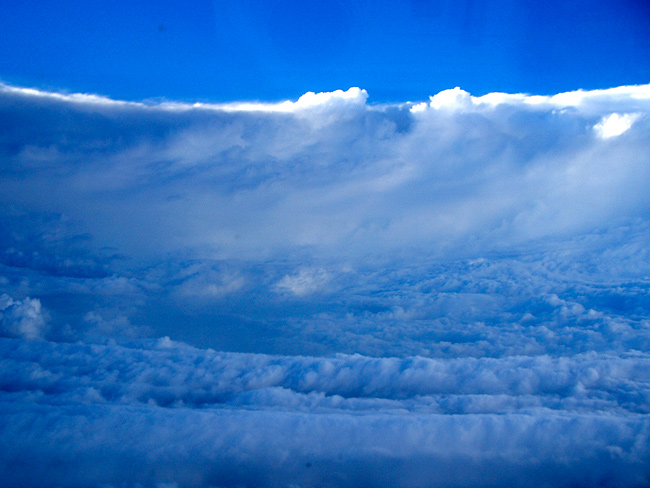
Inside the eye of Hurricane Katrina, as seen by a NOAA hurricane-chasing aircraft.
(Photo from NOAA. More photos of Katrina's eye here.)


  • The eye wall, on the other hand, is where the storm is at its worst. The eye wall is a thick, vertical bank of clouds surrounding the eye. Here is where the clouds are the most concentrated, the thunderstorms are most severe, rainfall at its greatest, wind speeds at their highest. Everything that's been getting sucked into that low-pressure zone is converging here. You do not want to be here.
  • The winds & storms in the eye wall that are being pushed toward that low-pressure center are spiraling upward. In other words, at the heart of a hurricane is a tornado, or a cyclone. In fact, a hurricane is considered a particular type of cyclone.
  • In that la-de-da eye, warm air is floating lazily back down to the surface of the ocean. As the hurricane travels, though, it's going to suck that air right back into itself and continue to feed the cyclone. Isn't that the way with divas, though? Even their cast-offs become fodder for more drama.
  • Beyond the eye and eye wall are those strips of clouds that extend outwards. Or from above they look like clouds. But actually, they are rainbands. Rainbands are skinny strips of rainclouds and thunderstorms that are lined up, parallel to one another and all spinning in a spiraling near-concentric circles out from the eye.
  • So it's raining inside that hurricane, in one wave of rain after another. Because of all the wind blowing things around inside the hurricane and mushing everything together, you're not aware of the rain passing over as one band after another. But that's what those rainbands are doing.

Cross-section of a hurricane. There are rainbands in there, man!
(Diagram from UCAR, University of Michigan)


  • But that's still not all. Because remember how I said that both air and water get sucked into the hot, low-pressure pocket?
  • Underneath the hurricane, at the ocean's surface, even as the rain is coming down and the winds are reaching tremendous speeds, the seawater is getting sucked up into that low-pressure pocket that is now the tempestuous eye wall. The storm is literally lifting the ocean up towards it.
  • As the hurricane travels, it's carrying that huge hump of water with it. And of course that hump doesn't stay the same size. Just as the winds spin faster & harder the farther away they get from the Equator, so too does that mound of water underneath the storm get bigger and taller.
  • It is this hump of water that becomes the storm surge, once the hurricane hits land. This is also why the bigger and faster hurricanes have a bigger storm surge: because the increased strength of the wind has been able to gather that much more water towards it.
  • An additional factor in building the size of storm surge is the fact that the ocean floor gets shallower the closer the storm gets to land. That mound of water the storm is pushing along with it simply doesn't have anyplace else to go.

STORM SURGE
  • For most of us, the most dangerous part of a hurricane is the storm surge.
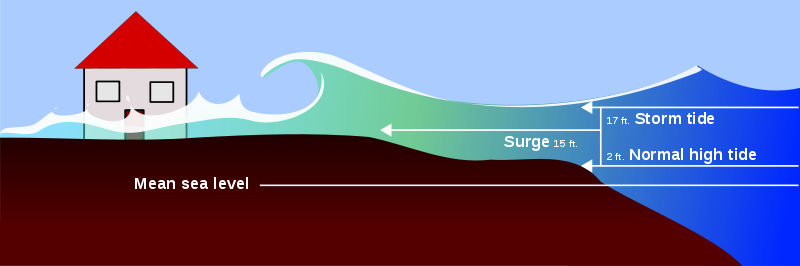
  • Storm surges typically increase the water level at the shoreline by 15 feet. That's about the height of one and a half stories in a building.

Here's a nice pretty graphic diagram of a storm surge
(Diagram from Rick McClain's Nautical Sailing Terms & Nomenclature)


And here's what a storm surge looks like in real life
(Photo from the McKnight Foundation)

  • Considering that water weighs 1,700 pounds per cubic yard, if we translate that height increase into volume (cubic yards), that's about 8,500 pounds of water crashing on your head.
  • Lots of storm surges have been even larger. The storm surge from Hurricane Katrina was estimated as high as 30 feet. The largest ever recorded was in Australia in 1899, when the storm surge got up to 43 feet.
  • In developing countries, storm surges are responsible for the majority of deaths associated with a hurricane. In developed countries like the US where people have far better systems in place for warning the public about approaching hurricanes, it isn't the storm surge that kills people so much as it is the inland flooding that happens afterward. Witness Hurricane Katrina.


In this video, you can see the water rushing inland at amazing speeds. The water continues to rise higher and higher, and at the end of the video, there's less water but much higher winds. This is because the storm surge precedes the actual hurricane. Those winds at the end of the video are the hurricane itself arriving.


  • The storm surge and its attendant flooding varies from one side of the hurricane to the other. North of the Equator, hurricanes spin counter-clockwise. This makes the right front quadrant of the hurricane the area where the winds are at their strongest, and where the storm is going to carry the most water along with it.
  • The amount of inland flooding that occurs depends a lot on how quickly or gradually the land rises as it moves away from the shoreline. The more gradual the slope, the easier it is for that extra water to push inland.
  • Once the hurricane moves over land, or over cold water, its primary source of energy -- warm, evaporating water -- is no longer available to keep feeding it. So the wind speeds drop, the hurricane's spin loosens up, and the single storm breaks up into a whole bunch of rainstorms.

THE SCALE OF HURRICANES

Lots of people cite this hurricane scale (officially called the Saffir-Simpson hurricane scale), but those numbers by themselves don't mean a whole lot to me. So I thought I'd pair them up with hurricanes that people may remember.

Category 1
winds 74-95 mph
damaging winds
Hurricane Cindy, 2005
storm surge: up to 6.2 ft

Category 2
winds 96-100 mph
widespread wind damage
Hurricane Isabel, 2003
storm surge: up to 10.5 ft

Category 3
winds 111-130 mph
dangerous winds, extensive damage
Hurricane Rita, 2005
storm surge: up to 14.9 ft

Category 4
winds 131-155 mph
extremely dangerous winds, devastating damage
Hurricane Hugo, 1989
storm surge: 20 ft

Category 5
winds 155 mph +
catastrophic damage (complete roof & building failures)
Hurricane Andrew, 1992
storm surge: up to 23 ft

(Satellite image of Hurricane Andrew from the Sun-Sentinel)

Hurricane Katrina, 2005
storm surge: up to 28 ft

(Satellite image of Hurricane Katrina from 10 East)


During Katrina, Keesler Air Force Base, Mississippi
(Photo from the Gulf Coast Information Service)


After Katrina, Mississippi
(Photo from the Gulf Coast Information Service)


After Katrina. This is what they mean when they say about a Category 5 hurricane, "catastrophic damage, complete building failure."
(Photo from United Methodeviations)


UPDATE:
A district court judge recently ruled that the Army Corps of Engineers was negligent in maintaining a canal near New Orleans and knew that their negligence could lead to increased flooding in the case of a hurricane, yet they did nothing to address the problems they had created.

“Once the corps exercised its discretion to create a navigational channel [MRGO], it was obligated to make sure that channel did not destroy the environment surrounding it thereby creating a hazard to life and property.

“When the corps designed the MRGO, it recognized that foreshore protection was going to be needed, yet the corps did nothing to monitor the problem in a meaningful way.

“It is the court's opinion that the negligence of the Corps, in this instance by failing to maintain the MRGO properly, was not policy, but insouciance, myopia and short-sightedness.

“For over 40 years, the Corps was aware that the Reach II levee protecting Chalmette and the Lower Ninth Ward was going to be compromised by the continued deterioration of the MRGO. . . . The Corps had an opportunity to take a myriad of actions to alleviate this deterioration or rehabilitate this deterioration and failed to do so. Clearly, the expression ' talk is cheap' applies here.”

--U.S. District Court Judge Stanwood Duval, Jr.

The judge awarded damages to 5 plaintiffs and opened the door to some 100,000 more claims that could be filed against the Corps. This is potentially a huge piece of justice for the people of New Orleans. This Bloomberg article has more details and explanation.


Sources
Daily Apple, Why is March Windy? March 7, 2009
USA Today, Answers Archive: The relation between temperature and pressure, March 19, 2003
Weather Wiz Kids, Hurricanes
USA Today, Understanding the Coriolis force, 2003
Valdosta State University, What is a Hurricane?
Lisa Tacoronte, Massachusetts Institute of Technology, What is a Hurricane?
USA Today, Hurricane, tropical cyclone glossary, 2001
University of Illinois WW2010, The Eye Wall

NOAA National Weather Service, Hurricane Preparedness, Storm Surge, Saffir-Simpson Hurricane Scale, and The Saffir-Simpson Hurricane Wind Scale (Experimental)
Wise Geek, What is a Storm Surge?
Enchanted Learning, Hurricane Landfall and Storm Surges
NOAA, Most Intense Hurricanes in the United States, 1851-2004

Wednesday, July 1, 2009

Apple #394: Fireflies

Two faithful Daily Apple readers want to know about lightning bugs, or fireflies, and what's all that bioluminescence about. They guessed that it's about mating, but they'd like to know for sure. Good question, I say. And I want to know what causes that glow. Do they have little pools of phosphorus in there, or something?


Keep in mind, if you catch a firefly, it's only got two weeks or less to live, whether you keep it in the jar or not.
(Photo from Firefly.org)


  • Fireflies are actually beetles.
  • There are about 2,000 different species of fireflies. Some flash off and on, some simply glow, some flash and dive to make glowing shapes in the air, and some don't glow at all.
  • Fireflies prefer moist places, so they tend to live in humid climates or near bodies of water. Some Asian fireflies spend their entire lives underwater.

More species of fireflies and more of each species live in Asia. So in Asia you'll see a lot more fireflies in one place, as in this photo of a berembang tree in Malaysia that is full of fireflies.
(Photo from Malaysia Site)


  • Fireflies live all across the US, but west of Kansas you'll find only the ones that don't glow. Scientists don't know why the glowing fireflies prefer the eastern part of the country.
  • The glow comes from photic organs, or organs that produce light.

A good shot of the firefly's photic organ in full glow.
(Image from Catching Fireflies)


  • Three special substances combine in the cells of the photic organs. The three substances are
  1. luciferin -- a pigment present only in fireflies and other bioluminescent creatures
  2. luciferase -- enzyme that acts as a catalyst
  3. ATP, or adenosine triphosphate -- a nucleotide that provides energy to cellular activities. We all have ATP in our cells.
  • (Luciferin and luciferase, by the way, don't have anything to do with the devil. Those words mean "light bearer," not devil. So don't go making fireflies into something evil because they're not.)
  • Those three substances react together to make two new substances, and then one of those meets up with oxygen, light is produced.
  • What's pretty remarkable about this reaction is that nearly 100% of the energy produced is in the form of light. Hardly any of it is heat. By comparison, only 10% of a light bulb's energy is in the form of light and 90% is heat. This is why the fireflies don't overheat when their taillights keep flashing on and off.
  • Scientists think that the flashing happens when fireflies control the flow of oxygen into the photic organ. When the restrict the flow of oxygen, the light shuts off. Turn on the oxygen, the light goes on.
  • Speaking of the flashing, each species has a different blinking pattern. So if you see a firefly that blinks in one pattern and another one nearby that flashes a different pattern, chances are, those are two different species.


  • If you watch long enough, you can pick up their blinking pattern. And if you have a penlight and blink it in the same pattern, a firefly will flash you that pattern back.
  • And yes, the purpose of the blinking is so that the fireflies can find potential mates.
  • Firefly mating is actually pretty intense. Fireflies live for two years underground as larvae, and then when they come up into the air as adults, they've got two weeks to live and they spend it looking for mates.
  • Adult male fireflies might visit a few plants to collect nectar and pollen, but adult female fireflies don't eat at all. They're too busy looking for mates.
  • The fireflies doing all the flashing are males. (No pun intended.) The females stay on the ground and watch. When they're interested in somebody, they flash a single pulse. The male will blink his pattern back, and a call & response goes on for a while.
  • A female might flash her single pulse with as many as 10 males in an evening. But ultimately, she'll choose only one--the one with whom she has had the most call & response exchanges.
  • How she chooses which male may have something to do with the male's ability to provide food.
  • Male fireflies, like a lot of invertebrate species, produce packages of protein with their sperm. Eggs that are fertilized with sperm that has lots of protein do much better than those with less sperm-protein. So scientists think that female fireflies are interpreting the male firefly signals to try to find the males that can give them the biggest protein package.
  • But firefly flashing is a subtle art. Males that flash brightest or fastest or longest are sometimes preferred by the ladies. But those superlative males are also the biggest target for their main predator, the Photuris, which pounces on fireflies, sucks the blood out of them, and casts their husks aside. So scientists think this is why some females prefer males that aren't always so flashy--they live longer.
  • When a male and female firefly do hook up, they mate with each other all through the night until dawn. Then the couples will split up and the females will burrow into the grass and lay their eggs.

Fireflies mating. All night long.
(Photo from the Firefly Badminton Club in the UK)


  • Firefly larvae also produce a glow. But larvae are certainly not old enough to mate. So scientists think that another purpose of the glow might be to warn potential predators that fireflies taste very bitter. (I always wonder how scientists know this sort of thing. Do they eat the fireflies themselves? And how do they know that what tastes bitter to humans will also taste bitter to birds or other bugs?)

Glowing firefly larva, or glow-worm
(Photo from Firefly.org)


  • There are a few other beetles besides fireflies that are bioluminescent. Some click beetles can glow, and a few beetles in the phengodid family, as well as a few other small families of beetles.

I just want to point out a little coincidence here. The Daily Apple reader who asked me about this topic did so on my birthday. The article that is the primary source for this Apple was published on my birthday. A little synchronized glowing, yes?


Sources
National Geographic, Animals, Firefly (Lightning Bug)
Marc Branham, The Firefly Files
Onelook
Carl Zimmer, "Blink Twice if You Like Me," The New York Times, June 29, 2009
University of Utah, Why do fireflies glow?

Sunday, August 3, 2008

Apple #332: Welcome to August

Not sure this needs any introduction. Except to say that August roughed me up pretty badly a couple of times in the past. But in accordance with my pledge that this year will be like the phoenix, I am determined not to let that happen this year.

  • The word "august" probably comes from a word that means, essentially, indicated by the augurs (prophets or prophecies) as being favorable.
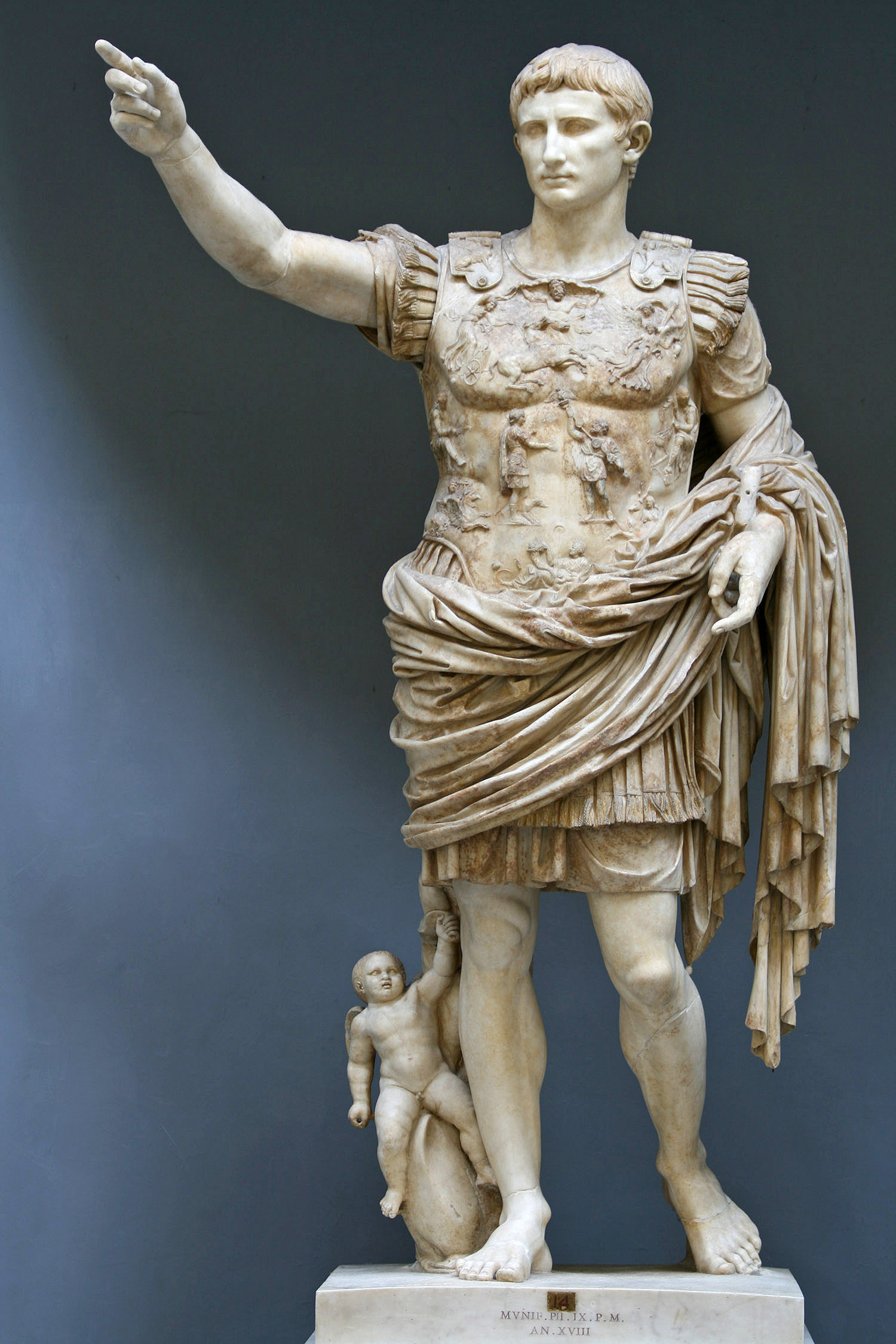
  • In terms of the calendar, though, the 8th month is called August after Caesar Augustus, adopted son of Julius who established the Julian calendar, which is very close to the Gregorian calendar that we use today. This emperor was also called "venerable ruler."
 
 
Statue of Julius Caesar Augustus (and also Cupid at his ankle), which now stands in the Vatican.
(Photo from Wikipedia)


  • The term "august" can also mean all sorts of wonderful things, depending on which dictionary you consult, such as:
      • profoundly honored
      • marked by majestic dignity or grandeur
      • befitting a lord or one with exalted birth
      • inspiring reverence or admiration


Ragweed, not goldenrod, is the bane of allergy-sufferers' existence.
(Photo from WQAD)


  • The French Republic calendar used to call the 8th month Thermidor, or "hot month." (Actually, this month ran from about mid-July to mid-August in the Gregorian calendar.)
      • That word "Thermidor" may remind you, as it did me, of Lobsters Thermidor. What's the connection, you ask?
      • Okay, if you'll remember your French history for a moment, after Robespierre and the French Revolutionaries stormed the Bastille and all, they started hacking off the heads of royalty left and right, and they got totally out of control. This period is considered the "Reign of Terror."

This is not at all how I pictured Robespierre. He looks way too namby-pamby to have orchestrated several years' worth of executions. But, in fact, he did. In his mind, he was "weeding out" people who would undermine the Revolution.
(Photo of portrait from Wikipedia)

      • A few years later, Robespierre was overthrown (his head was cut off, actually), and the Reign of Terror was considered to be ended. This happened during the month of Thermidor.
      • Fast forward about a century, and in 1891, a French play called "Thermidor" opened. Though the Revolution had ended long ago, political tensions in France were very high and people were sharply divided along class lines. The play caused such an outcry that it was banned after only three performances.
"Night second scarcely allowed the actors to speak. A more astonishing scene was never seen in any theatre. Pandemonium reigned in the auditorium. The house was packed, and . . . the excitement was intense. . . . Lissagary, the editor of the Bataille, threw cents, whistles, and one-franc coins on the stage. He was requested to leave the proscenium box. Others were forced to quit the scene of the action . . . 'A mort Sardou' [death to the author of the play] was heard. . . . there could be no doubt of the presence of a large number purposely on hand to fight the play down. . . . At each lull the artists would begin, soon to be lost in noise and whistle. . . . After the spectacle, the street was full, and I am told that the police had to clear the way and carry off a good many shouters."

--New York Times review, Sardou's Ill-Fated "Thermidor," February 15, 1891
      • The night the play opened, the story goes, a French chef at the Marie restaurant in the Boulevard Saint-Denis in Paris invented the dish called Lobster Thermidor in honor of this play. Or perhaps, given the way the lobster is prepared, it is in honor of the decapitation of Robespierre.
      • In brief, here's how you make Lobster Thermidor (for a more precise recipe, check out the Old Foodie):
          • Start with a live lobster. Split it in two, lengthwise, while it's still kicking.
          • Season it all up, give it some oil, and roast it in the shell for about 15-20 minutes
          • While your lobster is roasting, make a stock of white wine, fish stock, and meat gravy, add some French-like spices and some chopped shallots. (Some people add mushrooms, or they use Sherry instead of white wine, etc.)
          • Reduce the stock, add a very thick Bechamel sauce (oh, so French!) and mustard.
          • Eyeball the amount of sauce you've got and add about 1/3 that amount's worth of butter. Can you feel the French yet?
          • Take the meat out of the lobster shells and give it a rough chop.
          • Pour some of your creamy-buttery sauce into the lobster shells, put the chopped lobster back in there, cover it with the rest of the sauce.
          • Add more butter and Parmesan cheese, and put it all back in the oven again to brown it up.

Lobster Thermidor, as served at Andre's in Las Vegas. According to someone who commented on the photo, this was the best lobster ever.
(Photo by ccaviness on Flickr)


  • Although Lobster Thermidor was not invented in the month of August, and technically the overthrow of Robespierre took place in what is now our July, I will now think of Lobster Thermidor in connection with August.

So that's the month of August. The month that is favorable for kings, assassinations, weeds, decapitations, and flayed lobsters. It's all making sense now.


Sources
Online Etymology Dictionary, august
OneLook, august
E. Cobham Brewer, Dictionary of Phrase and Fable, 1898, Months
Columbia Encyclopedia, sixth edition, Thermidor
The Old Foodie, A revolutionary dish, January 24, 2006

Monday, July 16, 2007

Apple #254: Fruit Flies

A friend of mine asked me a long time ago to do an Apple about fruit flies. I hesitated, thinking the subject might be too disturbing and icky. But, he said, maybe there's some way you can get them out of your kitchen that would be good to know about.

So finally I looked into it. And he was right. There is a little trick to get rid of them that seems pretty simple. I haven't tried it myself so I can't say whether it works. Maybe I'll give it a shot and report on my findings later.

In the meantime, here are a few details about the pesky things and some suggested remedies:


I know you've seen fruit flies hovering over fruit before. But come to think of it, I can't think of any still life paintings of fruit that include the fruit flies . . .
(Image from the Discovery channel's The Skinny On...)


  • You've probably seen fruit flies in the produce section of the grocery store, hovering over the apricots, and they've probably come home with you and taken up residence in your kitchen.
  • Fruit flies like over-ripe fruits and vegetables. That includes things like bananas, apricots, melons, grapes, squash, even produce that you would think might be too tough for the little buggers, including potatoes and onions.
  • They also like yeasty and alcoholic things like beer, wine, vinegar, cider, and even soft drinks.
  • The fruit fly likes vinegar so much, they're even sometimes called vinegar flies.
  • They like to eat produce, but they also like to lay their eggs in it. I know, this is the gross part.
  • Fortunately, they lay their eggs at the surface of the food. When the eggs hatch, the young eat the fruit nearby, but again, only at the surface. This means you can cut away the over-ripe portions of food and the remainder will have been untouched by the fruit flies.
  • Once you've thrown away the bad part of the produce, the fruit flies will continue to survive in your trash can. They can reproduce like mad -- they have to, since they only live for about a week -- so the potential for your trash can to become a fruit fly haven is quite real.

However, getting rid of the fruit flies can also be fairly easy. In this case, their short life span works to your advantage.
  • Throw out over-ripe or rotting produce.
  • Clean out your trash can or in-sink disposal or other drains as best you can.

Wouldn't it be nice if your kitchen sink ever looked this clean?
(Photo from Nosumo's blog entry about remodeling her kitchen)


  • If you still can't get the bugs out of your drain, there's a product called Drain Gel that destroys the film of organic material at the bottom of your drains where the fruit flies are reproducing. Since it costs $19.95 per quart, this is probably suitable for restaurants and larger places of business.
  • You can use a variety of pesticides, but this is not my favorite method because I don't like the idea of using pesticides in the kitchen.
  • You can also use bug zappers or those sticky flypaper strips.
However, my favorite method for catching fruit flies is the home-made trap:


(Drawing from the University of Kentucky College of Agriculture)

    • Pour a little cider vinegar or diluted honey or into the bottom of a jar.
    • Roll up a sheet of notebook paper into a cone and place in the mouth of the jar.
    • That's it. The fruit flies will find the cider vinegar and fly into the jar, but they won't be smart enough to be able to figure out how to get out again.
    • You can either kill them once they're in the jar or release them outside.

Another trap is just as simple and may work even better:
    • Coat the inside of a jar with diluted honey or corn syrup or some other sticky liquid.
    • Invert the jar and place it on top of two pieces of wood or something to keep some space between the jar and the surface of your counter or table.
    • Place a banana or some other sweet & fruity goody at the base of the open jar.
    • Fruit flies will find the bait, fly into the jar, and then get stuck on the gooey sides of the jar.
    • Wait about a week to ten days and they'll all be stuck dead. Discard the jar.

Sources

Michael F. Potter, University of Kentucky College of Agriculture, Entomology, Fruit Flies, January 1994
Professional Pest Control Products, Fruit Flies
Metro, Fact Sheet, Fruit (Vinegar) Fly
Hannah Holmes, The Skinny On . . . Where Fruit Flies Come From
Wendy Boswell, Lifehacker, Get rid of fruit flies with a soda bottle trap, July 8, 2007

Wednesday, July 4, 2007

Summer Apples

I'm on vacation from my paying job, so I'm going out of town for a few days. In the meantime, here are some entries about summery topics for you to browse through:


Happy Independence Day!

Sunday, July 1, 2007

Apple #251: Fireworks

Recently, some readers have made a few excellent suggestions for potential Apples. I will answer their requests, but I have another topic I'd like to cover first.

I saw a part of a program on the National Geographic Channel today that talked about how fireworks are made. I want to pass along what I learned, and hopefully expand on it.


Four gold fireworks. You can't tell, but these were enormous. It's tough to take a good picture of fireworks. At the very least, you have to get the timing just right.
(Photo by the Apple Lady)

  • A firework is made primarily of two parts: a sleeve or tube, and a shell.
      • The shell is the part that contains the explosive material that makes all the pretty colors
      • The sleeve or the tube holds the shell and provides the initial propulsion to get the shell up into the air as far as it needs to go.

    A cluster of fireworks, cut away to show the shells within the tubes
    (Diagram from Pyrouniverse)


    • Both of these parts are activated by a fuse.
        • The fuse that's lit at the top, like the wick at the top of a candle, descends down the inside of the tube to the bottom.
        • There, it ignites pellets of various chemicals, generally referred to as black powder. The resulting explosion propels the sleeve with the shell inside it into the air.

      Interior of an aerial shell, showing the initial fuse and the secondary charge that ignites the display of sparks
      (Diagram from Pyrouniverse)


          • As the shell rockets upwards, the second wick, or sometimes a blast charge, is ignited by the sparks from the first explosion. Ideally, the second wick will ignite when the shell has traveled as far into the sky as it needs to.
            • When the shell ignites, the chemicals packed inside explode, creating the colorful display.
        • Which chemicals that get packed into the shell will determine what sparks the firework makes when the shell explodes.
            • Blue -- copper
            • Green -- barium salts
            • Red -- strontium
            • Yellow -- sodium
            • Gold -- aluminum
            • White (the really flashy ones) -- magnesium
        • The arrangement of the particles will also affect what the explosion looks like (Geology.com has a very helpful diagram).
            • Larger particles will produce larger sparks; smaller particles will produce finer sparks.
            • If the particles are arranged in a circle around the wick, they will create a circular pattern in the sky.
            • The particles can also be layered within the shell so that one color explodes first, then a second, then a third, and so on.
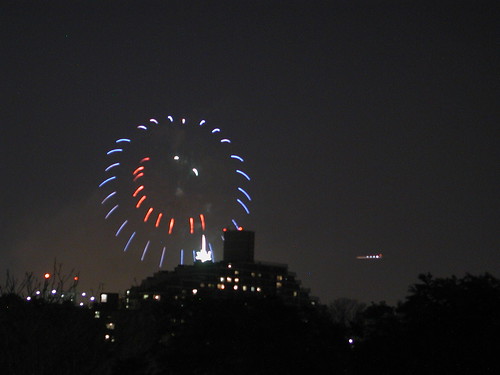
            • A relatively recent development in firework manufacturing is the use of microchips embedded in the shell that direct the sparks into a particular shape. Fireworks that produce smiley-faces in the sky are so directed by microchips.

        Smiley-face firework, courtesy of a little bitty microchip that got burned up when this exploded
        (Photo by Eric in NY City)


        • Most fireworks displays of any size are coordinated by computer.
            • The tubes of fireworks are arranged in box-like clusters.
            • Each firework is then connected to a control board with lots of numbered knobs on it. Each number corresponds to a single firework.
            • Engineers plan the timing of when each firework is to be ignited. Sometimes the timing is also coordinated with a series of songs.
        • It's an extraordinarily painstaking process which is years in the making, but which is over in about twenty to forty minutes.

        San Diego's fireworks, here using red, white, and blue colors
        (Photo from Search.com)


        Here are more of my paltry attempts at taking pictures of fireworks. These are the best of the bunch and they're not great. It's hard to convey just how huge these things were.


        (Photos by the Apple Lady)


        Sources
        National Geographic Kids, How Fireworks are Made
        BBC News Round, How Do Fireworks Work?, October 21, 2005
        Holly Hartman, Factmonster, Facts on Fireworks, 2006
        Totse.com, Bad Ideas, Background and Basic Chemistry of Fireworks

        Wednesday, June 20, 2007

        Apple #249: Hand Signals for Bicycling

        I brought my bike up from the basement last week and I've been riding it in the evenings when it hasn't been too hot. I can't remember the last time I rode a bike, and let me tell you, it feels wonderful.

        I love the speed of it, the way the wind rushes past my face. At the same time, I'm going slowly enough that I can look at houses and people and all sorts of interesting things as I ride by. In that way, biking has all the benefits of walking, in that I feel like I'm physically part of the neighborhoods I'm moving through, not like when I'm in a car and securely wrapped in my metal bubble. But I'm moving faster than walking, so I can cover more territory. But mostly it just feels good.


        You can ride a bike just about anywhere.
        This woman is riding her bike -- in Laos.
        (Photo by Stuart, posted at World 66)


        I've been really wishing I could remember hand signals. Sometimes there are cars behind me, and I don't want anyone to have to guess about anything. I remember that if you want to turn in one direction, you stick your hand straight out. Another direction, you hold your shoulder straight out but raise your forearm perpendicularly in the air. But is that for a right turn or a left turn? Because I couldn't remember, I was just pointing vigorously in the direction I meant to go.

        Turns out, that weird signal is out of fashion. You could still use it if you wanted to, but apparently most people are like me in that they can't remember which way that's supposed to indicate.


        LEFT TURN -- hold out your arm straight to the left.
        (Diagram from Dr. James Watrous)


        RIGHT TURN -- hold out your arm straight to the right.
        This one is much more obvious than the other, so I'm only going to post this one.
        (Diagram from Dr. James Watrous)


        STOP -- hold out your left arm and drop forearm toward the ground.
        I can't imagine using this signal very often. Mainly because I need both hands to work the hand brakes.
        (Diagram from Dr. James Watrous)


        Some other bicycling safety tips:
        • Ride as far to the right in your lane as possible. Sometimes potholes or parked cars make it too dangerous or difficult to hug the curb, but try to keep to the right as far as you can.
        • If you're going to make a left turn, do a head check first. This acts as a kind of signal to traffic that you mean to move out into the road. When the traffic is clear, move into the left turn lane (if there is one), and once you're in that lane, keep to right of that lane as you make your turn.

        (Diagram from Bike Miami Valley)

        • If there is no left turn lane, wait at the right side of the right lane for traffic to clear, and then cross the right lane and make your left turn.
        • If somebody told you to ride your bike against traffic, they gave you bad advice. Always ride with the flow of traffic.

        This is the Prime Minister of Japan, riding a bicycle.
        He doesn't look too confident about it, does he?
        Though the kids seem to be loving it.
        (Photo from What's up around the Prime Minister)


        Sources
        Kidshealth, Bike Safety
        James Allen Watrous, Ph.D., Bicycling Hand Signals
        Bike Miami Valley, Bicycle Safety: Hand Signals
        Jesse White, Illinois Secretary of State, Illinois Bicycle Rules of the Road