Wednesday, February 23, 2005

Apple #40: 1976

1976

I've been reading John Cheever's Journals (I might do an Apple on him, but not today). In 1976, he was at the worst of his drunkenness, to the point of not remembering how he wound up in a hospital in Boston and got transferred to a dry-out facility. That same year, he published one of his many novels, Falconer.

At the time, I thought 1976 was somehow an unusually important year. Ever since, I've noticed when 1976 comes up. And here is a list of some of the things that happened that year. Some were good, some were bad, but all in all, I think I was right to call it important.
  • Bicentennial of the United States
  • Leap year
  • Jimmy Carter sworn into office, first President from the Deep South since the Civil War
  • US Supreme Court ruled the death penalty a constitutionally acceptable form of punishment
  • Son of Sam was on the loose
  • Rocky, Taxi Driver, and All the President's Men were playing in movie theaters
  • One Flew Over the Cuckoo's Nest won Best Picture
  • George Lucas began filming Star Wars
  • Alex Haley's Roots was published
  • Riots in Soweto, South Africa, marked the beginning of apartheid's end
  • North and South Vietnam voted to form a unified republic
  • Pol Pot became dictator of Cambodia
  • Nadia Comeneci became the first gymnast to be awarded the perfect 10.0 (she won seven of them), and Greg Louganis won the silver at the age of 16
  • In the height of the Steelers vs. Cowboys rivalry, Pittsburgh beat Dallas in the Superbowl 21 to 17
  • Fleetwood Mac recorded Rumors and the Eagles released Hotel California
  • The Clash formed, and the Sex Pistols launched their famously disastrous tour and swore on television
  • Viking I landed on Mars
  • Richard Leaky discovered a 1.5 million year-old Homo erectus skull in Kenya
  • Cosmic string theory was first postulated
  • Steve Jobs and Steve Wozniak founded Apple Computers, the then-tiny Microsoft was registered in New Mexico, and the Cray-1 supercomputer was invented
  • Howard Hughes, Mao Zedong, and Howlin' Wolf died
  • Peyton Manning, Reese Witherspoon, and 50 Cent were born

Sources
Infoplease Alamanac,
1976
Wikipedia,
1976
International Olympic Committee, Olympic Games,
Montreal 1976

Sunday, February 20, 2005

Apple #39: Potpourri

POTPOURRI (In the Jeopardy! sense of the word)

Rather than doing one entry on one subject, I thought today I would note a few little factoids I have uncovered recently, on miscellaneous subjects:

  • While one can be "ruthless" (devoid of pity or compassion), one can no longer have "ruth" or be "ruthful." Those words did exist and were in use at one time, but they are now archaic. "Ruth," by the way, was the quality of being compassionate; or pity or sorrow. If you were "ruthful" you had compassion for others, or you could inspire pity in others. But you can't do that anymore.
  • The true origins of feta cheese are difficult to discern. While it came from the Balkan countries at some point in the 12th century, both Greece and Bulgaria claim to have made it first. The word "feta" seems to have been derived from the Italian fetta, meaning "slice." Now, with the help of the EU, only Greek feta will be allowed to use the name "feta" when exporting its cheese.
  • Tiger paw prints are called "pug marks." Tigers can eat up to 80 pounds of meat at one time. The sandpaper-like roughness of their tongue helps to take the meat off the bone. They like water and often swim to cool themselves in the hottest parts of the day. Tigers do not purr, but they do chuff, which is something like a small sneeze and is accompanied by a shake of the head. It means hello and all is well.
  • In Steely Dan's "Deacon Blues," they never say "our Pamela," as I'd thought. The chorus actually goes like this:

I'll learn to work the saxophone
I'll play just what I feel
Drink Scotch whiskey all night long
And die behind the wheel
They got a name for the winners in the world
I want a name when I lose
They call Alabama the Crimson Tide
Call me Deacon Blues

Sources
My copy of the Oxford English Dictionary
"
Feta Cheese Rich in History," San Francisco Chronicle, republished in the Cincinnati Post, 8/18/2004
In-Sync Exotics Wildlife Rescue and Education Center,
Education page on big cats, especially Tigers
Steely Dan's official website, lyrics by song,
Deacon Blues

Thursday, February 17, 2005

Apple #38: The Tongue

TONGUE

I have a sore spot on my tongue, where my teeth have been rubbing against it. This made me think, I know the tongue is a muscle, but is it more complicated than that? And of course, the answer is yes.

  • The tongue is the organ of the sense of taste.
  • The tongue is also crucial in the activities of chewing and swallowing, breathing, and speaking.
  • It is a system of muscles with a mucous membrane on the outside.
  • On that mucous membrane, on top of the tongue are lots of follicles, or pores. In each follicle, lots of tiny nodules of tissue are grouped under a sheath of skin. The technical term for this sheath of nodules is "papilla" or, basically, a bump. These bumps essentially contain your taste buds.
  • Each of these little nodules has tiny arteries and veins branching into them, as well as numerous nerve cells of different kinds. Some of those nerve cells specifically sense taste. These are called "gustatory cells." Other nerve cells sense pressure and pain, hot and cold.

  • The tasting nerve cells sense bitter, sweet, salty, and bitter. People now say that there is also a fifth taste, called umami.
  • It's hard for people to describe what umami means, exactly. The Japanese say it means "deliciousness." Others say it is a robust, meaty, or savory taste.
  • As table salt activates your salt-sensing nerves, the chemical glutamate activates your umami cells. Mushrooms have a lot of glutamate in them, which accounts for their savory, sometimes meaty flavor. Monosodium glutamate also especially makes you taste the umami. People also say that aged cheese, anchovies, and other foods with complex, rich flavors, are associated with umami.
  • In the past, people drew a "taste map," depicting the tongue as especially sensing particular tastes in particular areas of the tongue. For example, people used to say that you sensed sweetness only at the very tip. In fact, the nerve cells that sense different types of taste are scattered all across the tongue, not grouped in special areas. Scientists know this because if you block half the tongue from sensing anything, people still report being able to sense all five tastes.
  • By the way, the word flavor refers to the combination of one or more of the five tastes along with smells, the texture, the temperature, and the spiciness of what you're eating.

Sources
My copy of Gray's Anatomy, dated 1977. There's also a
Gray's Anatomy online, but I didn't get very good results searching that.
By the way, the TV show is spelled GrEy's Anatomy.

Tongue entry from the Columbia Electronic Encyclopedia, accessed through InfoPlease
"
Homing in on a Receptor for the Fifth Taste," press release from the Howard Hughes Medical Institute, February 25, 2002
Umami - the Fifth Taste, MushroomCouncil.org
Taste entry from Wikipedia (Note: the Columbia Encyclopedia's entry on "taste" is outdated and now incorrect)
UConn Taste and Smell Center
General Information
Lecture 15 - Organ Systems: Digestive, from Biology 441/541 Histology, Fall 2004 course taught by Dr. David L. Swanson, University of South Dakota
Image of taste cells from pathologyoutlines.com/_oralcavity.html

Wednesday, February 16, 2005

Apple #37: Umbrellas


It's been raining quite a bit lately. Every time I carry an umbrella, I think, "What a great invention." It's simple, and it's genius.


A couple under an umbrella in Laos
(Photo from Cringel's blog)


  • The first umbrellas were parasols, used to provide shade from the sun. Ancient art from Egypt, Assyria, Greece, and China all show people carrying parasols. Having one held up over you was a sign of prestige.
  • The Chinese were the first to waterproof their parasols for protection against rain. They coated the fabric with wax and lacquer.
  • The use of umbrellas became popular in Europe in the 16th Century. Except at first, only women used them.
  • Early European umbrellas used wood or whalebone for the handle and ribs, and alpaca or oiled canvas for the covering. Some umbrellas were made of intricately carved ebony.
  • Then in the late 1700's, a British guy named Jonas Hanway, who was a travel writer about Persia and well-known philanthropist, started carrying umbrellas when it rained. Eventually, other British gentlemen started carrying them, too. Some people in England still call their umbrellas the "Hanway."
  • In 1852, a guy named Samuel Fox patented the use of steel for the ribs. He said he did this to try to use up the steel he had left over from making stays for corsets.
  • Also in the 1850's, Europeans realized they could use umbrellas in the sun, too, and thus the parasol became popular again. It was considered an essential accessory for women until the invention of the automobile.
Sources
"Who Invented the Umbrella?" Mary Bellis, on the Inventors pages at About.com
"Umbrella" entry in the Columbia Electronic Encyclopedia, accessed through InfoPlease
"Jonas Hanway" entry in the 1911 Encyclopedia Britannica

Sunday, February 13, 2005

Apple #36: David Lee Roth

DAVID LEE ROTH

Every once in a while, my brother likes to pose the question, "What do you think David Lee Roth is doing right now?" Of course, one can only speculate. Our typical answers have included such things as eating pizza and watching basketball, scratching his chest, flossing, etc. While I can't find information that will answer my brother's question definitively, I can provide some more background about Mr. Roth that may help us in our speculations.

For those who may not know, David Lee Roth was the dynamic front man for the 1980's smash hit band, Van Halen. He all but trademarked wearing spandex pants, doing the leaping splits, and shouting "Whooo!" into the microphone.

Then:


  • David Lee Roth was born in Bloomington, Indiana, in 1955. This year, he will celebrate his fiftieth birthday.
  • His family moved to California when he was a teen-ager, and soon he joined a band, the Red Ball Jets.
  • He often loaned his PA system to another band, Mammoth, which included Eddie and Alex Van Halen. They struck up a friendship, and in 1974, the Van Halen brothers asked Roth to join them in a new band.
  • Roth claims that it was his idea to name the band Van Halen, but this assertion is one of the countless sources of friction between Roth and the Van Halen brothers.
  • Gene Simmons from Kiss helped them produce their demo tape, which they shopped around at various record labels.
  • In 1977, when Roth was 22, the band was signed by Warner Brothers. In 1978, they released their first album, Van Halen, to tremendous success.
  • Through the late 1970's and early 1980's, the band released album after album, and hit after hit, including:
    • Runnin' with the Devil
    • You Really Got Me
    • Panama
    • Jump
    • Hot for Teacher
    • Just a Gigilo (cover)
  • In 1985, Roth issued a four-track solo album called Crazy From the Heat, which set off rumors that the band was breaking up. He also claimed that he was going to star in a major motion picture.
  • The movie never panned out, Roth left the band, and Roth and Van Halen sniped at each other through the press for several months afterwards.
  • Roth released several solo albums, but each one seemed to get worse, and soon his back-up bandmates had drifted off. He also tried to break into the Vegas circuit, but without success.
  • In the meantime, Van Halen continued on, with various other lead singers, but none quite stirred the public's enthusiasm the way Roth did.
  • In 1996, Van Halen and Roth appeared together at the MTV music awards show, and it looked like maybe they were going to get back together. In fact, Roth claimed that he had been promised as much. But then it was revealed that Van Halen had hired someone else instead, and Eddie Van Halen and Roth nearly got into a fist fight backstage at the awards show.
  • Roth and Van Halen did record some more songs together, and Roth waited for months to hear what would come of that. In 2001, he issued a statement on his website saying as much, but then a week later, Eddie Van Halen announced to the public that he had been diagnosed with cancer. The following year, Eddie got a clean bill of health and Van Halen had another lead singer -- Sammy Hagar, again.
  • A former roommate of mine in the late 1990's told me Roth had moved into his mother's house in Pasadena, in the same neighborhood as my roommate's parents. She said he sent out a flyer to everyone in the area, assuring them that he would not be having any wild parties and that he wanted a nice, quiet place to live. And, my roommate said, as far as she knew, he kept his word.
  • More recent news articles say that he moved from his estate in Pasadena to New York's Lower East Side.
  • In the summer of 2004, Roth announced he was in training to become a qualified paramedic. Skeptics thought he only wanted to get himself on a reality TV show. But, he says, he used to be a surgical orderly after he finished junior college and medicine runs in his family. By June of 2004, he had ridden with other paramedics on more than 200 calls -- all without being recognized. And paramedics say he used a defibrillator to save the life of a heart attack victim in the Bronx. He said he hopes to be able to volunteer a few times a week.

Here are some quotes from Mr. Roth, as recorded at the fansite, the Diamond David Lee Roth Army:

  • Young musicians are always coming up to me and asking how do you know when you've made it. When you can spell subpoena without thinking about it, that's when you know you've made it.
  • "Oh woe is me," as a form of self-dramatization, is always fun. It shouldn't be replaced, but there should be a balance. Sooner or later, it's Miller time!
  • Van Halen has always come down the beach with a torch in one hand and a sword in the other, and that's the way we've always approached our music and our live show and particularly my interviews and I don't see how people can resist.
  • [In response to an interviewer's statement, "You're five minutes early! How rock 'n' roll is that?":] Like a thunderbolt in your Cheerios, son, wake up and smell the toxic waste. They took it out of my Pop Tarts just when I was getting used to the taste. Actually, I haven't been to sleep since the late Eighties. How do I look?

Now:

Sources
Yahoo Music biography of David Lee Roth (the same biography is available at lots of music sites)
Diamond David Lee Roth Army fansite
NNDB editorial-flavored entry on David Lee Roth
"
David Lee Roth Impresses Paramedics Peers," Contactmusic's News on David Lee Roth, November 16, 2004
"
David Lee Roth's New Gig: EMT," Originally posted by E! Online and reprinted at Yahoo Music, 6/25/2004
www.davidleeroth.com is just a bunch of pictures
Images from images.amazon.com and
www.jimpoz.com, a repository of quotes

Thursday, February 10, 2005

Apple #35: Shrimp

SHRIMP

The last entry was pretty long. Here's a short one. About shrimp, ha-ha.

This is what shrimp look like after you take them out of the water, before they hit the market or your plate:


Shrimp live all over the place, in salt or fresh water, in wetlands and in the open sea. They eat algae, microscopic organisms, and other little plants or animals.

They swim by paddling their "abdominal swimmerets."

Sources:
Gulf States Marine Fisheries Commission, SEAMAP Gulf of Mexico
Resource Surveys
Columbia Encyclopedia, Sixth Edition,
Shrimp
US EPA,
Wetlands and People
Great Salt Lake
Brine Shrimp

Wednesday, February 9, 2005

Apple #34: The Bahamas

BAHAMA ISLANDS

I've been getting that I'd-like-to-visit-a-tropical-island-feeling lately. Since that's not going to happen, I thought I could at least write a blog entry about some islands. So I looked at a map and decided on the Bahamas.


  • The Bahamas are a collection of islands -- 23, to be exact, plus thousands of islets and uninhabited cays (pronounced "keys").
  • The nearest of the islands is only 50 miles from the coast of Florida
  • The word Bahamas comes from the Spanish "Baja Mar," which means "shallow sea."
  • The islands are mountain plateaus that have emerged from the Atlantic over thousands of years. As they grew, they hosted thousands of generations of coral, which now form the limestone base of the islands.
  • The people native to the Bahamas call themselves the "Lukku-cairi," or island people. They came from South America, coming up through the Caribbean Sea sometime around 900 A.D.
  • The shallow, rocky shores made the Bahamas a favorite with pirates, who liked to lure unsuspecting ships here where they foundered and could be easily looted and plundered, aye!
  • After a guy named Woodes Rogers drove the pirates away in 1780, England recognized the Bahamas as a colony.
  • Although the Bahamians helped the American Confederates by smuggling cotton to English mills in exchange for weapons curing the Civil War, the Bahamas remained an English colony until they were granted self-government in 1964. The island nation still recognizes the Queen of England as its head of state.

Each of the islands are quite different from each other in landscape, history, and flora & fauna. Some of the islands that you may or may not have heard of include:

  • --Grand Bahama: a popular tourist spot, it has resorts and sportfishing, but it also has beaches that are often deserted, towns that used to be hideouts for rum-runners, and ruins from the island's earliest civilizations.
  • --Nassau, Paradise Island: capital of the Bahamas. Where Blackbeard got shipwrecked. Howard Hughes and the former Shah of Iran also used to hang out here. Has lots of old forts, Victorian mansions, cathedrals, observation towers, resorts, casinos, and pastel buildings.
  • --Acklins: one of the least known islands, hilly and desolate, with unusual rock formations and lots of plant and animal life, including an occasional swamp turtle. Here, you're on your own.
  • --Andros: largest island, surrounded by mangroves, great for gamefishing, supposedly has its own Loch Ness Monster, has coastal coral gardens and deep blue holes.
  • --Little Inagua: named for the iguanas that live here. Just 30 square miles in size, it is uninhabited except for herds of wild donkeys and goats, some species of wild heron, and the iguanas. It has a wide reef that keeps boats from coming too close.
  • --Crooked Island: Columbus seems to have sailed by here, maybe even landed. Lots of plantations were started here, and people used slaves to harvest cotton, which didn't grow too well. Then people harvested sea sponges until the sponges got wiped out by fungus.
  • --Eleuthera: colonized by a small band of English pilgrims seeking religious freedom. Has miles of pink and white beaches and lots of pineapple plantations. Pretty quiet and calm, overall.
  • --Cat Island: possibly named for Arthur Catt, who was either a British sea captain or a pirate depending on your history. The island is also overrun with wild cats brought in the 1600s. Has a medieval monastery and used to be home to cotton and pineapple plantations. Now, however, it is "untamed," "lush," and "vine-covered."

I think, of all these, I would pick Andros. I'm curious about those coral reefs and deep blue holes. And you?

This place, called Tiamo Resorts, has 11 beachfront bungalows, each with one king bed in a 600 square foot room. Snorkeling at the blue holes is only one mile away, and the beach is right outside. (If you want to kill the fantasy and find out how much it costs, click here)

Sources
Geographia.com's site on
The Islands of the Bahamas
First photo from the Out Islands of Bahamas
Hotel Finder
Second photo from Bahamas Travel Info, Tiamo Resort

Monday, February 7, 2005

Apple #33: Swiss Cheese

So I was eating some Swiss cheese yesterday, and I wondered, what makes the holes in this cheese? The answer, it turns out, is "gassy bacteria."

  • Making cheese requires bacteria. Different kinds of cheese use different kinds of bacteria as well as different kinds of milk.
  • Swiss cheese uses three types of bacteria, but the one that makes the holes is called Propionibacter shermani. When a cheesemaker adds this bacteria to the mix, it makes bubbles of carbon dioxide. The cheesemaker can control the size of the bubbles by changing the acidity, temperature, and curing time of the mix.
  • The holes in Swiss cheese are technically called "eyes."
  • Swiss cheese made in the US is aged only four months. Swiss cheese made in Switzerland is aged four to fourteen months.
  • The Swiss make two types of Swiss cheese, Emmentaler and Gruyere, named for the places where they were first made. It is believed that the first Emmentaler was made as long ago as 50 B.C. The holes in Gruyere cheese may be considerably smaller than Emmentaler.

Emmentaler

Gruyere


About cheese in general:

  • Cheese was the result of an accidental discovery. It is presumed that people put milk in a bag made from the stomach of a cow and discovered that the next day, it had cured into chunks (curds) and liquid (whey). They took out the curds and ate it and thought it was pretty tasty. Then they added salt to it and found that the curds would last even longer.
  • The recipe for cheese basically goes like this: milk + starting culture (bacteria + rennet for coagulation) = soft curd. The curd is then manipulated in various ways: the whey is removed, it gets salted, then it gets molded and pressed, sometimes salted some more, it gets "bandaged," and then it's allowed to mature.
  • Interestingly, when a calf drinks milk, its four stomachs supply various kinds of bacteria at the various stages of digestion, turning the milk into a soft curd. The curd passes into the intestine, and now that the milk is in curd form, its passage to the exit is slowed long enough that the nutrients can be absorbed into the calf's body. So the production of cheese kind of mimics what happens to milk in a cow's stomach.

Sources
Why Does Swiss Cheese Have Holes in It? Ask Yahoo, June 10, 2002
Swiss Cheese Recipes and Cooking Tips, by Peggy Trowbridge
The Basics of Making Cheese, Early Cheesemaking in Scotland, part of a course taught through the Edinburgh Business School
Rennet for Making Cheese, David B. Fankhauser PhD, Professor of Biology and Chemistry, University of Cincinnati Clermont

Photos from a cheese website in German and The Cook's Thesaurus

Friday, February 4, 2005

Apple #32: Weddings

WEDDINGS

A friend of mine recently told me he's getting married this summer. He's a little overwhelmed by all the details and the planning. Maybe some of these statistics will help him feel better.

  • In 2001, 2.3 million couples got married in the US. That's almost 6,200 weddings per day.
  • From June 2003 to June 2004, about $80 billion was spent on weddings, not including the honeymoon.
  • The average wedding budget is $20,000, with an average of 178 guests.
  • On average, over $1,000 is spent on wedding rings.
  • Tradition has it that the father of the bride is supposed to pay all the costs of the wedding and the reception. Today, however, about 30% of all brides and grooms pay the costs themselves. In only 17% of weddings do the bride's parents pay everything. The rest of the weddings are paid for by some combination of the bride and groom and both sets of parents.
  • During an average 13-month engagement, the bride spends 8 hours a week planning the wedding. The bride's biggest worries:
    • budget 65%
    • forgetting a crucial detail 50%
    • reception won't be fun 39%
    • people not showing up 25%
  • June is the most popular month for weddings. However, since weddings now pretty much happen all year round, "most popular" means just over 10% of weddings happen in June.
  • Other popular months are August, September, and October.
  • 80% of weddings are performed in churches or synagogues.
  • 99% of newlyweds go on a honeymoon.
  • The city where the most weddings take place in the world is Istanbul, Turkey. Las Vegas comes in second, with 138,600 weddings. Third most popular city is -- where else? -- Gatlinburg, Tennessee.

So I had to find out, why Gatlinburg. The Gatlinburg website says it's the "wedding capital of the south." They give lots of reasons: it's pretty because it's near the Smoky Mountains, it's centrally located for half the population of the US, there are all kinds of romantic hideaways, etc. But the real reason may be this one:

"It's also easy to get a marriage license in Tennessee. There's no blood test and no waiting period. Plus, here in Sevier County, the wedding license is only $38.50 for out-of-state couples and $98.50 for Tennessee residents."

Oh, and one last thing. Did you know, the current, widespread conviction that the diamond ring is the only acceptable kind of engagement ring is because of an advertising campaign?

Sources
(Some of this data is kind of old, by the way. A few of the sources reference things going back to 2001 or 1998.)
"Statistics on Weddings in the United States," SoundVision.com
Statistics for the Wedding Industry, Association for Wedding Professionals International
Valentine's Day Facts for Features press release, US Census Bureau, December 16, 2004
Tips & Stats at SelltheBride.com
Bridal Industry Statistics at The Knot.com
Gatlinburg, Tennessee Chamber of Commerce website

Monday, January 31, 2005

Apple #31: Marshmallows

Lately I've been enjoying a few marshmallows in my mug of hot chocolate. And I wondered, what are marshmallows, anyway? I'm almost afraid to find out.

  • Marshmallows today are made of corn syrup, sugar, gelatin, gum arabic, and flavoring. Gum arabic is a compound obtained from trees in India. It's essentially several sugars, and it's used as a flavor stabilizer. So, basically, marshmallows are made of sugar, goo, and more sugar.
  • According to Kraft, which makes the most popular marshmallows in the grocery store, Egyptian pharaohs were the first ones to eat the earliest form of marshmallows. These were made when people discovered that if they squeezed the root of the mallow plant (an herb), a sweet, sticky sap was released. They mixed this with honey and made candy.
  • In the 19th century, doctors mixed mallow root with egg whites and sugar, then cooked and whipped it into a meringue that hardened. This was given to children as medicinal candy, to soothe their throats (early cough drops). The mallow root supposedly had beneficial properties.
  • Mallow root is still sold today to treat sore throats, diarrhea, constipation, and bronchial inflammation.

Mallow root.
(Photo from PastryScoop.com)


Health food stores typically sell mallow root chopped up like this.
(Photo from More Than Alive)


  • In France, in the mid-1800s, inventors whipped and molded the mallow root sap to make candy, and pretty soon, people couldn't get enough of it.
  • To increase production, marshmallow makers decided to mold the marshmallows. So that you could eat what was put in the molds, the molds were made of modified corn starch. Thus the marshmallows took on corn starch. Then, to make sure they'd stay fresh, the manufacturers added gelatin. Today's marshmallows, Kraft is happy to report, contain no mallow root at all.
  • Just Born, the company that makes the marshmallows treats called Peeps, produces over 1 billion Peeps each year. More than 700 million of them are eaten in the US in a year.
  • In 1953, it took 27 hours to make one Peep. Today, it takes 6 minutes.
  • If you put a Peep in the microwave and zap it for a little while, it will get huge. Every once in a while, my mother, who loves marshmallow candy, will put a Peep in there and blow it up.
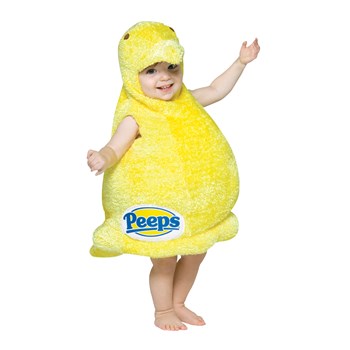
  • Or if you're into more Peep-friendly activities, you could always dress up as a Peep:


A Peeps costume for children, available for $29.99

Sources
About.com's section on inventors, history of marshmallows
Kraft's pages on Jet-Puffed marshmallows (go to About Jet-Puff, then choose History or Nutritional Information)
University of Illinois at Urbana-Champaign's Midwestern Turfgrass Weed Identification and Control, Common mallow lookalikes photos
Camden-Grey Essential Oils, mallow root
Just Born About Peeps Fun Facts. Check out the Factory Tour, too.
Martin Chaplin, Professor of Applied Science, London South Bank University, page on gum arabic

Thursday, January 27, 2005

Apple #30: The Replacements

THE REPLACEMENTS

By request, here's info on The Replacements, a band from the 1980's. They were probably one of the first "indie" bands to reach a fairly wide audience.


Photo by Greg Helgeson


  • They were:
    • Paul Westerberg, vocals, guitar, primary song-writer. Still recording and performing on his own. I saw him in the late 90's. He wore baggy pants and red & white shiny shoes and a red shirt, and I was close enough to the stage to see the sweat flying off his face.
    • Bob Stinson, guitar, RIP. Died in 1995 of a drug overdose.
    • Slim Dunlap, guitar. Replacement for Bob Stinson.
    • Tommy Stinson, Bob's brother, bass. Later formed his own band, Perfect Tommy.
    • Chris Mars, drums.
  • Known for getting fabulously drunk before, during, and after their shows. As one writer put it: "Frequently, the band was barely able to stand up, let alone play, and when they did play, they often didn't finish their songs."
  • They were also incredibly young. When their first album was released, Tommy Stinson, the youngest, was 14.
  • Referred to by fans as "The Mats," short for "The Placemats," itself a pun on the band's name.
  • Formed in 1979 in Minneapolis as a garage punk band.
  • Signed to a local label in 1981 and released a few albums to increasing acclaim.
  • In 1984, released Let It Be, which revealed the depth of Westerberg's song-writing talent and swelled the ranks of the band's underground following. Soon after, they signed a contract with Sire records in 1985.
  • The release of their next album was anticipated to be the work that would launch them into mainstream fame and blow the lid off. When that album was released later in 1985, it carried the purposefully unprepossessing title, Tim.
  • The band continued its self-deprecating style with its video for "Bastards of Young" which featured only a stereo system playing the song. This tactic "thereby cut themselves off from the mass exposure MTV could have granted them." One could argue, not everyone got the joke.
  • Appeared on Saturday Night Live roaring drunk, and Westerberg said the F word on air, which did nothing to endear them to promoters.
  • Following the tour for Tim, Bob Stinson was fired for unreliability due to his drug and alcohol addictions.
  • Three years, two mildly successful albums, and a new guitarist later, the band said they had kicked their habits and wanted to "play the promotional game." The next album featured "I'll Be You," which scored high on both rock and pop charts. However, the rest of the album never really took off.
  • Westerberg next wanted to record a solo album, but Sire records refused. He then released All Shook Down, which was the solo album he would have liked to have made, but under The Replacements' name. The drummer left the band shortly thereafter, and by 1991, The Replacements had disbanded.

("The Replacements" is also the name of a mediocre movie about football starring Keanu Reeves and Gene Hackman.)

Sources
Stephen Thomas Erlewine, All Music Guide, reproduced on MTV's
Bio of The Replacements
Rolling Stone,
The Replacements Bio
Wikipedia,
The Replacements
Stephanie Zacharek, "
True Romance: the bittersweet legacy of The Replacements," The Boston Phoenix archive, November 6-13, 1997
"
Westerberg, Mould, but No 'Mats at Mueller Benefit," Billboard, September 23, 2004

Monday, January 24, 2005

Apple #29: Idaho

IDAHO

As requested, here are some facts about Idaho:
  • Idaho was part of the Louisiana Purchase, acquired by the United States from France, for a mere $15 million in 1803.
  • Before Idaho became a state in 1890, its chief products were first fur trading, then gold, then silver. Finally, Idaho became the United States' primary producer of potatoes.
  • "Idaho" was the name of a steamship that traveled the Columbia River (the Columbia, in Washington, joins up with the Snake River, which forms part of the border of Idaho and Washington). Gold mines dug around the Clearwater River in Idaho began to be called the Idaho mines, and the name stuck.
  • Idaho is the Gem State, and its state bird is the Mountain Bluebird.
  • The state tree is the Western White Pine, which is appropriate since Idaho has the largest remaining stand of this kind of timber.
  • There's also a state flower and a state fish and a state horse and a state fossil and yes, even a state folk dance, but you can look those up yourself.
  • The state vegetable is, of course, the potato.
  • In 2002, Idaho accounted for about 58% of all the potatoes produced in the US. There are 8 states that are the primary growers, and Idaho is at the top of the list. The US as a whole grew 46 billion pounds of potatoes in 2002, and of that total, Idaho grew nearly 28 billion pounds that same year.
  • The current population of Idaho is about 1.3 million. Idaho is about 82,000 square miles, which means that there are an average of 15.6 persons per square mile. By comparison, Illinois has 223.4 persons per square mile, and Massachusetts has 809.8.
  • The northern panhandle and center of the state is nearly all mountains and wilderness. The southern third of the state is flatter, and contains most of the population. Smack in the middle of the state is a place called the Frank Church River of No Return Wilderness Area.

Sources
Idaho history
US Census Quick Facts on
Idaho and other states
Idaho
State Symbols
USDA Economic Research Service,
Potato Statistics, files tab01us.xls and tab12id.xls
Idaho Interactive Map and the map of Idaho from my Rand McNally Road Atlas

Friday, January 21, 2005

Apple #28: Toboggans

TOBOGGANS

I went to my home town recently, and a snowy hill I passed reminded me that I once sled down it on a toboggan when I was a kid with about five other kids, and we almost wound up in the lake at the bottom of the hill. I thought about that word toboggan and then I wondered where they came from.

  • Toboggans were pulled by hand or by teams of dogs, and were used to haul cargo across frozen, snow-covered ground. They were also used to pull children too young to walk far in cold weather.
  • The word is attributed to the Micmac tribe, some of whom still live in northeast Canada. They made a lot of things out of birch bark, and they hunted big animals like elk, moose, bear, and caribou.
  • Numerous other northern tribes are known to have used toboggans, including the Eskimos, or Inuit. In the Innu language, the word for "automobile" is utapan, which also means "toboggan."
  • Since toboggans have to glide over frozen, uneven ground, they must be flexible. Metal will snap if bent or jarred, and plastics can also get distorted and may be weakened by UV light. For its flexibility even in cold temperatures, wood remains the preferred material for toboggans.
  • Steering a toboggan is difficult, since it was never originally intended to be ridden, but hauled. Shifting one's weight or trailing one's feet are the only ways to steer or stop a toboggan.
  • In the sport of tobogganing, special iced chutes are constructed so that steering is eliminated. The toboggan, therefore, is the forerunner of the bobsled and the luge. Also, the first snowmobile was a motorized toboggan.

Only three more days to submit your requests!

Sources
Northern Toboggan & Sled's
History page
Compact Oxford English Dictionary,
toboggan entry
Minnesota State University EMuseum, North American Cultures,
Micmac
Utapanasku - the
Innu toboggan
Columbia Encyclopedia, entry on
tobogganing

Wednesday, January 19, 2005

Apple #27: Benny Hill

BENNY HILL

As requested, here's some info on the British comedian who often ran around very fast on his show, performed slapstick, and leered after women.
  • Born in January 1924, in Southampton, England
  • Real name: Alfred Hawthorne Hill. He adopted the name Benny Hill in homage to his favorite comedian, Jack Benny.
  • Held jobs as a milk cart driver and a salesman at Woolworth's before becoming a comedian
  • Performed in live variety acts on stage and on the radio for several years. In 1949, he began writing sketch comedy.
  • In 1955, at the age of 31, he started his own TV show with the BBC. This made him one of the frontrunners of television comedy in England. The show ran for more than 30 years and was aired in over 100 countries.
  • In 1979, the show was aired in the US. While some thought that British humor wouldn't translate to American tastes, "The Benny Hill Show" became massively popular with its bawdy jokes that were considered risque compared to other shows on American television.
  • The signature music for his show was the song "Ernie (The Fastest Milkman in the West)," parodying his early job as a milkman
  • He also appeared as the toymaker in "Chitty Chitty Bang Bang" with Dick Van Dyke and Julie Andrews
  • In the 1980's, as his popularity soared in America, his show was on the decline in Britain. While he cranked up the "slap and tickle" humor, exactly these types of jokes were found increasingly offensive as more people embraced feminism. In 1989, his show was canceled due to public pressure.
  • He never married, though he proposed to two women.
  • He never owned a car or a house. He remarked that his favorite possessions were his TV and his VCR.
  • In 1992, he died of a heart attack at the age of 68. Some reports say he was in the hospital; others say he was alone in his apartment watching TV. He was worth an estimated 140 million pounds (about $260 million).

Sources
Museum of Broadcast Communications, Benny Hill
BBC's Guide to Comedy, Benny Hill
BBC America, The Benny Hill Show
The Benny Hill Page Biography
The Benny Hill Songbook

Monday, January 17, 2005

Apple #26: Grommets & Myrrh

Since I've been away from this thing for a few days, I thought I'd do two entries today. And, in honor of my pledge to take requests, both are from the request lines.

GROMMETS
  • A grommet is a metal ring used for lining a small hole through which cords or lines will be run. The ring may also be made of plastic or even rubber.
  • Grommets are the metal rings around the openings in your shoes, through which the laces pass. They are also used in other laced clothing, such as corsets or laced vests, and in curtains.
  • Grommets are also used in electronics, to protect the holes where wires or tubing pass into and out of wiring boxes without grounding.
  • In nautical terms, a grommet is a loop of rope that secures a sail to its stay.
  • It is also used around the holes in mailbags.
  • In medicine, it is a tube surgically implanted in the eardrum, used to drain fluid from the middle ear and thus alleviate a condition known as "glue ear."
  • In military weaponry, it is a ring of rope used as a wad to hold a cannon ball in place, presumably in a pile of other cannon balls.
  • In construction, it is a ring of fiber used as a seal or gasket, or it may also be a washer which seals joints between lengths of pipe.
  • The term probably comes from a French word, gromette, which was the chain that joined the ends of a bit for a horse's mouth. This word, in turn, comes from another Old French word that means "to curb."
Looks like grommet is one of those words like doo-hickey that people use to describe a thingamabob that can be used for just about anything. In this case, the thingamabob is a little ring that protects the material where a hole is made.

MYRRH

Myrrh is best known as one of the three gifts the Magi brought to the baby Jesus. But what is it, exactly?
  • Myrrh is a gum-resin, used as a perfume and an unguent, burned as incense in temples and used in embalming.
  • True myrrh comes from the bark of a shrub that grows in Africa and Arabia.
  • In resin form, it occurs in irregularly shaped pieces, from 3/4 of an inch to 3 inches or so. It has a reddish-brown color and contains some white streaks. It is a mixture of resin, gum, and the essential oil, myrrhol, which gives it its distinctive aroma.
  • Myrrh has been in use for at least 3700 years, well before the Bible. It has also been used for:
    • milching cows to improve quality and increase quantity of milk
    • when mixed with lime, giving a gloss to walls
    • when shaken with water to form a lather, for washing hair and for whitening shields
    • when ingested, for expelling the guinea-worm
    • it used to be used for treating reproductive disorders, though this is an ill-founded belief and in fact is harmful in pregnant women.
    • more recently, it has been found to be beneficial, when mixed with water, in protecting the stomach against damage caused by NSAIDs such as aspirin or ibuprofen.
  • It is also currently available as an herb, more commonly referred to as chervil or cicely or in a blend known as fine herbs. It is used fresh on salads and has a sweet, mild anise flavor. When dried, it loses its flavor. It can be used as a substitute for sugar in some dishes.
Sources
OneLook's entry on grommet and subsequent reference links
1911 Encyclopedia Britannica entry on myrrh
Webster's revised, unabridged 1913 dictionary, myrrh
Memorial Sloan-Kettering Cancer Center's About Herbs, Botanicals & Other Products, myrrh
Hormel Glossary of Kitchen and Food Terms, myrrh
My Cookbook.net's glossary terms, myrrh

Wednesday, January 12, 2005

Apple #25: Request Lines Are Now Closed

NO LONGER TAKING REQUESTS

Sorry, folks, but the time for submitting requests has expired. I'll take requests again at some point in the future, never fear, so stay tuned. And I also have some requests to fill yet, so keep an eye out for your topic to appear in the subject line.

Thanks to everybody who submitted suggestions. You've helped expand this thing beyond the confines of my own head.

Finally, I'm going to re-set this so that registration is once again required if you'd like to leave a comment. It's always nice to see input from people because it tells me that somebody is actually reading this.


Thanks again to everybody who's participated.

--the apple lady

Apple #24: Jupiter

Jupiter is my favorite planet. I like it because of the spot, which is a storm, and because it's lots of different colors. And, it turns out, all kinds of crazy stuff goes on there.


(Photo of Jupiter from Zabawiki)


  • Jupiter is the fifth planet from the Sun.
  • It is the largest planet in our solar system. It has more than twice the mass of all the other planets combined. If Jupiter were hollow, more than 1,000 Earths would fit inside it.
  • Galileo's discovery in 1610 of four of Jupiter's moons and the fact that they rotated around Jupiter was the first time anybody realized that things in the heavens rotated around things other than the Earth.
  • We now know of 63 moons that orbit around Jupiter.
  • Jupiter is 90% hydrogen and 10% helium, with traces of methane, water, ammonia, and "rock." This composition is considered to be very close to that of the nebula from which our solar system was formed.
  • The presence of "rock" is really only a guess. Scientists think that Jupiter probably has a rocky core, with a mass of about 10 to 15 times that of Earth.
  • Around this core is liquid metallic hydrogen, which can exist only at pressures greater than 4 million bars.
  • Winds whip around Jupiter at more than 400 mph, driven mostly by the planet's internal heat. This heat is generated by the planet's slow gravitational compression.
  • The colors which seem to be on the planet are actually clouds, made mostly of ammonia and ice. The exact reason for the colors is uncertain. Some say they're from trace elements in the atmosphere, maybe sulfur or phosphorous. In some images, the colors are coded to correspond with altitudes of the clouds, where blue is the lowest and red is the highest.
  • The Great Red Spot (GRS) is a 12,000 km by 25,000 km oval, large enough to hold two Earths.
  • The Spot is actually a hurricane-like storm of gases, which has existed for at least as long as people have been looking at it, or over 400 years. Nobody seems to know much more about it than that. See a movie of the red spot in action.
  • Jupiter also has rings, like Saturn, though they are much smaller and fainter. They were discovered by Voyager I in 1979. They are actually small dust particles.
  • Jupiter also has "auroral emissions" or magnetic events like Earth's northern lights.
This is from the Hubble Space Telescope, in 2004:


Update: In July 2009, the telescope Hubble has taken pictures of a new large spot on Jupiter, a black one. It's estimated to be 6,000 miles wide, or about twice the size of Europe. This spot was probably caused, astronomers believe, by an impact from a comet or an asteroid.

To-scale image of the new black spot on Jupiter, as taken by Hubble.
(Photo from the Hubblesite)


While everyone has been talking about how great Hubble is for the pictures it's taken, the new black spot was first noticed by an amateur astronomer named Anthony Wesley from Australia.

Sources:
The Nine Planets
Views of the Solar System,
Jupiter page
Hubble Space Telescope's
Hubblesite
A little bit more detail about the
Great Red Spot, from Astronomy 161, as taught by the Department of Physics & Astronomy at the University of Tennessee
News about the black spot:
"Hubble pictures Jupiter's 'scar'," BBC News, July 24, 2009
"See Jupiter's Great Black Spot," MSNBC News, July 24, 2009

Monday, January 10, 2005

Apple #23: Seeing Eye Dogs

SEEING EYE DOGS, or Guide Dogs for the Blind

I recently helped a blind man find some things in a store. He had a dog with him, but the man was looking for things on the shelf, and of course the dog was no help with that. Then when the blind man was ready to leave the store, he told the dog to lead him out, but the store was busy and the dog seemed to be overwhelmed by all the people and the stuff in the store, and the dog wasn't really leading anywhere, just sort of walking dazed. So I walked them both to the door.
  • The first systematic effort to train dogs to help blind people was in 1780, in a Paris hospital for the blind. Then, during the First World War, a German doctor left his dog alone with a blind man when he was urgently called away. When he returned, he got the distinct impression that his dog was looking after the blind man. So he began what became a series of schools throughout Germany that trained dogs to help men blinded in the War.
  • Generally, German shepherds, Labrador retrievers, golden retrievers, and sometimes mixed breeds are trained to be guide dogs. These breeds are known for their stable temperament, their sociability with people, and their ability to respond to commands.
  • Depending on the institute responsible for training the dogs, a dog may be bred especially to become a guide dog. As puppies, they are trained to be obedient and sociable. Then before they are 2, they attend a four-month course of specialized guide-dog training. After the dog successfully completes this training, the dog is then matched with a blind person, and the two work together with a sighted person for about 3 weeks to get used to each other.
  • Dogs are color-blind and have no idea when traffic lights change. Their owners learn to listen for changes in traffic patterns to know when it's safe to cross the street. Then they will tell the dog, "Forward," and the dog will begin walking across the street.
  • Only dogs trained by The Seeing Eye Inc., in Morristown, New Jersey, are supposed to be called "seeing eye dogs." Otherwise, they're called guide dogs or leader dogs.
  • Volunteers can help by going to guide dog schools to feed or walk or pet the puppies and get them used to new people. Some schools also allow volunteers to raise puppies that will eventually be trained to become guide dogs.
  • People who want to train guide dogs for a living undergo a three-year apprenticeship before receiving their license.
  • Some schools charge as little as $150 for a dog. Some schools provide the dogs free of charge.
Here are some recommendations for what to do when you meet someone who is blind and how to treat his or her guide dog. Some of the things I did right, some of the things I didn't do too well.

Also, when I was maybe 14, I read this book, Light a Single Candle, about a girl who goes blind because of glaucoma and she has to go to blind school, which is awful, and then she gets a guide dog. I know it's a young adult book, but it was written by a woman who is herself blind, and the descriptions of what it's like to be blind make it seem like it's not that foreign an experience, and the whole process of how she gets a guide dog I found really interesting.


Sources
The Seeing Eye Inc.'s FAQs
Southeastern Guide Dogs Inc Obtaining a Guide Dog FAQs
International Guide Dog Federation History
Guide Dogs for the Blind Training

Friday, January 7, 2005

Apple #22: Pimiento

I finished a jar of green olives the other day. I've looked up the word pimiento before but I couldn't remember what it is. So here's what it is:

  • A sweet red pepper, heart-shaped, somewhat small. It's sweeter than the typical red bell pepper available in grocery stores everywhere.
  • Pimiento is the Spanish word for "pepper." The Spanish word originates with the Latin pimiento, which means "pigment or spice."
  • Sometimes the word is spelled pimento
  • It's possible that the reason pimientos are stuffed into olives is that all olives, no matter how ripe, "have a vile, intensely bitter taste." (What is it with people wanting to eat nasty-tasting things, in spite of their nastiness?) The pimiento may help to counteract the olive's bitterness. That and all the soaking in alkaline and brine and the fermenting you have to do to an olive to get rid of the bitter substance inherent in it.
  • When olives are processed, a punching machine pushes a metal pin into the olive from one end and forces the pit out the other. If you look at the bottom of the olive, you'll see an x where the punch entered. The larger hole is where the pit came out.
  • Next, the pimiento, cut into strips, is fed into a machine in rolls. This machine inserts the pimiento into the hole where the pit was.
  • Large quantities of pimiento are also used to make paprika.

The pimiento, not yet in an olive:


Sources

Ask Yahoo What is a pimento and why is it in my olive?
Hormel's Glossary of Kitchen and Food Terms, Pimiento entry
Compact Oxford English Dictionary, pimiento entry
Australian Consumer's Choice Association, Olives: You may not have wanted to know this
UCLA Louise M. Darling Biomedical Library, Spices Exotic Flavors & Medicines

Wednesday, January 5, 2005

Apple #21: Ebony & Persimmons

What the heck is ebony, anyway?
  • Ebony is wood, specifically, a fine-grained, hard timber from the persimmon tree
  • There are three kinds of ebonies: one which is uniformly black that grows in Africa, a second which is black with lighter streaks and grows on the island of Celebes, and a third which is a much lighter pale cream color that grows in North America and Africa.

Cross-section of ebony that grew in the Sahara. Ebony wood sells for $50 per square foot.
(Photo from Safari Gifts)


  • Because of its hardness and its color, it is used in furniture and is often carved in great detail. In the 16th century, exquisitely carved cabinets made of ebony were all the rage.
  • Ebony is often used for piano keys, but so is African Blackwood, which has a translucent reflective quality.
  • Many varieties of ebony are now endangered.
  • Ebony is also the name of a magazine published by a cosmetics company and marketed primarily to African Americans.
  • Ebony is also the name of a clarinet concerto by Woody Herman.

Here's a picture of a pretty fantastic ebony and ivory cabinet from 17th century Germany, valued at roughly $120,000 to $200,000.

This one, from Italy also in the 17th Century, was valued at about $330,000 to $400,000.

(You've got that Stevie Wonder song in your head now, don't you? Yeah, so do I.)

Now, what the heck is a persimmon?

  • The fruit of the persimmon tree, the persimmon, is often edible.
  • The fruit is a light yellow-orange to a dark orange-red and is usually acorn-shaped
  • One variety of persimmon is astringent (bitter) and contains tannic acid. This variety becomes soft and pulpy when ripe.
  • Another variety of persimmon is referred to as non-astringent, though it is only less bitter than the first. This remains hard and crunchy when ripe.
  • Persimmon trees actually grow all over the world, including in Japan, China, Korea, and the Mediterranean, as well as in Africa and the southern US.

These are persimmons from Uncle Paul's Produce in Oregon:


Sources:
Wikipedia's entry on Ebony
Wikipedia's entry on the Persimmon
Columbia Enclyclopedia's entry on Ebony
Sofresh New Zealand, Persimmons in New Zealand

Tuesday, January 4, 2005

Apple #20: Mattresses

MATTRESSES

The other day, I was lying in bed for a while after I woke up, sort of patting the mattress. It occurred to me that what I was lying on was something of a miraculous invention. Here are some of the substances that mattresses have been made of or stuffed with in the past:

  • Dirt and a wooden prop for the head
  • Ebony and gold
  • Rice hulls
  • Hay
  • Wool
  • Feathers
  • Water in goatskins or, more recently, vinyl
  • Pine straw
  • Coconut fiber
  • Horse hair
  • Pea shucks in ticking (plain rough cloth), with velvet & brocade on the outside
  • Straw or cotton in ticking on rope lattice
  • Cornhusks
  • Cotton on iron
  • Rubber and foam
  • Air

Some notable facts:

  • The average person spends 220,000 hours in bed over the course of a lifetime.
  • The phrase "sleep tight" probably comes from the 16th century when mattresses were laid on a lattice of ropes that needed tightening. The phrase was later combined with "don't let the bedbugs bite" in rhymes for children.
  • In the late 18th century, when cotton was used in mattresses on iron beds, it was discovered that vermin disliked this combination. Until that time, bugs in the bed were accepted as a regular part of sleeping.
  • Water beds were used in Persia in 1500 BC, and also later, during the Roman empire.
  • The first spring mattress was patented in 1865, but spring mattresses did not become widely used until the 1930's.

Sources:
The Better Sleep Council
About.com's History of Beds
World Wide Words, on the origin of "sleep tight"
New York Daily News At Your Service column, Mattresses/Beds (note that way at the bottom of this page, alphabet games are recommended as a way to help you fall asleep)